VOLTIXC / ENQUIRY
Request a Quote
Tell us what you need and we will review your enquiry.

By VoltixC Engineering Team · Last updated: 2026-09-28
Fast answer: Ring terminal sizes are read from two numbers: the wire range the barrel accepts, such as 22–16, 16–14 or 12–10 AWG, and the stud size the ring fits, such as #8, #10 or 1/4 inch. Pick a ring of the same nominal size as the stud, then choose vinyl or nylon insulation for the environment.
A ring terminal is a crimp terminal whose flat tongue ends in a closed ring, so a screw or stud passes straight through it. Catalogues also call it a ring connector, a ring lug or a wire eyelet. VoltixC lists 69 insulated ring terminals in two series, RV with a vinyl sleeve and RNY with a nylon sleeve, from 16–14 AWG to 6 AWG on the ring terminals page.
Write the wire gauge and the stud name on your list before you compare parts. A 16–14 AWG wire on a #10 screw takes a 16–14 AWG barrel with a #10 ring, and the same wire on an M6 stud takes a different part. The ring terminal size chart finds the RV or RNY series from the gauge and the sleeve you want.
Two numbers set a ring terminal: the wire range its barrel accepts and the stud size its ring fits. Sleeve material, barrel type and finish are picked after those two.
| Sizing item | What it identifies | Working value on this page |
|---|---|---|
| Wire range | The AWG band the barrel accepts | RV: 16–14 and 14–12 AWG; RNY: 16–14, 12–10, 8 and 6 AWG on the supplier specification sheets; RV1.25 and RNY1.25 (22–16 AWG) and RV5.5 (12–10 AWG) are not tabled, so ask before you specify |
| Stud size | The stud or screw the ring goes over, named in inch numbers, inch fractions or metric | The same nominal size as the stud, per West Marine’s summary of ABYC E-11.14.4.1.11 for ring and captive-spade terminal connectors |
| VoltixC stud range | The studs named on the RV and RNY sheets | #2 to 3/4 in across both series; the stud-name table below gives the hole for each |
| Holes per wire range | How many stud sizes one wire band can meet | ABB’s Spec-Kon table offers non-insulated copper ring terminals for 1.5–2.5 mm² conductors with M3 through M12 stud-hole sizes |
| Ring geometry | Hole diameter d2, tongue width W and length L | On the supplier sheet for every RV and RNY part; RVS2-5 (16–14 AWG, #10 stud) lists d2 5.3 mm, W 8.5 mm and L 21.8 mm |
| Sleeve material | Vinyl (PVC) or nylon over the barrel | RV = PVC (vinyl), RNY = nylon |
| Colour band | The wire range, in the maker’s own code | Varies by maker; ABB’s Spec-Kon vinyl-insulated ring table uses red for 0.5–1.5 mm², blue for 1.5–2.5 mm² and yellow for 4.0–6.0 mm² conductors |
| Temperature and voltage | The maximum rating printed for one model | Set per model; ABB’s Spec-Kon vinyl-insulated ring specifications list a maximum rating of +105 °C and 600 V |
| Current (amp) rating | What the joint may carry | Follows the wire and the maker’s rating for the part; the VoltixC specification sheets give no current value |
| Body and finish | The metal under the sleeve | Copper body with tin plating, per the supplier specification sheets |
| VoltixC item | The part code on the order | 69 part numbers: RV2 and RV3.5 families (24 parts) and RNY2, RNY5.5, RNY8 and RNY14 families (45 parts); RVS2-5, for example, is a 16–14 AWG ring for a #10 stud |
Source: VoltixC rows per supplier specification sheet (RV and RNY series), not individually re-tested; other rows from the sources cited below.
Fields the supplier sheets leave blank, such as current and temperature, stay blank in this guide. Put the stud name next to every gauge on your list, and the hole, tongue width and length for each RV or RNY part come from its sheet row.
| Also asked as | Short answer | Covered in |
|---|---|---|
| ring terminal dimensions | Wire band, stud, hole Ø d2, tongue width W and length L; the RV and RNY supplier sheets give all five for each part | This table; VoltixC ring terminals |
| ring terminal size chart; ring terminal stud size chart; terminal stud size chart | The stud-name table: each stud from #2 to 3/4 in with the hole diameter printed on the VoltixC sheets and the wire bands that come with it | Stud names and bolt diameters |
| what is stud size in ring terminal | The screw or stud the ring goes over; it sets the hole, while the wire gauge sets the barrel | The two numbers |
| ring terminal amp | No amp figure of its own: the current follows the wire gauge and the rating the maker prints for the part, and the VoltixC sheets list none | This table |
| how to read ring terminal sizes; how to measure ring terminal size | Read the wire band and the stud name on the bag or sheet; for an unknown stud, measure its diameter with a ruler or calipers and compare it with the hole column | Stud names and bolt diameters |
| types of ring terminals; ring terminal types | The variety comes from three choices: barrel, insulation and tongue | Types of ring terminals |
| how to choose ring terminals | Pick ring terminals for your project by wire band first, then stud, then sleeve and finish | The two numbers; insulation and plating |
| how to use ring terminals | Crimp the barrel onto the stripped wire, pull-test it, then fit the ring over the stud under the washer or nut | Crimp and mount |
| what are ring terminals used for | Ending a wire under a screw or nut: terminal blocks, grounding studs, battery and busbar studs, panel screws | What a ring terminal is |
A ring terminal is a crimp terminal with a closed ring on its tongue, and the screw has to come out before the ring can leave the stud.
| Problem | What to do | Check |
|---|---|---|
| The wire must stay on the stud if the screw backs off | Choose a ring terminal. According to Wiltronics, a ring terminal is chosen where the fastener passes through it, so the connection cannot be removed without loosening or removing the fastener | The ring stays on the stud with the screw half out |
| The joint sits on a screw terminal that is opened only for service | Use a ring. Electrical Engineering Portal notes that loop or eye connections at screw terminals are inexpensive and are used where the connection would be infrequently disconnected | The terminal is not on a test or swap point |
| The wire is swapped on and off a screw many times | Look at a fork terminal; the fork and spade terminal guide compares them | The fork can leave with the screw loosened a turn |
| The sleeve colour is the only marking you can see | Read it as that maker’s code. According to ABB’s Spec-Kon guide, insulated terminals use colour-coded insulators according to DIN cable sizes | The wire range on that maker’s data sheet covers your wire |
| The cable is heavier than 6 AWG | Move to a copper tube ring terminal; the RNY list stops at 6 AWG | The part is on the copper tube ring terminals page |
| You are unsure the part is a ring terminal | Look for a crimp barrel, a sleeve and a flat tongue with a full ring | The ring is a closed circle with no slot, sized to one bolt or stud |
Ring terminals land on terminal blocks, grounding studs, battery and busbar studs and panel screws, wherever a wire ends under a nut. The RV and RNY parts sit on the ring terminals page, and the wider insulated range is under crimp connectors.
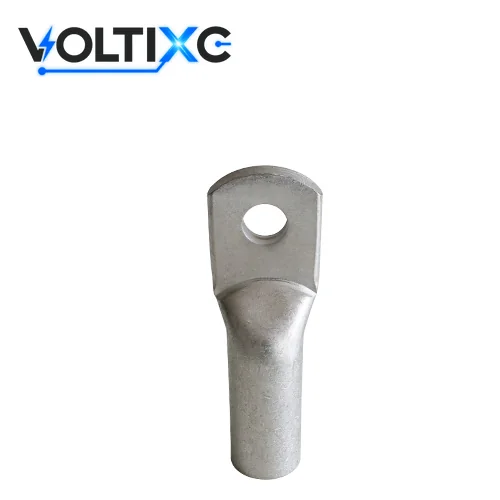
On a 16–14 AWG wire going to a #10 screw, the 16–14 AWG range picks the barrel and #10 picks the hole in the ring.
| Number | Where you read it | What the data says |
|---|---|---|
| Wire range | The gauge printed on the wire jacket, then the range on the terminal’s data sheet | Wiltronics notes that colour-coded conductor ranges on insulated terminals can differ between manufacturers and connector systems, so the specific terminal’s data should be checked |
| Stud size | The equipment drawing, or the stud itself | West Marine, summarizing ABYC E-11.14.4.1.11, says ring and captive-spade terminal connectors should be the same nominal size as the stud |
| Both on one part | The marking on the terminal or its bag | According to ABB’s Spec-Kon selection table, insulated ring terminals are copper, tin plated, marked for wire size and bolt size, and available with PC/PVC/PA insulation |
| Wire range under the standard | The conductor range of the connector standard named in your spec | According to UL Standards & Engagement, the copper conductor ranges listed for UL 486A-486B are 30 AWG through 10 AWG solid and 30 AWG through 2,000 kcmil* stranded |
*kcmil = thousand circular mils.
ABB’s Spec-Kon table below lists three conductor bands, and each band comes with a spread of metric stud holes.
| ABB conductor range | Terminal | Stud-hole sizes offered |
|---|---|---|
| for 0.5–1.5 mm² conductors | ABB Spec-Kon non-insulated copper ring terminal | M2.5 through M12 |
| for 1.5–2.5 mm² conductors | ABB Spec-Kon non-insulated copper ring terminal | M3 through M12 |
| for 4.0–6.0 mm² conductors | ABB Spec-Kon non-insulated copper ring terminal | M4 through M12 |
Source: ABB Spec-Kon table, one maker’s range; VoltixC stud holes for RV and RNY are in the stud-name table below.
Worked example: RVS2-5 or RNYS2-5 takes 16–14 AWG wire. The ring hole for a #10 screw is 5.3 mm on the supplier sheet; an M5 stud is not on the current list, so ask before you specify.
Copy the stud name from the drawing, whether it reads #10, 5/16 in or M8, and order the ring hole under that name; US and metric names pair up only roughly.
| Stud name on the drawing | Naming system | Metric name buyers pair it with | VoltixC hole Ø d2 on the supplier sheet (mm) | VoltixC wire bands with this stud (AWG) |
|---|---|---|---|---|
| #2 | US screw number | — | 2.2 (also 2.5) | 16–14 |
| #4 | US screw number | — | 3.2 | 16–14 |
| #6 | US screw number | M3.5 | 3.7 | 16–14, 12–10, 8 |
| #8 | US screw number | M4 | 4.3 | 16–14, 14–12, 12–10, 8, 6 |
| #10 | US screw number | M5 | 5.3 | 16–14, 14–12, 12–10, 8, 6 |
| 1/4 in | Inch fraction | M6 | 6.4 | 16–14, 14–12, 12–10, 8, 6 |
| 5/16 in | Inch fraction | M8 | 8.4 (also 7.4) | 16–14, 12–10, 8, 6 |
| 3/8 in | Inch fraction | M10 | 10.5 | 16–14, 12–10, 8, 6 |
| 7/16 in | Inch fraction | — | 11.5 | 6 |
| 1/2 in | Inch fraction | — | 13 | 16–14, 12–10, 8, 6 |
| 9/16 in | Inch fraction | — | 15 | 16–14, 12–10 |
| 5/8 in | Inch fraction | — | 17 | 16–14, 12–10 |
| 3/4 in | Inch fraction | — | 21 | 16–14, 12–10 |
| M3.5 to M10 | Metric thread size in mm | #6 to 3/8 in, as above | Not on the current list; ask before you specify | — |
Source: stud names as they appear on equipment drawings and buyer enquiries, where the metric pairings are names, not measured equivalents; VoltixC hole diameters and wire bands per supplier specification sheet (RV and RNY series), not individually re-tested.
| Rule | What the source says | Source |
|---|---|---|
| Hole size | Ring and captive-spade terminal connectors should be the same nominal size as the stud under ABYC E-11.14.4.1.11 | West Marine |
| Inspection | Visual connection inspection should check the bolt diameter relative to the lug fixing hole | Electrical Engineering Portal |
For a #10 ring terminal size, the screw on the drawing is #10; for an M8 ring terminal size, the stud is M8. Before a 5/16 in ring goes on an M8 stud, slide the bolt through one sample. The table below gives four makers’ colour codes for the wire range, and none of them marks the stud size.
| Maker and part | Red | Blue | Yellow |
|---|---|---|---|
| ABB Spec-Kon vinyl-insulated ring table | 0.5–1.5 mm² | 1.5–2.5 mm² | 4.0–6.0 mm² |
| Phoenix Contact OTTA 6-T ring cable lug | 1.5 mm² | 2.5 mm² | 6 mm² |
| Phoenix Contact RBO 5-T ring cable lug | 1 mm² | 2.5 mm² | 6 mm² |
| Waytek, insulated terminal sleeves | 22–18 AWG | 16–14 AWG | 12–10 AWG |
Source: each maker’s own identification colours, as cited; sleeve colours on the VoltixC RV and RNY sheets are in the parts table near the end of this guide.
Sort ring terminals by barrel (open or closed), by insulation (bare, vinyl, nylon or heat-shrink) and by tongue (standard, multi-stud, right-angle or offset).
| Type | Barrel | Insulation | Tongue | Fits | VoltixC |
|---|---|---|---|---|---|
| Vinyl-insulated ring | Crimp barrel under the sleeve | Vinyl (PVC) sleeve | Standard ring | Dry panels and general wiring; an economical sleeve with basic protection | RV, 16–14 and 14–12 AWG |
| Nylon-insulated ring | Crimp barrel under the sleeve | Nylon sleeve; according to Waytek, many nylon-insulated terminals are designed for double crimping, which adds strain relief and tensile strength | Standard ring | Wire that moves or vibrates | RNY, 16–14 to 6 AWG |
| Insulation-support ring | Wire barrel plus a metal sleeve on the jacket | According to TE Connectivity, its PIDG terminals combine a nylon or PVC-insulated body with a metal sleeve that crimps onto the wire insulation for support | Standard ring | Wire that flexes right behind the terminal | Not on the current list; ask before you specify |
| Heat-shrink insulated ring | Crimp barrel under a heat-shrink sleeve | Waytek reports that heat-shrink insulated terminals seal tightly when heated properly, giving moisture resistance and corrosion protection | Standard ring | Damp, wash-down or marine spots | Adjacent range; ask before you specify |
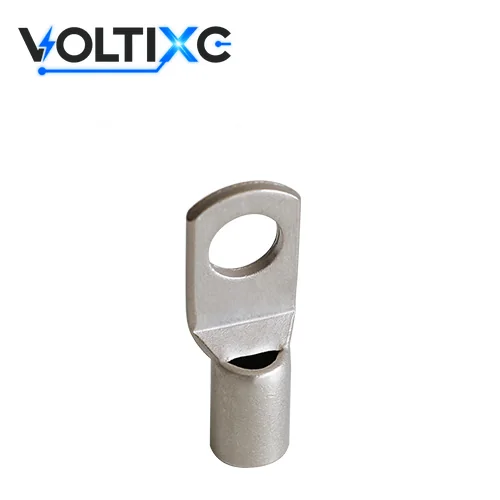
| Non-insulated copper tube ring | Closed copper tube | None | Standard ring | Battery and power cable heavier than 6 AWG | bare copper tube rings |
| Open-barrel ring | Wings that fold over the strands | Bare or separate sleeve | Standard ring | Work set up with the barrel maker’s own tooling | Not on the current list; ask before you specify |
| Multi-stud, right-angle, offset or rectangular tongue | Any of the above | Any of the above | Tongue shaped for the space | Crowded stud rows, turns at the stud, busbar faces | Custom tongue by tooling for volume orders; ask before you specify |
Source: type definitions are general; VoltixC column per supplier specification sheet for the RV and RNY series.
VoltixC lists the first two rows. A special tongue starts from your drawing, and the tooling is quoted for volume orders. Compare RNY and RV side by side on the insulated ring terminal page.
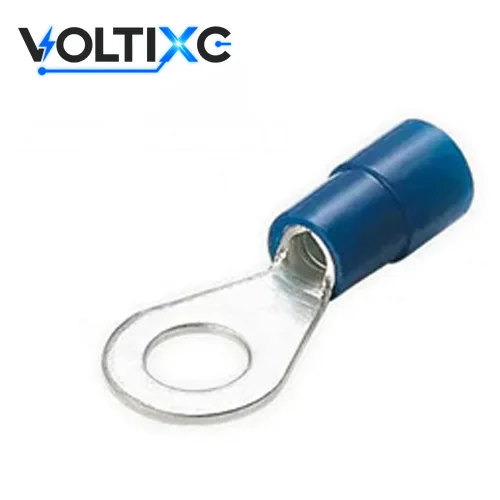
Use a vinyl RV ring in a dry cabinet, a nylon RNY ring in double-crimp form where the wire vibrates, and a heat-shrink insulated ring where water can reach the crimp.
| Where the joint sits | Pick | What the data says | VoltixC |
|---|---|---|---|
| Dry control cabinet or panel | Vinyl sleeve rated for the heat at the joint | According to ABB’s Spec-Kon vinyl-insulated ring specifications, the listed maximum rating is +105 °C and 600 V | RV; rating confirmed per model |
| Engine, pump or machine that vibrates | Nylon sleeve built for a double crimp | Waytek writes that many nylon-insulated terminals are designed for double crimping, which adds strain relief and tensile strength | RNY |
| Damp, wash-down or marine location | Heat-shrink insulated ring | According to Waytek, heat-shrink insulated terminals seal tightly when heated properly, giving moisture resistance and corrosion protection | Adjacent range; ask before you specify |
| Wires that must be told apart by size | The maker’s colour band, read against that maker’s chart | ABB’s Spec-Kon vinyl-insulated ring table gives red for 0.5–1.5 mm², blue for 1.5–2.5 mm², and yellow for 4.0–6.0 mm² conductors | RV and RNY sleeve colours on the supplier sheets: blue 16–14 AWG, black 14–12, yellow 12–10, red 8, and blue again for RNY 6 AWG |
| Chassis or equipment ground stud | Any insulated ring sized to the ground wire and the stud | A ring keeps the ground wire on the stud until the nut comes off | RV or RNY by wire gauge |
| Damp air on the metal itself | Tin-plated copper body | The supplier specification sheets list tin plating on a copper body for both series | RV and RNY: tin-plated copper |
Source: VoltixC column per supplier specification sheet (RV and RNY series); other rows from the sources cited below.
Temperature and voltage belong to one model, so read the rating printed for the exact part. Heat-shrink ring terminals are outside the RV and RNY lists; send the wire gauge, stud and location, and the part is confirmed before you specify it.
Match the part to the wire and the stud, strip, insert, crimp in the matched nest, pull-test, then fit the ring over the stud and tighten it to the equipment maker’s torque.
Pick the barrel from the wire gauge and the ring from the stud name on the drawing.
Both the AWG band and the stud name on the part match your list.
Strip the wire to the length of the metal barrel.
Held next to the terminal, the bare copper reaches from the barrel end to its mouth.
Push the stripped end in until the conductor reaches the far end of the barrel.
No strand is folded back or left outside.
Close the crimp tool through its full stroke in the nest marked for that wire range.
The indent sits on the barrel and clear of the ring tongue.
Give the wire a steady, in-line pull.
If the terminal moves at all, cut it off and crimp a new one.
Take the screw or nut off, slide the ring over the stud and refit the screw.
The ring lies flat under the washer or nut, with the tongue clear of its neighbour.
Tighten to the torque the equipment maker gives for that terminal.
After tightening, the tongue has not turned and the sleeve is not crushed.
| Step | What the source says | For a ring terminal |
|---|---|---|
| Insert | According to TE Connectivity, a funnelled wire entry prevents turned-back strands and speeds wire insertion | Push the strands straight in; a funnel entry helps, and the strands still need a square strip |
| Pull | Wiltronics advises that a crimp that moves or pulls out in a steady in-line pull test should be cut off and redone with a new terminal, and crimped terminals should not be reused | Cut off a ring terminal that moved and crimp a new one |
The full crimping method, from choosing the die to the pull check, is in how to crimp wires. Torque values are not given here, since they belong to the terminal block or the equipment.
Tip: Crimp one ring terminal on a spare length of the same wire and pull it before you set up the batch.
A ring terminal ends up wrong when its barrel or ring is chosen from a name, a colour or the jacket size instead of the conductor and the stud.
| Problem | What to do | Check |
|---|---|---|
| The barrel was chosen from the outside diameter of the cable | Size it from the conductor. According to Wiltronics, installers should size a connector from the conductor size printed on the cable, not from the cable’s outside diameter alone | The AWG band on the part covers the gauge printed on the jacket |
| The sleeve will not close on a thick jacket, or rattles on a thin one | Check the jacket too. TE Connectivity explains that insulation outside diameters vary among wires with the same AWG size, so the insulation barrel must accommodate the wire’s outside diameter and the crimp range must match it | The sleeve grips the jacket with no gap |
| The ring is one size larger than the stud | Order the ring for the stud named on the drawing, not for the size of the bolt guessed by eye | The washer covers the ring, and the ring cannot slide sideways |
| An M5 ring went on a #10 screw, or a 5/16 in ring on an M8 stud | Treat the two names as two sizes and order the one on the drawing | The bolt passes through the hole without forcing and without play you can feel |
| Five or more rings are stacked on one stud | Move the extra wires. According to West Marine, no more than four terminals should be secured to one terminal stud under ABYC E-11.14.4.1.10; extra connections need additional studs joined by jumpers or copper straps | Four rings or fewer on each stud |
| A vinyl sleeve sits next to a hot part | Read the rating of that exact model and choose a part rated for the heat there | The printed rating covers the temperature at the joint |
| The terminal was crimped with pliers or the wrong nest | Cut it off and crimp a new one in the nest marked for the wire range | The indent is centred on the barrel |
Put the conductor gauge, the jacket outside diameter and the stud name on each order line, and try one crimped sample on the stud before the batch is made.
Caution: Cut off and replace a ring terminal that failed the pull test; a second squeeze on the same barrel leaves the fault in place.
The insulated ring terminals page lists 69 VoltixC parts in two series, RV vinyl and RNY nylon, and the size lookup tool finds the series from your wire gauge and sleeve.
| Wire band (AWG) | mm² | Sleeve colour on the sheet | RV vinyl | RNY nylon |
|---|---|---|---|---|
| 16–14 | 1.5–2.5 | Blue | RV2 family: 20 parts, #2 to 3/4 in | RNY2 family: 15 parts, #4 to 3/4 in |
| 14–12 | 2.5–4 | Black | RV3.5 family: 4 parts, #8 to 1/4 in | — |
| 12–10 | 4–6 | Yellow | Not tabled; ask before you specify | RNY5.5 family: 12 parts, #6 to 3/4 in |
| 8 | 8 | Red | — | RNY8 family: 10 parts, #6 to 1/2 in |
| 6 | 14 | Blue | — | RNY14 family: 8 parts, #8 to 1/2 in |
Source: supplier specification sheets, RV and RNY series; not individually re-tested. 69 part numbers are in the full specification table, with the hole, tongue width and length for each; request the complete list with your quote.
The 14–12 AWG band is RV only, and 8 AWG and 6 AWG are RNY only. Send one line per size with the fields below.
Gauges outside 16–14 AWG to 6 AWG are not on the current list for these two series, so ask before you specify 22–16 AWG parts. For heavier cable, the tinned copper tube lugs page and the copper lug size chart cover copper tube terminals. To prove the fit on your equipment, ask for one or two sizes as samples first; fastest sampling is 7 days. MOQ, packing and lead time are confirmed per order.

The wire range and the stud size. The sleeve and the finish are picked after that.
M5 and #10 are two different sizes that happen to sit close together. The drawing decides which one you buy, and a bolt pushed through a sample ring shows whether it fits. Electrical Engineering Portal’s inspection guidance checks the bolt diameter relative to the lug fixing hole.
With a hole that is too big, the nut presses on a thinner band of the ring and the tongue can swing on the stud. West Marine’s summary of ABYC E-11.14.4.1.11 calls for ring terminals of the same nominal size as the stud.
When the terminal is crimped by hand in a die nest. The closed tube holds every strand in place as the nest closes, while an open barrel is made for the tooling its maker names. The barrel form of RV and RNY parts is confirmed per order, and an open-barrel part named on a drawing is quoted from its part number.
A nylon sleeve made for a double crimp. Many nylon-insulated terminals are designed for double crimping, which adds strain relief and tensile strength (Waytek). VoltixC lists that sleeve in the RNY series, from 16–14 AWG to 6 AWG, while the vinyl RV series suits dry, still panels.
One ring can serve several when a sample ring takes a bolt of each stud type without forcing and with little play. Where one wire has to land on two different studs, two parts are the safer order, and each hole is confirmed per order once both stud names are on the enquiry.
A ring listed for M8, with the barrel taken from your wire gauge. ABB’s Spec-Kon table, as one maker’s example, offers non-insulated copper ring terminals for 4.0–6.0 mm² conductors with M4 through M12 stud-hole sizes. On RV and RNY parts an M8 ring is not on the current list, and 5/16 in, with an 8.4 mm hole, counts as a separate size.
How this guide was written: part codes, wire bands, stud sizes, hole diameters, sleeve colours and the tin-plated copper body come from the VoltixC supplier specification sheets for the RV and RNY series, which give no current or temperature rating. The sizing rules and maker examples come from West Marine’s summary of ABYC E-11, ABB, Phoenix Contact, TE Connectivity, Waytek, Wiltronics, Electrical Engineering Portal and UL Standards & Engagement. VoltixC ran no tests for this guide. It gives no current, pull-force or torque values of its own, and the supplier rows have not each been re-tested.
VoltixC is the brand of Guangzhou FuTeXin Technology Co., Ltd. It makes the insulated ring terminals this guide describes, in the RV vinyl and RNY nylon series, along with copper tube terminals for heavier cable.