VOLTIXC / ENQUIRY
Request a Quote
Tell us what you need and we will review your enquiry.

SAM stacked mechanical lugs from VoltixC for panelboard and breaker terminals where more than one conductor lands on one mounting point
Fast answer: Double lugs are mechanical lugs with more than one conductor opening, so two or more wires share a single mounting point. VoltixC makes SAM stacked mechanical lugs for panelboards and breaker terminals, including four- and six-conductor versions named in supplier titles. Send your conductor list, and each opening is sized to it on the quote.
SAM is one series of stacked mechanical lugs: a panelboard stack lug plus multi-conductor lugs whose supplier titles name four and six conductors. Supplier descriptions list the body as copper and aluminum with tin plating, and the conductor range for each opening is set against your conductor list.
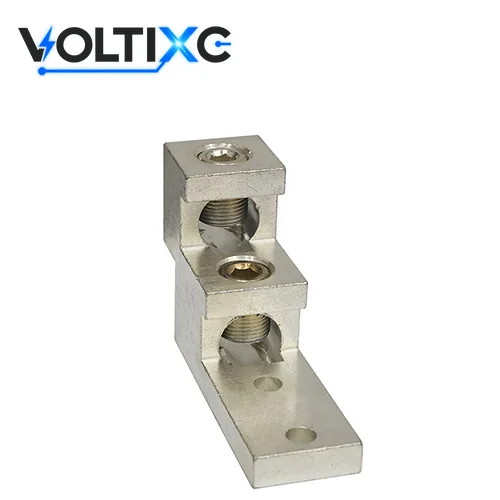
A double lug is a mechanical lug that takes more than one conductor on a single body, and a stacked mechanical lug places those conductor openings in levels above one mounting point. Each conductor gets its own opening and its own set screw, so the joint is clamped rather than crimped. Buyers also search for double mechanical lugs or a double lug connector. The term stackable lugs also covers crimped lugs built to sit on top of each other, which the route comparison further down explains.
A stacked mechanical lug holds its conductors in four steps:
The lug body bolts to a bus bar or equipment terminal through its mounting hole, so every conductor on the lug shares that one connection point.
Each stripped conductor goes into its own opening. The opening size sets the conductor range for that opening.
A set screw above each opening presses the conductor against the body. The clamping force comes from the screw, not from a compression crimp, so no crimp die is needed on site.
Each set screw is tightened to the torque the lug maker gives for that opening and conductor size.
Double lugs exist because connector instructions start from one conductor per connector. According to the ILSCO installation guide, the majority of connectors are suited to one conductor, and more than one conductor needs explicit permission from the manufacturer. When a panel needs two feeders or several branch conductors on one terminal position, forcing two wires under a single set screw sits outside that default. A lug with a separate opening for each conductor solves the problem at the part level. Whether the equipment accepts a stacked lug at that position is still a question for the equipment maker.
You choose double lugs from four inputs, taken in this order: the number of conductors at the terminal position, the size of each conductor, the mounting hole and the conductor metal. Settling the conductor count first means every later detail is sized against the right body.
Conductor count. Count every conductor that must land on the position, including any spare. SAM supplier titles name four- and six-conductor lugs, while the panelboard stack lug title gives no count, so state the number you need.
Size per opening. List each conductor in AWG or kcmil with its stranding. Openings in one stacked lug can differ in range, so a list that pairs each conductor with its size lets the lug be matched opening by opening.
Mounting hole. Give the stud or bolt size and the space around the terminal, including the height the stack may occupy under a panel cover or breaker shield.
Conductor metal. State copper, aluminum or both. Supplier descriptions list the SAM body as copper and aluminum without naming the conductor metals a part is marked for, so put the conductor metal on the enquiry.
Write sizes the way the table below shows, one line per conductor.
| Size term | What it means | Example of how it is written |
|---|---|---|
| AWG | American wire gauge; a smaller gauge number is a larger conductor | 14 AWG, 6 AWG, 2 AWG |
| kcmil | Thousands of circular mils; also written MCM | 250 kcmil |
| mm² | Metric cross-section | As printed on metric cable |
| Wire range | The smallest to largest conductor one opening takes | One range per opening |
For double lugs for breaker terminals, add the breaker model, its voltage rating and the breaker maker’s lug instructions to your list. The breaker maker decides which lug may sit on its terminal, and that answer comes before any SAM part is matched.
Send My Size ListThe SAM series covers stacked mechanical lugs that put two or more conductors on one mounting point, and its supplier titles name a panelboard stack lug, a quadruple-wire lug and a 6-conductor panelboard lug. Part numbers and sizes are not listed on this page; the table shows what the supplier titles and descriptions give for the series as a whole.
SAM is the only series on this page, so the table describes the series rather than single parts.
| Item | SAM series (supplier titles and descriptions) | Set on your quote |
|---|---|---|
| Conductors per lug | Panelboard stack lug; quadruple-wire (4) and 6-conductor versions | Number of openings, from your conductor list |
| Layout | Openings arranged in levels above one mounting point | Level count and stack height |
| Conductor range | Not given for the series | One range per opening, in AWG or kcmil |
| Mounting | Bolts to a bus bar, plate or equipment terminal | Stud or bolt size |
| Body and finish | Copper and aluminum, tin-plated | Copper or aluminum alloy body; plating on body and screws |
| Conductor metal | No dual rated (AL/CU) marking stated | The conductor metals the part is marked for |
| Set screws | One set screw per opening | Drive type, such as hex socket, and the torque for each opening |
| Electrical rating | Not stated in the supplier data | The rating your equipment label calls for |
| Part numbers and dimensions | Not listed on this page | Given on the quotation |
Source: SAM supplier product titles and descriptions; not individually re-tested.
Data note: For SAM parts, the part number, the conductor range of each opening, the stud size, body dimensions and set-screw torque are confirmed per order. Each of these is made to your conductor list, and the quotation states the values for the part you order.
Conductor metal is the next thing to pin down. According to Electrical Engineering Portal, ALCU lugs are suitable for either aluminum or copper conductors. The SAM supplier descriptions name a copper and aluminum body but no conductor marking, so ask which conductor metals your part is marked for. For the size scale, UL Standards & Engagement lists the aluminum conductor ranges in UL 486A-486B as 12 and 10 AWG solid, 12 AWG through 2,000 kcmil stranded, and 12 AWG through 1,000 kcmil stranded single-input wire. That range belongs to the standard; this page states no SAM rating against it.
Supplier descriptions for the SAM stacked mechanical lugs give a copper and aluminum body with tin plating. They do not say which metal a given part uses or how thick the plating is, so both are stated on the quote.
| Element | Given in the supplier descriptions | What you confirm on the quote |
|---|---|---|
| Body metal | Copper and aluminum | Copper or aluminum alloy for the part you order, plus the conductor marking |
| Surface finish | Tin-plated | Plating on the body and on the set screws |
| Size system | AWG | Conductor range per opening, in AWG or kcmil |
Source: SAM supplier product descriptions as listed; not individually re-tested.
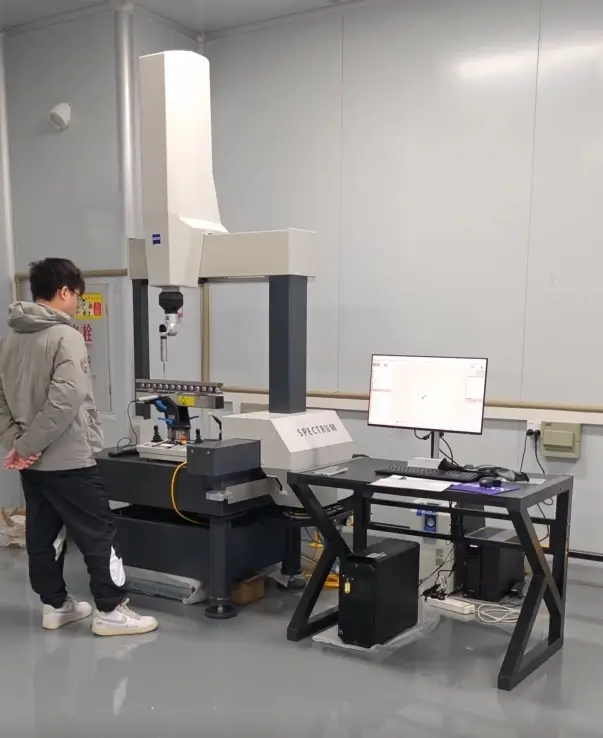
Tin plating covers the base metal of a lug body and slows surface oxidation in storage and in service. A mechanical lug body is formed first and then drilled and tapped for its set screws. At VoltixC, stamping presses, a CNC milling machine and a precision wire-cut EDM are visible in the factory photos further down this page. Which of them a SAM part passes through depends on the part. Custom bodies, finishes and markings follow your drawing.
Double lugs need the torque the lug maker gives for each opening and conductor size, and for SAM parts VoltixC supplies that value with the quote. A question installers raise is which torque figure governs, and a Mike Holt Forum thread on it quotes NEC 110.14(D), which refers to the value marked on the equipment or given in the manufacturer’s installation instructions. For a SAM lug, that puts the question to VoltixC: ask for the torque of every opening before the parts ship.
A figure copied from another maker’s torque chart does not carry over to a SAM opening. The value belongs to the lug, the screw drive and the conductor in that opening, so write one value per opening on the drawing or the installation sheet.
Install a stacked lug one opening at a time:
Strip each conductor to the depth of its opening without nicking the strands.
For aluminum conductors, follow the ILSCO installation guide: brush the conductor with a stainless steel wire brush to remove the oxide film, then apply oxide inhibitor compound.
Seat the conductor fully and tighten its set screw to the value given for that model, using a torque tool.
Move to the next opening and repeat, then recheck that each conductor in the assembly is held.
The guide to mechanical lug torque specs covers torque tables and drive types in more depth.
Choose double lugs when one terminal position must take two or more conductors and the equipment maker allows a stacked lug there. A single-conductor lug, a stacked compression lug or a lay-in lug is the better pick when the position, the conductor or the job points elsewhere.
| Route | How conductors land | Better pick when | Where to look |
|---|---|---|---|
| Stacked mechanical lugs (SAM, this page) | Double wire or multi-wire: each conductor in its own set-screw opening on one mounting point | One terminal position takes several conductors and you terminate on site without crimp dies | Series table above |
| Single-wire mechanical lugs | One conductor per lug under one set screw | Each conductor has its own terminal position, or the equipment allows one conductor per lug | aluminum and copper mechanical lugs |
| Stacked compression lugs | Crimped lugs whose pads sit on top of each other on a two-hole terminal spade | Your crew already crimps, the spade has NEMA two-hole pads and the spec may call for heat shrink over the barrels | compression vs mechanical lugs |
| Lay-in grounding lugs | A conductor laid into an open channel and held by a screw | A grounding or bonding conductor runs through several lugs without being cut | grounding lugs |
The compression route is a real alternative. According to CMC, offset heights and mounting pad dimensions allow its ATL lugs to stack on AHL lugs, connecting two conductors at each NEMA two-hole terminal-spade position. That is one maker’s design, cited to show how stacking works with crimped parts; VoltixC does not list a stacked compression lug.
Move from double lugs to single-conductor lugs when each conductor can have its own terminal. Single lugs keep every conductor on a separate screw and a separate mounting point, which also makes one conductor easier to replace later. Move to lay-in grounding lugs when the conductor is a grounding or bonding run that must continue past the lug, because a stacked lug ends each conductor in its own opening.
Move to crimped lugs when your specification calls for compression terminations. A double lug holds each conductor under a set screw, with no die on site, so a compression specification moves the order to crimped parts. Every route in the table sits under mechanical lugs, the parent range for this page, except the crimped option.
Double lugs fit panelboards, load centers and breaker line or load terminals where more than one conductor must share one position. They are a poor fit where the equipment allows one conductor per terminal or where a conductor must continue past the lug. The cards are built from the SAM titles and the sources cited, not from VoltixC job references.
Conditions: two of the SAM supplier titles name panelboards, the panelboard stack lug and the 6-conductor panelboard lug.
Needs: the panel maker’s accepted lug list for the position and the mounting stud size.
Watch: the height of the stack under the dead-front cover.
Conditions: according to Electrical Engineering Portal, circuit-breaker line and load connections can use cable lugs for single or multiconductors, specified for copper only or copper/aluminum conductors.
Needs: the breaker maker’s lug instructions and the conductor metal.
Watch: terminals marked for copper conductors only.
Conditions: a quadruple-wire or 6-conductor stacked lug lets one bus point feed several outgoing conductors.
Needs: the size of each outgoing conductor and the rating of the terminal it sits on.
Watch: mixed sizes in one lug, which need a matching range for each opening.
Conditions: each set screw bears directly on the strands of its conductor.
Question to ask: how much torque is too much for your strand class? A Mike Holt Forum participant says an over-torqued set screw can cut stranded wires and may lead to overheating if arcing occurs at the cuts. Ask for the torque value per opening and whether each opening suits your stranding before you order.
Conditions: the equipment instructions allow one conductor per terminal and offer no stacked-lug option.
Why: according to the ILSCO installation guide, the majority of connectors are suited to one conductor, and more than one needs explicit manufacturer permission.
Use instead: one lug per conductor, each on its own terminal.
Conditions: a grounding or bonding conductor has to continue past the connection point.
Why: a stacked mechanical lug ends each conductor inside its own opening.
Use instead: lay-in grounding lugs, which take a continuous conductor.
VoltixC is UL certified, a CE attestation under the Low Voltage Directive 2014/35/EU covers the full terminal range, SAM stacked lugs included, and RoHS results from SGS are on file. The documents are issued to Guangzhou FuTeXin Technology Co., Ltd., the company behind the VoltixC brand. The factory covers 1,200 m², with 25 staff and 135 production machines, and the company was founded in 2021.
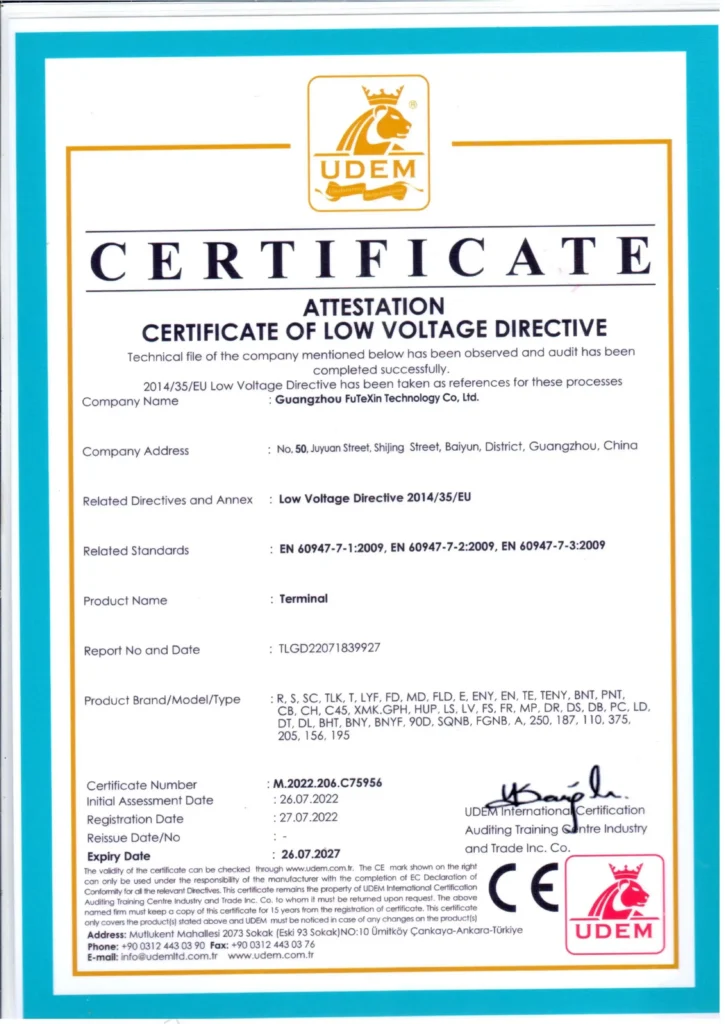
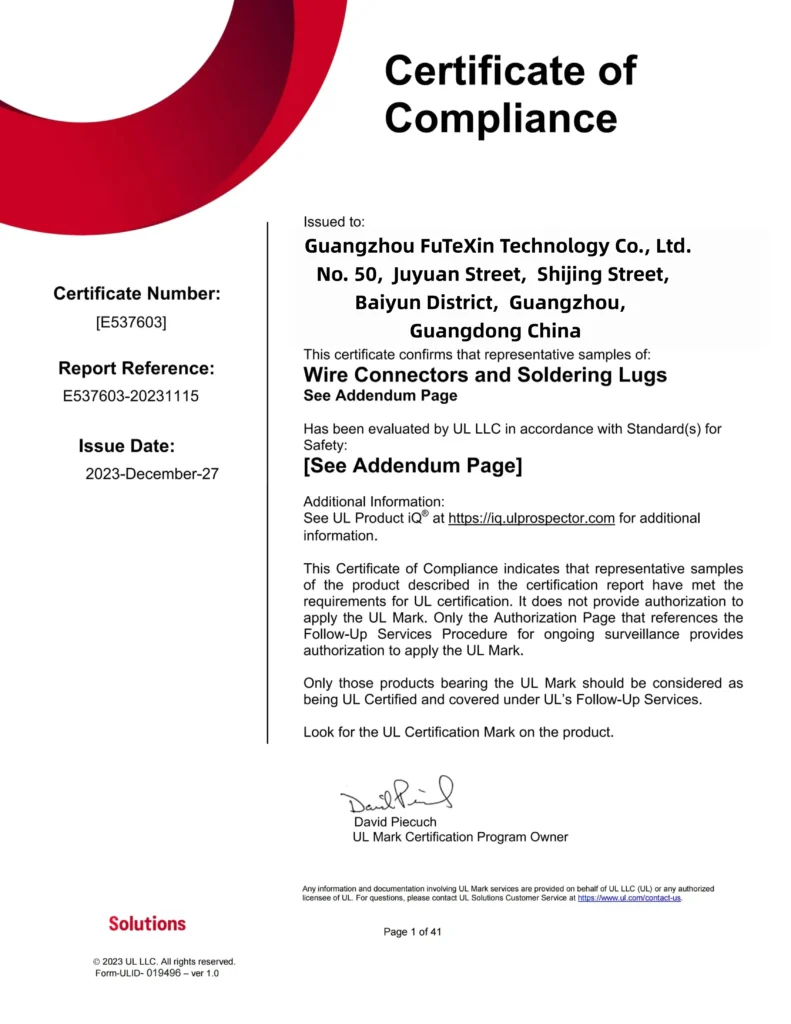
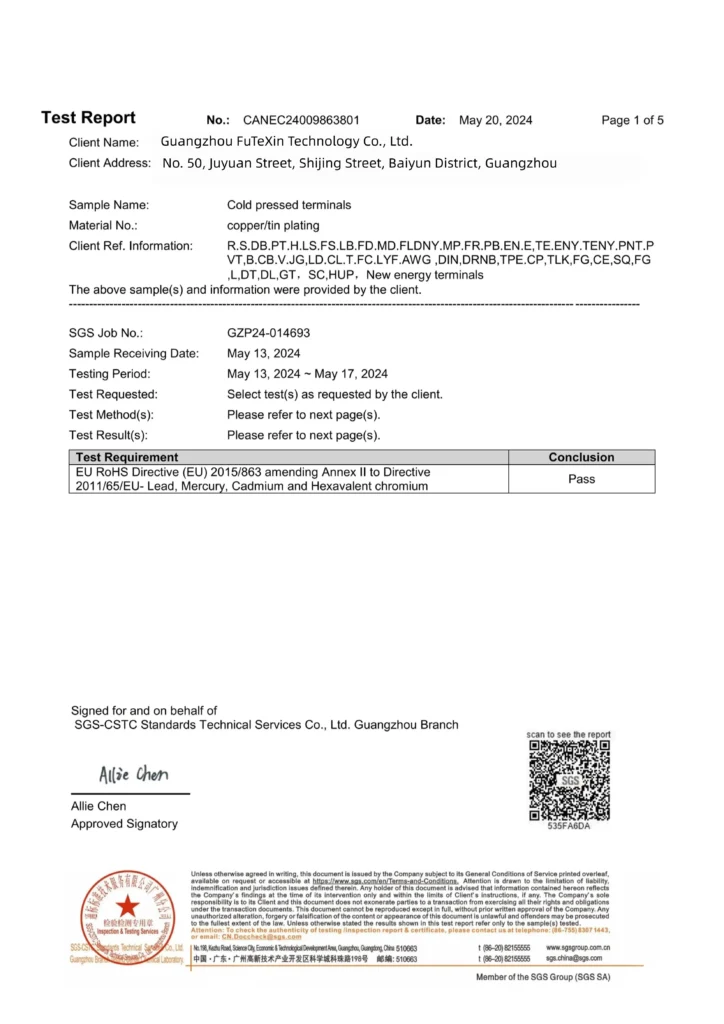
The CE attestation lists EN 60947-7-1, EN 60947-7-2 and EN 60947-7-3. RoHS test report available (SGS): lead, mercury, cadmium and hexavalent chromium were tested to EU RoHS limits on a tin-plated copper terminal sample. Certificate numbers and dates are not printed here; ask for copies with your quote.
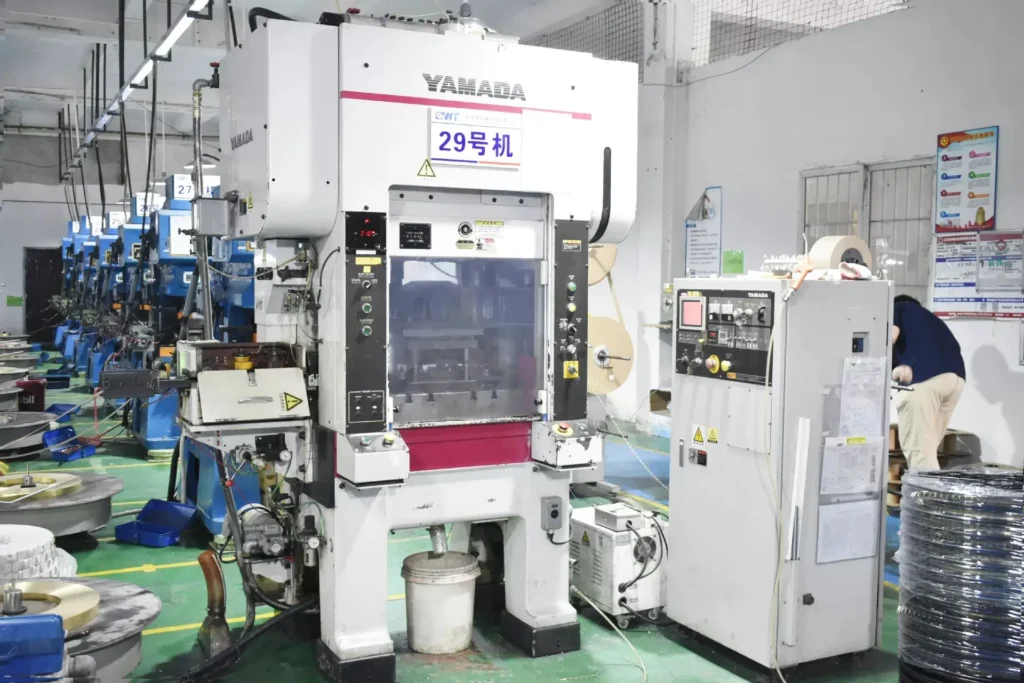
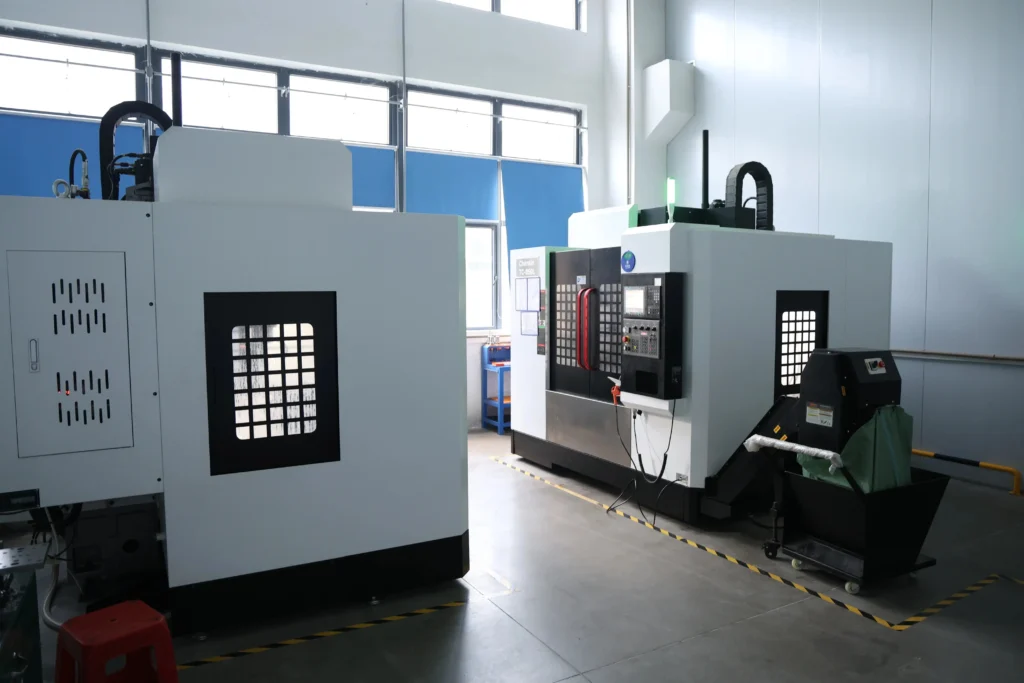
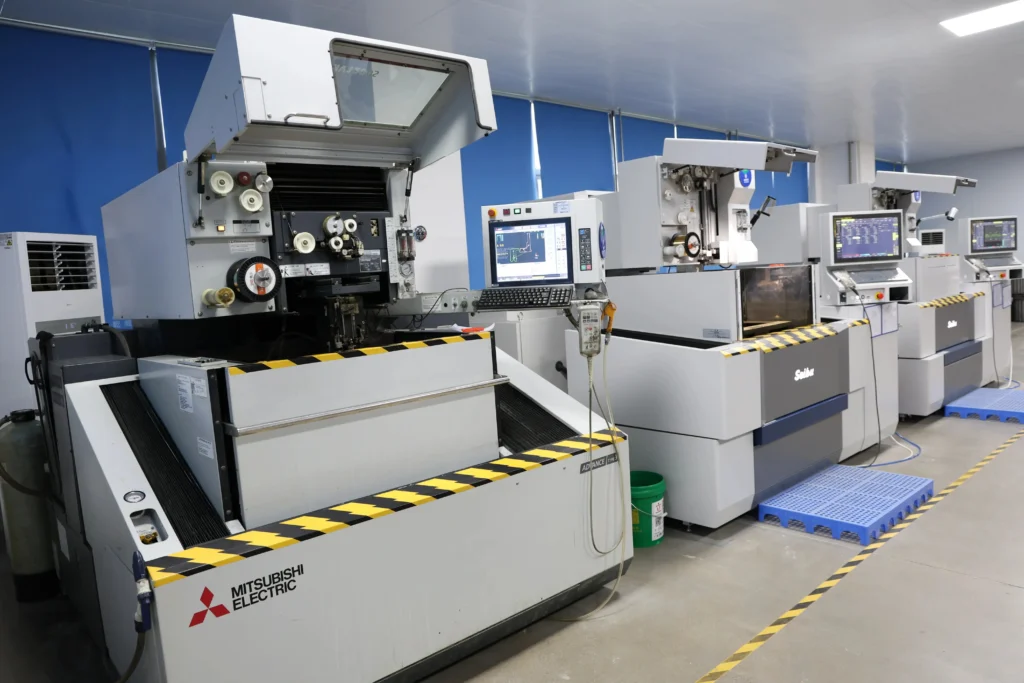
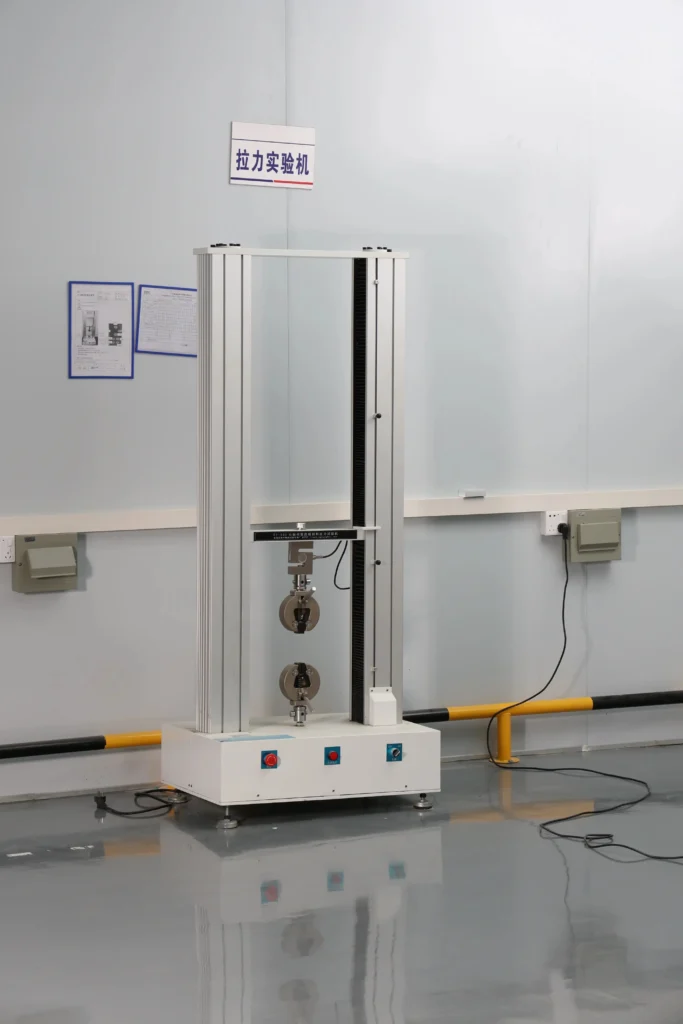

| Evidence | What it shows | What to ask for your SAM order |
|---|---|---|
| Compliance documents (CE, UL, RoHS) | CE attestation for the full range, UL certificate, SGS RoHS report | Copies with your quotation |
| Equipment photos | Machines present in the factory | Which checks apply to your part |
| Series data | Supplier titles and descriptions for the SAM series | Conductor range, stud size and torque for each opening |
| Sample | The part itself; fastest sampling is 7 days | Fit and stack height on your panel before production |
The price of a stacked mechanical lug order is set by the number of openings, the conductor range, the body metal and plating, the mounting hole, any drawing changes, the quantity and the packing. For SAM parts the opening count comes first, because it decides which body is quoted.
| Driver | Effect on cost | What you control |
|---|---|---|
| Number of openings | More openings mean a larger body and more set screws per part | The conductor count at each position |
| Conductor range per opening | Larger conductors need larger openings and screws | The size list, opening by opening |
| Body metal and plating | The metal sets the material cost; plating adds a process step | The conductor metal and any finish requirement |
| Mounting hole or stud size | A standard hole uses existing tooling; a special hole may not | The stud or bolt size on your terminal, or the old lug if the part is a replacement |
| Drawing changes or new tooling | Changes to the body can need new tooling | Whether a standard SAM body fits as it is |
| Quantity | Larger runs spread setup across more parts and lower the per-part rate | Order quantity and release schedule |
| Packing and labels | Custom cartons or labels add handling | Carton marks, labels and pack counts |
| Documents requested | Extra documents take preparation time | The documents your customer or inspector needs |
If a standard SAM body fits your terminal as it is, the quote stays on existing parts. A new stack height, a different opening size or an extra level moves the order to the drawing-change row.
MOQ, payment terms, lead time and warranty are confirmed per order by email or the enquiry form, and this page gives no figures for them. A SAM sample can be ready in as little as 7 days; with the part in hand you check fit and stack height on your panel before the production order.
A firm quotation needs the conductor list per position from the selection steps above, the mounting stud size, the quantity per position and the destination market. With those in hand, the quotation names the SAM part for each position and lists any field still open. Name, company, email and country fill the first four fields of the enquiry form; product line, conductor size and quantity follow, and the message field takes the position list. It has no upload field, so email drawings or panel photos to hugo@voltixconnect.com after you submit it.
Four VoltixC pages answer the side questions a double lug order raises: which lug family, which torque, which size and which grounding part. The mechanical lug range page lists the other set-screw lugs.
Compare crimped and set-screw lugs before you commit to a route: compression and mechanical lug comparison.
Torque tables and drive types for set-screw lugs: set-screw lug torque guide.
Look up conductor sizes in AWG, kcmil and mm² before you fill in your size list: cable lug size chart.
Grounding and bonding parts, including questions about two ground wires under one lug: grounding connector types.
Yes, with lugs built for it. A stacked mechanical lug such as a SAM model places its conductor openings in levels on one body, so the stack is part of the lug. Putting two separate single lugs on one stud is a different question, and the equipment maker’s instructions decide it. Crimped lugs can stack as well: according to CMC, offset heights and mounting pad dimensions allow its ATL lugs to stack on AHL lugs at each NEMA two-hole terminal-spade position.
The SAM supplier titles name a quadruple-wire mechanical lug and a 6-conductor panelboard lug, so four and six conductors are the counts on record. The panelboard stack lug title gives no count. The openings on your part follow your conductor list, and the quotation states how many there are and the range each one takes.
NEC 110.14(D) sends you to the torque marked on the equipment or in the manufacturer’s installation instructions, applied with a torque tool. SAM values come with the quotation, one value for each opening and its conductor size. A figure from another brand’s chart does not carry over, so keep the SAM value for each opening on the installation sheet. The torque guide for mechanical lugs goes further.
This page does not interpret the electrical code; the answer depends on the equipment, the lug and the code edition adopted where you work (in the USA, an edition of the NEC). According to the ILSCO installation guide, the majority of connectors are suited to one conductor, and more than one conductor needs explicit manufacturer permission. A lug with a separate opening for each conductor is a different case from two wires under one screw. Check the equipment instructions and ask your inspector.
The names overlap. Double barrel lugs describes a body with two conductor barrels, while stacked lug connectors describes openings arranged in levels. SAM parts are listed as stacked mechanical lugs, so ask for the arrangement drawing if the layout matters for your panel.
Supplier descriptions give the SAM body as copper and aluminum with tin plating, but they do not say which conductor metals each part is marked for, so ask before you specify a SAM lug for aluminum conductors. According to Electrical Engineering Portal, ALCU lugs are suitable for either aluminum or copper conductors. For aluminum conductors, the ILSCO installation guide calls for a stainless steel wire brush to remove the oxide film and an oxide inhibitor compound.
The series description comes from SAM supplier product titles and descriptions, and it is not individually re-tested. Part numbers, the conductor range per opening, dimensions and torque are not published here; the quotation gives them for the part you order.
Mechanical lugs clamp the conductor with a screw, and compression lugs are crimped onto it with a die. Double lugs such as the SAM parts are mechanical. A side-by-side guide to crimped and set-screw lugs compares the two in detail.
Yes. VoltixC works to customer drawings, including changes to the body, finish or marking, and a sample can be ready in 7 days at the fastest. Send drawings by email to hugo@voltixconnect.com, since the enquiry form has no upload field.
List each terminal position with its number of conductors, their sizes in AWG or kcmil, the conductor metal and the mounting stud, then add the quantity and any drawing. Each position then gets a proposed SAM model, or a note on what still has to be confirmed, such as torque or plating.
Ask a VoltixC Engineer