VOLTIXC / ENQUIRY
Request a Quote
Tell us what you need and we will review your enquiry.

SC, DT and GC tubular copper ring lugs for stud-mounted cable ends, listed by conductor size and made to order by VoltixC.
Fast answer: Copper ring terminals with an inspection hole let the installer see that the conductor has reached the barrel end before crimping. Three tubular series sit on this page: SC, listed with an inspection hole; DT, a tubular ring cable lug; and GC, with a sight hole and bell-mouth entry. Pick by conductor size and stud, then request a quote.
The supplier specification sheets list 189 part numbers from 22-16 AWG up to 1000/1250 kcmil, plus 800 and 1000 mm² in SC. Each part number has its own stud hole, barrel bore, length and tongue width, and every one is tin-plated copper.
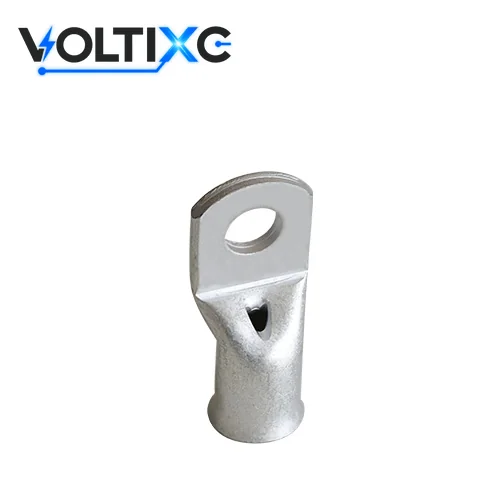
A copper ring terminal is a tubular barrel you crimp onto stranded cable, with a flat ring that bolts to a stud. The inspection hole is a small window in the barrel wall. A look through it before you crimp won’t make up for a tool and die that are wrong for the lug.
| Point | What the data says | Source |
|---|---|---|
| Inspection hole | The barrel has a chamfer for conductor insertion and an inspection hole to verify conductor positioning | Cembre, on its A-M cable lugs |
| Stripping | Insulation must be removed cleanly to the proper length, without nicking or breaking wire strands | TE Connectivity |
| Quality crimp | Correct tooling for the terminal and wire, the correct terminal for the application, properly prepared wire and a trained operator | TE Connectivity |
| Crimp profile | The right crimping profile depends on conductor material, cable-lug design and intended use | Klauke |
Source: manufacturer documents named in the Source column; each row is one maker’s example.
Strip the insulation back to the barrel depth and lay the bare end next to the barrel; both lengths should match.
Push the stripped copper wire in until you can see strand ends in the inspection hole (or sight hole); on GC parts the bell-mouth entry helps guide loose strands in. If the hole stays empty, the conductor stopped short and the crimp will close on fewer strands than the barrel was sized for.
Crimp only with a die made for that lug size. One that doesn’t suit the lug weakens the joint.
Bolt the ring to the stud with the hardware the equipment maker names, and make sure the ring hole isn’t oversized for that stud.
The SC, GC and DT sheets list 189 copper ring terminals between them: 89 SC, 58 GC and 42 DT part numbers. The two tables below give one row per conductor size for SC and GC, using the part whose stud hole is closest to 8.5 mm; the other holes for that size sit in the next column. DT follows in one short entry after them.
Every SC supplier title carries “with Inspection Hole”. SC runs from 16 AWG to 1000/1250 kcmil, and two more sizes, 800 and 1000 mm², are listed in mm² only.
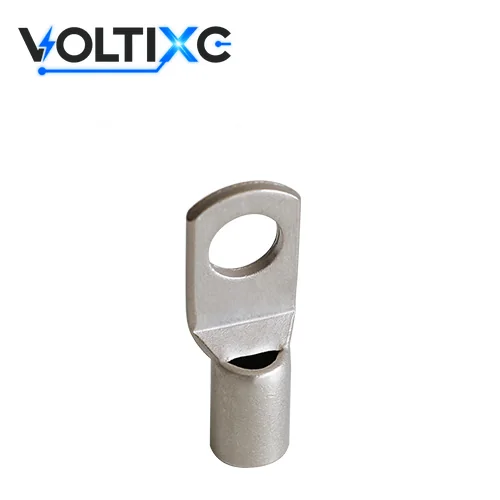
| SC part No. | AWG / kcmil* | mm² | Stud hole Ø (mm) | Other stud holes on the sheet (mm) | Barrel ID d (mm) | Length L (mm) | Tongue width (mm) |
|---|---|---|---|---|---|---|---|
| SC1.5-6 | 16 | 0.5-1.5 | 6.5 | 4.3, 5.2 | 1.9 | 18 | 9.2 |
| SC2.5-6 | 14 | 1.5-2.5 | 6.5 | 4.3, 5.2 | 2.6 | 20 | 9.2 |
| SC4-8 | 12 | 2.5-4.0 | 8.5 | 4.3, 5.2, 6.5 | 3.2 | 23.5 | 12 |
| SC6-8 | 12-10 | 4.0-6.0 | 8.5 | 5.2, 6.5, 10.3 | 3.7 | 24 | 12 |
| SC10-8 | 8 | 10 | 8.5 | 5.2, 6.5, 10.3 | 4.5 | 25 | 12 |
| SC16-8 | 6 | 16 | 8.5 | 6.5, 10.5 | 5.7 | 29.5 | 12.5 |
| SC25-8 | 4 | 25 | 8.5 | 6.5, 10.5, 13 | 7.2 | 33 | 13.1 |
| SC35-8 | 2 | 35 | 8.5 | 6.5, 10.5, 13 | 8.5 | 37 | 15.8 |
| SC50-8 | 1/0 | 50 | 8.5 | 6.5, 10.5, 13 | 9.8 | 42.5 | 18.1 |
| SC70-8 | 2/0 | 70 | 8.5 | 6.5, 10.5, 13, 15, 17 | 11.5 | 48.5 | 21 |
| SC part No. | AWG / kcmil* | mm² | Stud hole Ø (mm) | Other stud holes on the sheet (mm) | Barrel ID d (mm) | Length L (mm) | Tongue width (mm) |
|---|---|---|---|---|---|---|---|
| SC95-8 | 3/0 | 95 | 8.5 | 10.5, 13, 15, 17 | 13.7 | 57 | 24.8 |
| SC120-8 | 4/0 | 120 | 8.5 | 10.5, 13, 15, 17, 21 | 15 | 63 | 27.6 |
| SC150-8 | 250/300 | 150 | 8.5 | 10.5, 13, 15, 17, 21 | 16.7 | 70.5 | 30.5 |
| SC185-10 | 300/350 | 185 | 10.5 | 13, 15, 17, 21 | 19.5 | 77 | 34.5 |
| SC240-10 | 400/450 | 240 | 10.5 | 13, 15, 17, 19, 21 | 21 | 90.5 | 38 |
| SC300-10 | 500 | 300 | 10.5 | 13, 15, 17, 21 | 24 | 100 | 43.7 |
| SC400-10 | 600/750 | 400 | 10.5 | 13, 15, 17, 21 | 27 | 110 | 49.5 |
| SC500-10 | 800/1000 | 500 | 10.5 | 13, 15, 17, 21 | 30 | 123 | 55 |
| SC630-10 | 1000/1250 | 630 | 10.5 | 13, 15, 17, 21 | 35 | 135 | 65 |
| SC800-20 | — | 800 | 21 | none | 39 | 170 | 72 |
| SC1000-22 | — | 1000 | 23 | none | 44 | 200 | 81 |
Source: per supplier specification sheet (SC). * Sizes 250 and above are kcmil; — means the sheet gives mm² only.
GC pairs the sight hole with a flared bell-mouth entry. It covers 8 AWG to 300/350 kcmil, with up to seven stud holes for one conductor size.
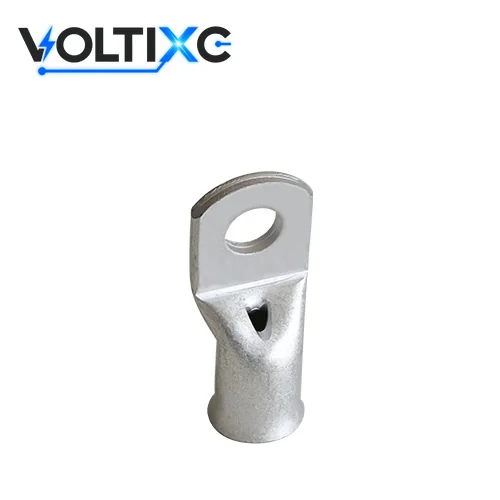
| GC part No. | AWG / kcmil* | mm² | Stud hole Ø (mm) | Other stud holes on the sheet (mm) | Barrel ID d (mm) | Length L (mm) | Tongue width (mm) |
|---|---|---|---|---|---|---|---|
| GC10-8 | 8 | 10 | 8.3 | 4.3, 5.3, 6.5, 10.3, 12.7 | 4.5 | 30 | 12.5 |
| GC16-8 | 6 | 16 | 8.3 | 5.3, 6.5, 10.3, 12.7 | 5.5 | 30.7 | 12.5 |
| GC25-8 | 4 | 25 | 8.3 | 5.3, 6.5, 10.3, 12.7, 14.8 | 6.7 | 32.2 | 13 |
| GC35-8 | 2 | 35 | 8.3 | 5.3, 6.5, 10.3, 12.7, 14.8, 16.5 | 8.6 | 37.6 | 16 |
| GC50-8 | 1/0 | 50 | 8.3 | 5.3, 6.5, 10.3, 12.7, 14.8, 16.5 | 9.5 | 41 | 18 |
| GC70-8 | 2/0 | 70 | 8.3 | 5.3, 6.3, 10.3, 12.7, 14.8, 16.5 | 12 | 52.4 | 22.5 |
| GC95-8 | 3/0 | 95 | 8.3 | 10.3, 12.7, 14.8, 16.8 | 13.4 | 54.7 | 25 |
| GC120-8 | 4/0 | 120 | 8.3 | 10.3, 12.7, 14.8, 16.5 | 15 | 60 | 27.5 |
| GC150-10 | 250/300 | 150 | 10.3 | 12.7, 14.8, 16.5, 20.9 | 16.5 | 67 | 30 |
| GC185-10 | 300/350 | 185 | 10.3 | 12.7, 14.8, 16.5, 20.9 | 19 | 73 | 34 |
Source: per supplier specification sheet (GC). * Sizes 250 and above are kcmil.
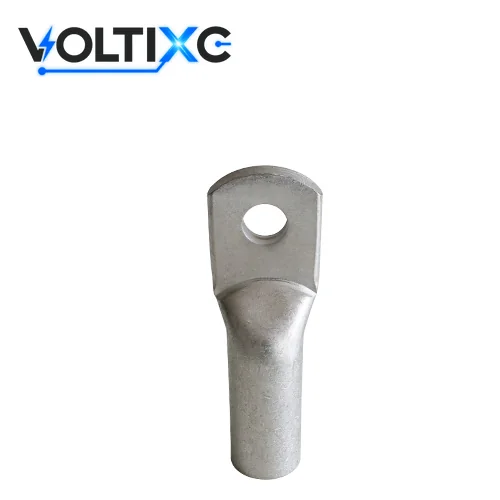
DT is a closed-ring tubular lug whose supplier titles do not mention an inspection hole. Its 42 part numbers run from DT1.5 (22-16 AWG, 5.2 mm hole) to DT630 (1000/1250 kcmil, 21 mm hole), with one to three stud holes per size.
189 part numbers in the full specification table — request the complete list with your quote. The values above are per supplier specification sheet and were not individually re-tested; barrel outside diameter, barrel length and box quantity are on the full sheet.
Find your conductor size in the matrix below, pick the series by the barrel entry you want, then pick the part number whose stud hole fits your bolt. Each row names the part numbers the sheets list for that size band.
| Your conductor or need | Series listed for it | Part numbers in that band |
|---|---|---|
| 22-16 AWG, small control lead | DT only | DT1.5 |
| 16 AWG to 12-10 AWG | SC and DT; GC starts at 8 AWG | SC1.5-4 to SC6-10; DT2.5-4 to DT6-8 |
| 8 AWG or 6 AWG, searched as an 8 gauge wire ring terminal, 8 gauge terminal ring or 6 gauge ring terminal | SC, GC and DT | SC10-5 to SC16-10; GC10-4 to GC16-12; DT10-6 to DT16-8 |
| 4 AWG to 4/0 AWG, visual check wanted before crimping | SC (inspection hole) or GC (sight hole with bell mouth); DT also lists these sizes | SC25-6 to SC120-20; GC25-5 to GC120-16 |
| 250/300 and 300/350 kcmil, loose or flexible strands | GC for the flared entry; SC and DT also list these sizes | GC150-10 to GC185-20; SC150-8 to SC185-20; DT150-12 to DT185-16 |
| 400/450 up to 1000/1250 kcmil | SC and DT | SC240-10 to SC630-20; DT240-12 to DT630 |
| 800 or 1000 mm² | SC only | SC800-20, SC1000-22 |
| Stud or bolt diameter | One hole per part number in every series | The dash number tracks the hole: SC50-8 has an 8.5 mm hole, SC50-10 a 10.5 mm hole |
Then settle the stud hole, the strand build and the crimp profile.
Stud hole. Give the bolt diameter and the space around the stud. Each part number has one hole size, so the quote picks the dash number whose hole clears your stud; the tables above show which holes each size offers.
Strand build. Buyers on Mike Holt’s Forum ask whether one nominal wire-size label can cover different coarse-strand and fine-strand cable constructions. Put the cable type or class next to the size.
Crimp profile. Klauke lists quad-point indent crimping as suitable for tubular cable lugs and connectors from 10 to 300 mm². If your crew already owns a tool and die family, name it and the quote can match the barrel to it.
Barrel ID d in the tables is the bore the conductor goes into, so compare it with the outside diameter of your stranded conductor when the size name alone leaves doubt.
Send My Size ListRead each listed size as the conductor the barrel is made for. Gauge numbers fall as the wire gets thicker, and after 1 AWG the scale continues as 1/0, 2/0, 3/0 and 4/0; buyers say “0 gauge” for 1/0. Entries from 250/300 upward are larger than 4/0. The supplier still labels them AWG, but North American buyers call these sizes out in kcmil, so send the kcmil value or the mm² value of your cable with the enquiry.
| Common names | Listed as | SC | GC | DT |
|---|---|---|---|---|
| 8 AWG ring terminal or 8 gauge ring terminal | 8 AWG, 10 mm² | SC10-5 to SC10-10 | GC10-4 to GC10-12 | DT10-6, DT10-8 |
| 6 AWG ring terminal | 6 AWG, 16 mm² | SC16-6 to SC16-10 | GC16-5 to GC16-12 | DT16-6, DT16-8 |
| 4 AWG ring terminal, 4 gauge ring terminal or 4 ga ring terminal | 4 AWG, 25 mm² | SC25-6 to SC25-12 | GC25-5 to GC25-14 | DT25-6 to DT25-10 |
| 2 AWG ring terminal or 2 gauge ring terminal | 2 AWG, 35 mm² | SC35-6 to SC35-12 | GC35-5 to GC35-16 | DT35-6 to DT35-10 |
| 1/0 AWG ring terminal, 1/0 ring terminal, 0 gauge ring terminal, 0 gauge terminal ring or 0 ga ring terminal | 1/0 AWG, 50 mm² | SC50-6 to SC50-12 | GC50-5 to GC50-16 | DT50-8, DT50-10 |
| 2/0 ring terminal | 2/0 AWG, 70 mm² | SC70-6 to SC70-16 | GC70-5 to GC70-16 | DT70-8 to DT70-12 |
| 4/0 ring terminal | 4/0 AWG, 120 mm² | SC120-8 to SC120-20 | GC120-8 to GC120-16 | DT120-12, DT120-16 |
A label with two values, such as 12-10 or 250/300, is the supplier’s name for that model. It does not say which conductor inside that span the barrel was drawn for. Ordering by name alone can leave a loose barrel on a small conductor or a barrel that will not accept a large one, so the exact conductor goes on the enquiry and the fit is confirmed per order.
Another page fits better when the job needs a feature these three series do not list: an insulating sleeve, a second bolt hole, an aluminum conductor, or a lug family bought mainly by battery gauge. The SC, DT and GC parts are uninsulated tubular lugs with one ring end, listed by conductor size. The table sets the switch points side by side.
| If the job needs | Go to | What changes compared with this page |
|---|---|---|
| A tin-plated copper tube lug in straight forms, no sight hole needed | tin-plated copper tube lugs | Five tube lug series on one page; the choice turns on plating and barrel form, not on a visual insertion check |
| Heavy-duty ends for battery and power cable, bought by gauge | battery lugs | One AWG heavy-duty series; you order by gauge and stud, and the sight hole is not the deciding feature |
| Two bolt holes on one palm, to stop the lug turning | two-hole lugs | The palm carries two holes at a set spacing, so hole spacing joins stud size on the enquiry |
| An aluminum conductor | one-hole compression lugs | Listed in copper and in aluminum; the lug and the crimp profile follow the conductor metal |
| An insulating sleeve on small-gauge wire | insulated ring terminals | Nylon or vinyl sleeves; the sleeve and its color join the conductor size on the enquiry |
| Several lug families in one order | cable lugs range | The parent page lists every copper lug family, so one size list can cover them all |
The aluminum switch point comes from how crimping works. According to Klauke, notch crimping is suitable only for processing copper, so an aluminum conductor needs a lug and a crimp profile picked for aluminum rather than a copper ring lug from this page. An insulated sleeve changes the part in the same way: SC, DT and GC rows list no insulation, so a job that needs a sleeve on a small wire belongs on the insulated page.
Stay on this page when the job has a stranded copper conductor from 22-16 up to 1000/1250 as listed, a single stud, and an installer who wants to see the conductor through the hole before the crimp. If only part of the list fits, send the whole list anyway; the quote can split sizes across pages.
Copper tubular ring terminals fit jobs where a stranded copper conductor ends on a single stud and the joint is made with a crimp tool. Below, the jobs are grouped by what each asks of the part. Each card starts from the lug shape and the joint it makes; no card reports a named customer job.
A battery ring terminal takes a stranded battery cable to a threaded stud or post, and the same battery ring terminal connector also lands on a disconnect switch or a bus bar in that circuit.
Needs: the cable size from the tables, for example 4, 2 or 1/0, plus the stud diameter so the right hole is picked.
Fails when: the ring hole is oversized for the stud, or the barrel is picked from a gauge name without checking the cable build.
If a nut loosens inside a panel, an open fork can slide off its stud; a closed ring can’t. According to Klauke, notch crimping is used in control-cabinet construction up to 1 kV.
Needs: the crimp profile your crew uses.
Fails when: the barrel and the die come from different systems.
Run a grounding lead from a frame, tray or enclosure to an earth stud and you have a single-conductor, single-stud joint, which is the SC, DT and GC form.
Needs: the conductor size and the stud or bolt diameter.
Fails when: the stud needs two bolts to stop rotation; that job belongs on the two-hole page.
SC and DT list sizes up to 1000/1250 kcmil, SC adds 800 and 1000 mm², and GC stops at 300/350.
Needs: the kcmil or mm² value of the cable and the crimp tool capacity on site.
Fails when: the listed label is read as a gauge number instead of the conductor area.
The SC, DT and GC rows don’t cover either job. Send small wiring that needs a sleeve to the insulated ring terminal page, and an aluminum conductor to the compression lug page. A bare barrel that only needs covering can take heat shrink tubing slid on after the crimp. OEM automotive wire harness terminal systems are outside this range; ask before you specify.
No SC, DT or GC sheet gives a voltage or temperature rating or a marking on the lug body. The SC sheet does print a maximum current for each size, from 18 A on SC1.5 to 1,065 A on SC630, as supplier data that was not re-tested. If your specification calls for a rated or marked lug, ask before you specify these series.
All 189 part numbers on the SC, GC and DT sheets list a copper terminal body with tin plating. None of the three sheets calls the metal pure copper; the series descriptions give the copper grade in their own words, as the table shows.
| Series | Terminal body on the sheet | Plating on the sheet | Supplier series description |
|---|---|---|---|
| SC | Copper, 89 of 89 part numbers | Tin | Copper of 99% purity; plating described as protection against the environment |
| DT | Copper, 42 of 42 part numbers | Tin | Red copper, Cu > 99%; electro-tin plating |
| GC | Copper, 58 of 58 part numbers | Tin | Tin-plated; supplier titles call the parts copper tube terminals |
The sheets list tin and VoltixC also supplies bare copper to the customer’s request; where corrosion is the concern, state the exposure on your enquiry, since the SC description presents its plating as protection against the environment. Tin plating also helps at the crimp. According to Cembre, its A-M cable lugs use high-purity electrolytic copper tube, annealed and electrolytically tin-plated to make crimping easier and to raise resistance to mechanical stress. According to BURNDY, its copper connectors are made from seamless high-conductivity electrolytic copper tubing with a heavy-duty wall. Both are single manufacturer examples, quoted to show which terms a drawing can name.
If your drawing names a copper grade, two references help. According to Copper.org, C11000 is electrolytic tough pitch wrought copper with a minimum copper content of 99.90 percent, silver counted as copper. For the tube itself, EN 13600 specifies composition, property requirements including electrical properties, and dimensional and form tolerances for seamless drawn copper tubes for electrical purposes. Naming a grade or a standard here is not a statement that these series are certified to it; the grade on your order is confirmed per order.
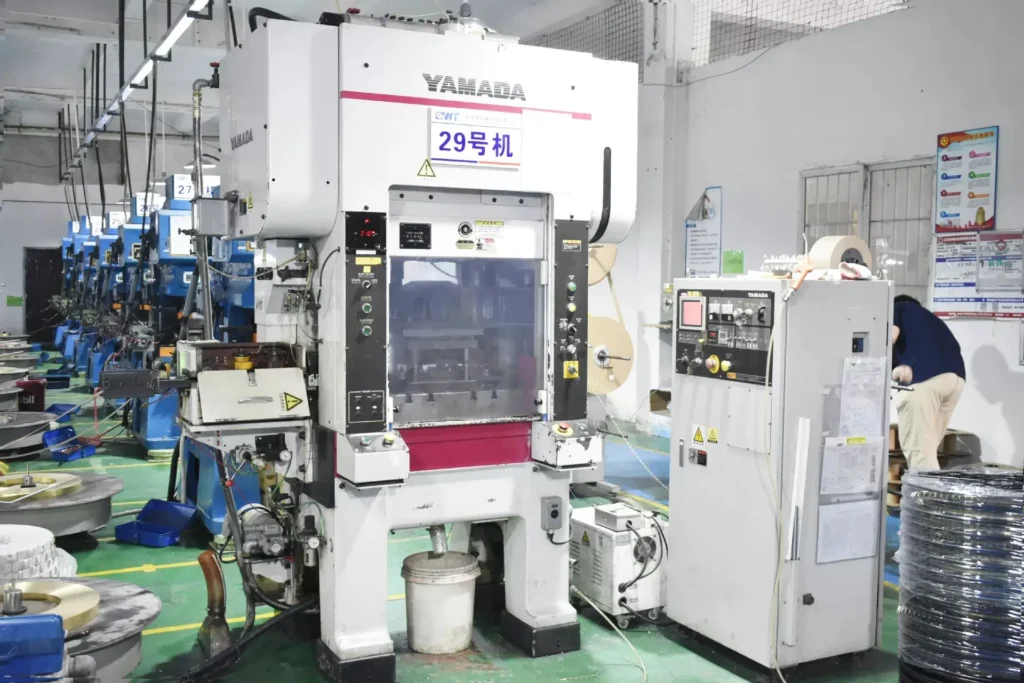
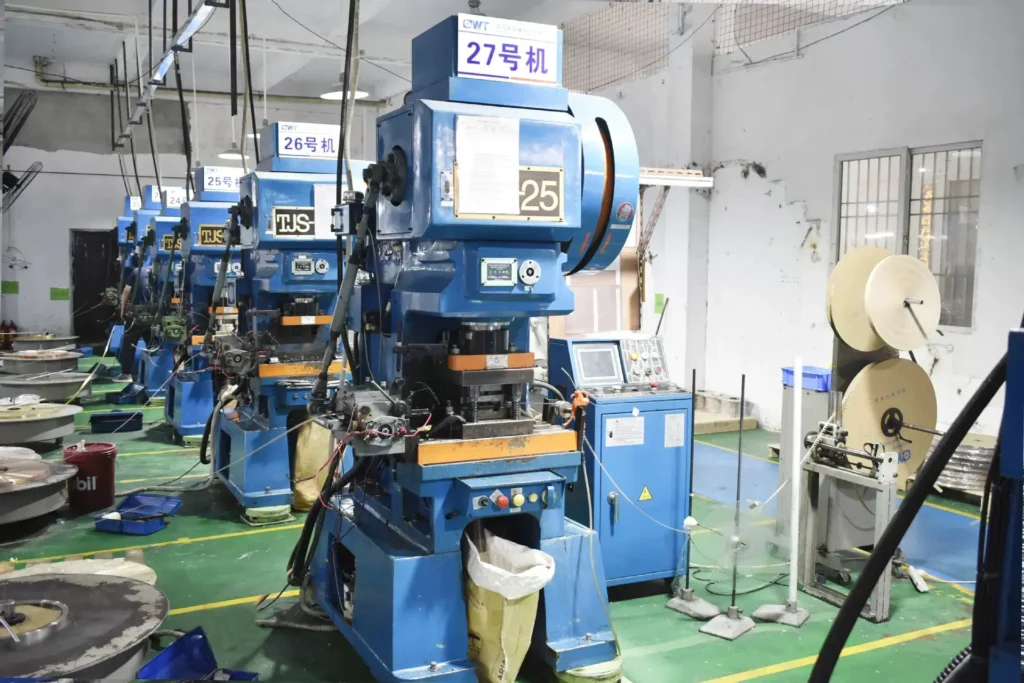
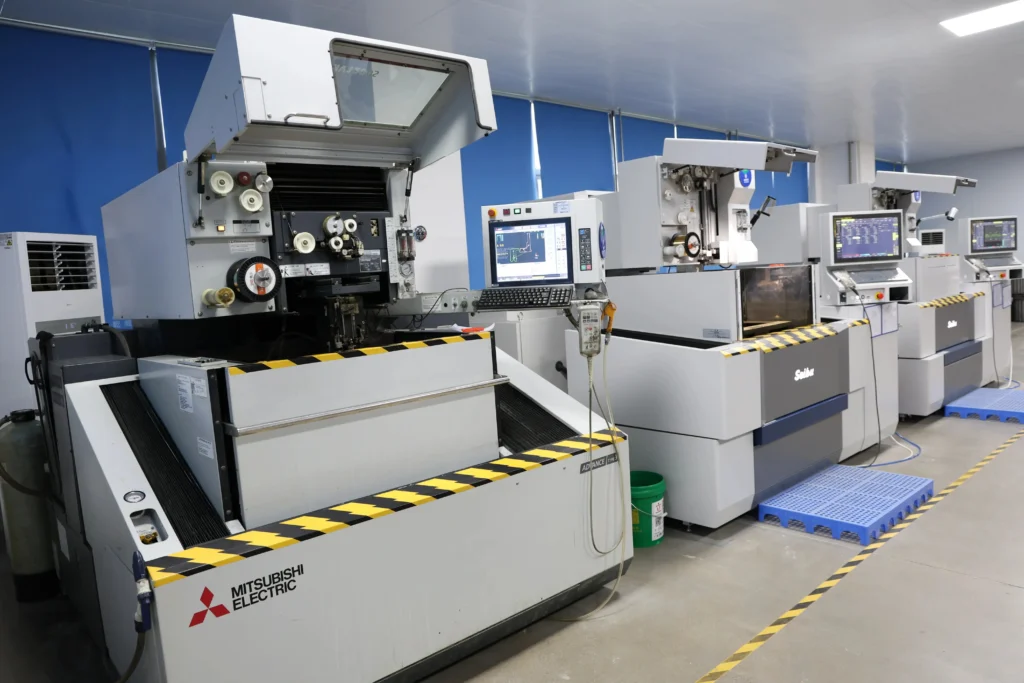
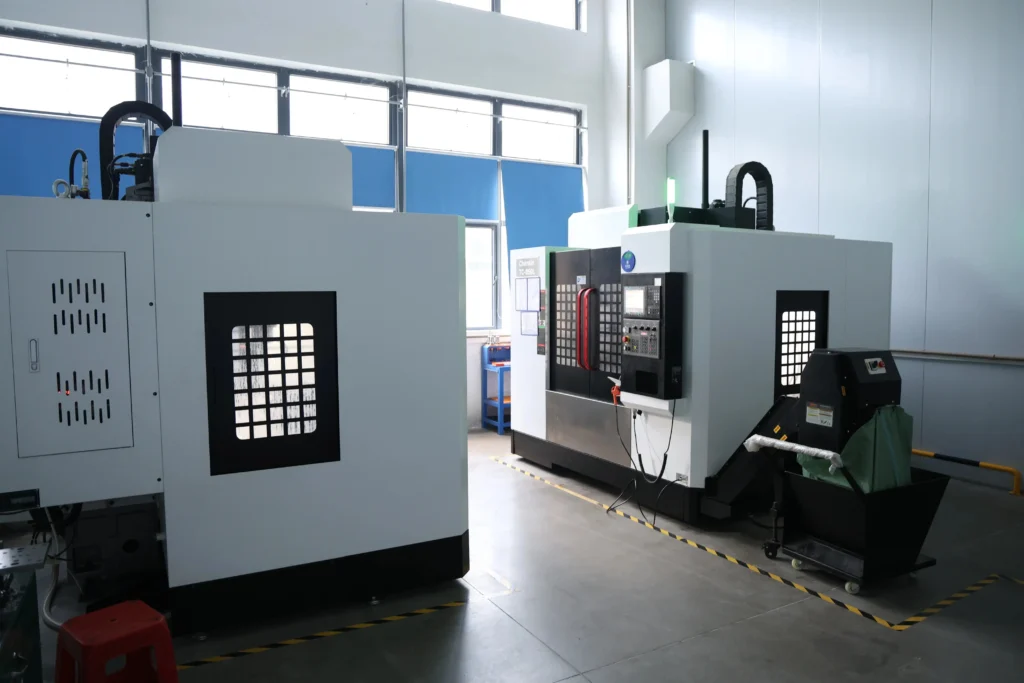
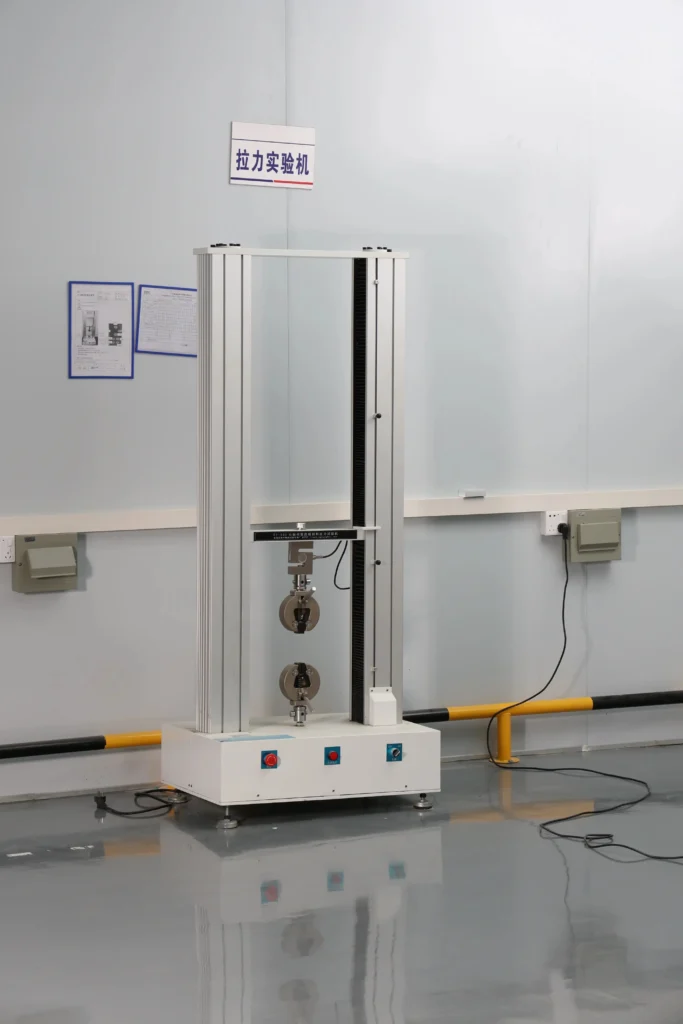
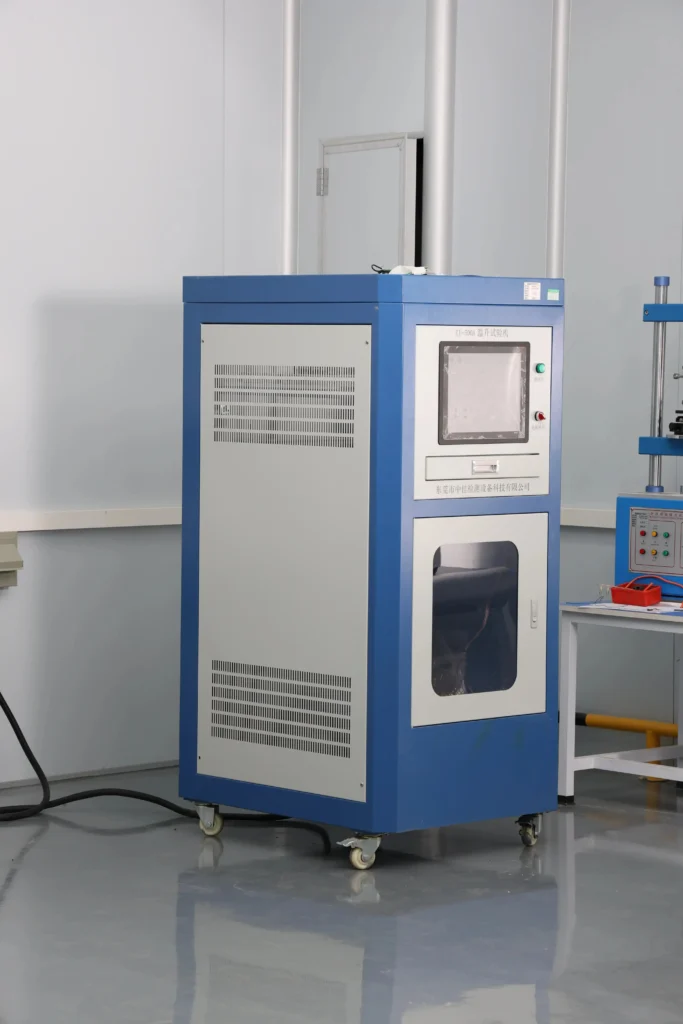
You can check the CE, UL and RoHS documents and photos of the machines in the VoltixC plant; document numbers and dates are not printed on this page. All three documents name Guangzhou FuTeXin Technology Co., Ltd., the company behind the VoltixC brand. VoltixC is an industry-and-trade company founded in 2021 with its own 1,200 m² plant in Guangzhou. The plant holds 135 production machines and a production team of 17.
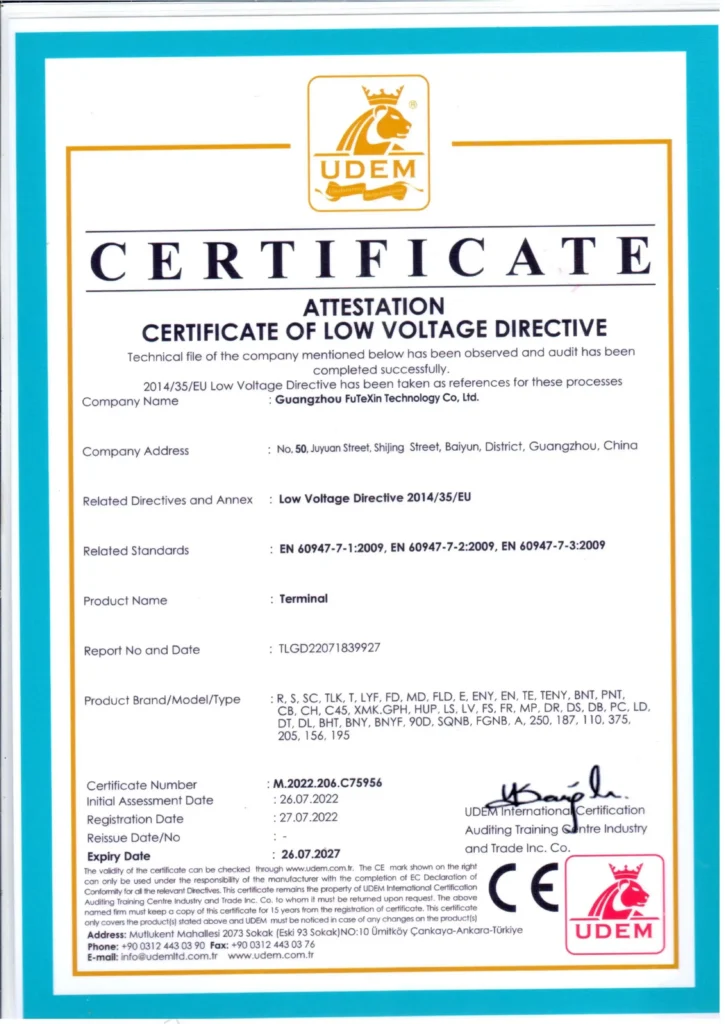
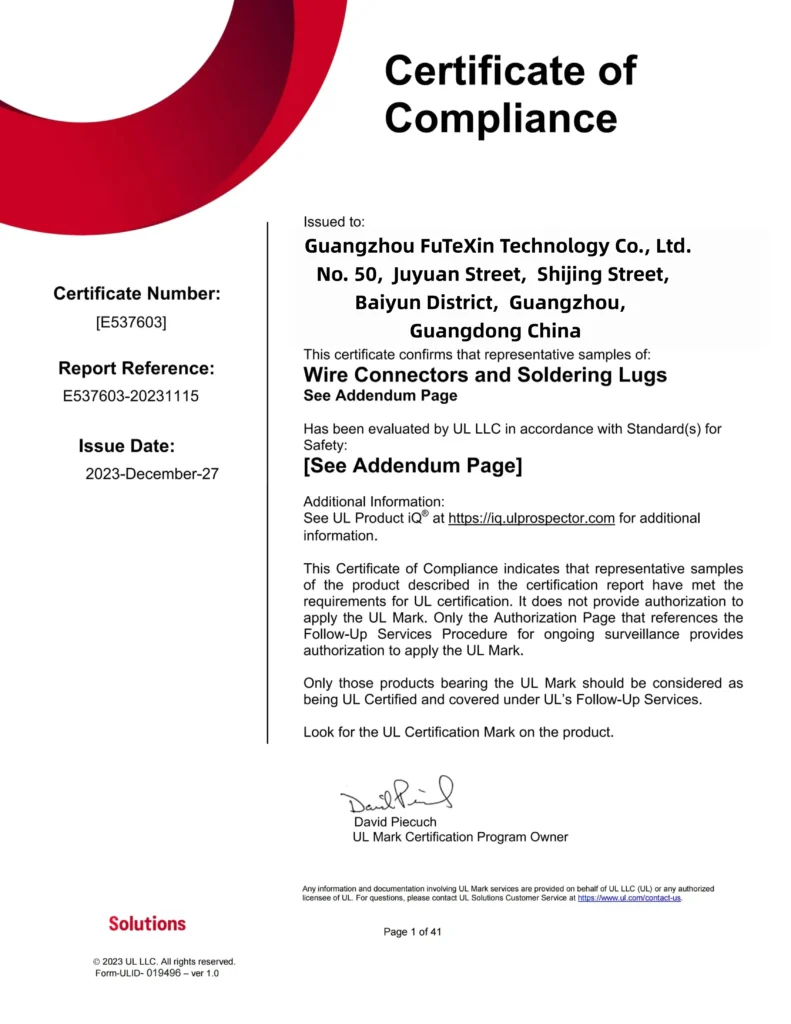
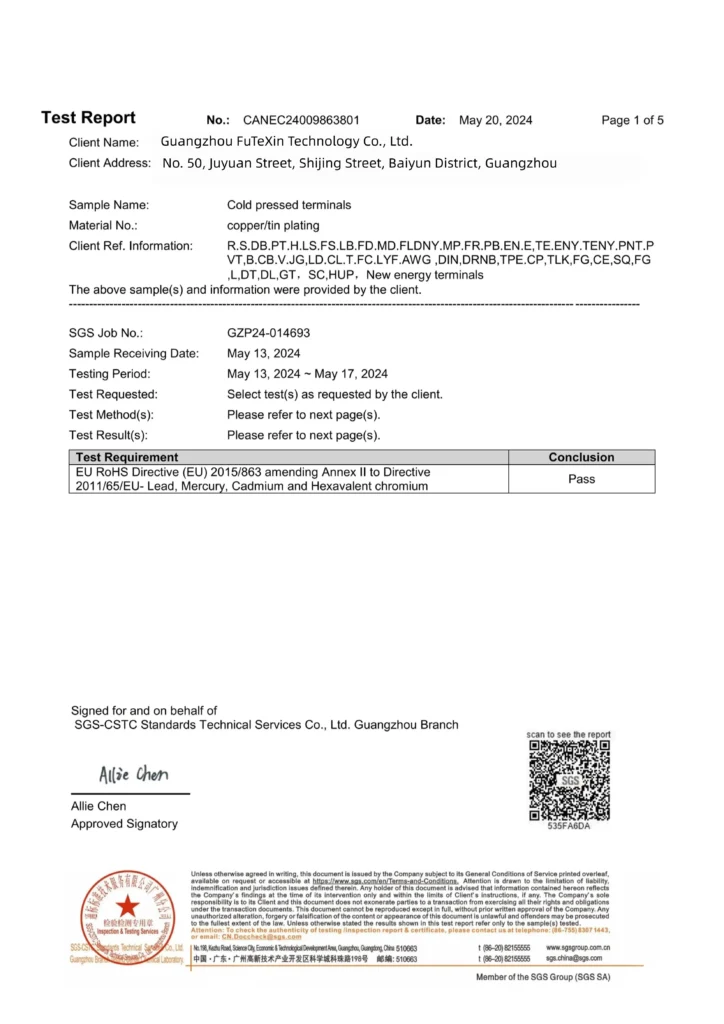
The photos below show machines standing in the plant. They show equipment, not results: no readings, sampling plans or test values from these machines are published here.


Before you place a ring terminal order with VoltixC or anyone else, check these four points:
Conductor size, series, finish, any change to the stud hole or palm, the quantity per size and the packing all move the cost of a copper ring terminal order. Below, each row names one driver, what it does to the cost and which choice on it is yours.
| Driver | Effect on cost | What you control |
|---|---|---|
| Conductor size | A bigger barrel takes more copper per piece, so 4/0 and 1000/1250 parts cost more than 8 or 16 | The exact conductor, so the barrel is not oversized |
| Series | SC, DT and GC use different barrel forms, and each form is priced on its own | Whether you need the inspection hole, the sight hole with bell mouth, or neither |
| Finish | Tin plating is an extra process over bare copper | Tinned or bare copper, named on the enquiry |
| Stud hole and palm | A ring hole or palm outside the supplier’s tooling may need new tooling | Stud diameter and palm width from your drawing |
| Quantity per size | A long list of sizes in small lots costs more to set up than a few sizes in larger lots | How the size list is grouped and which sizes can wait |
| Packing and labels | Plain bulk bags differ from per-size boxes or your own labels | Carton, bag count and label text |
| Documents | Extra paperwork per shipment takes time to prepare | Which certificate copies or declarations you need |
Samples come first when a size or finish is new to you; the fastest sampling time is 7 days. MOQ, lead time, warranty and payment terms are confirmed per order by email or the enquiry form, and no fixed figure for them is published here. Ask for the quote per model, so you can see how each size on the list affects the total and move sizes between orders if the first batch needs to shrink. Where two series list the same size, such as SC50 and GC50, ask for both on one quote; the gap shows what the barrel form does to the cost.
A tidy list keeps the quote simple. For each line, give the model from the tables or the conductor size, the finish, the stud diameter and the quantity. Put drawings in the email, since the web form has no upload field.
Size lookup, stud fit, lug dimensions and crimping each have a page of their own; open the one that matches the gap in your copper ring terminal size list.
Enter a conductor size in AWG, kcmil or mm² and read the matching lug size in the cable lug size chart, then copy that size onto your list.
Check which ring hole goes with which stud in the ring terminal stud size chart before you give a stud diameter.
Read what the barrel, palm and hole dimensions of a lug refer to in the cable lug dimensions guide.
Tool, die, stripping and pull checks are covered in the guide on how to crimp wires.
A bell-mouth barrel has a flared entry that guides the strands into the barrel, which makes loose or fine strands easier to insert. On this page only the GC series lists a bell mouth, in 58 part numbers from GC10-4 (8 AWG) to GC185-20 (300/350 kcmil). GC pairs the flare with a sight hole, so the installer can also see where the conductor ends.
The inspection hole lets the installer confirm that the conductor has gone all the way into the barrel before the crimp is made. According to Cembre, the inspection hole on its A-M lugs is there to verify conductor positioning. Here, every SC supplier title names the inspection hole and GC has a sight hole; for DT, the barrel form is confirmed per order.
SC lists 89 part numbers from 16 AWG to 1000/1250 kcmil, plus 800 and 1000 mm², with an inspection hole in every supplier title. DT lists 42 part numbers from 22-16 AWG to 1000/1250 kcmil as tubular ring cable lugs with a closed ring palm, and its titles do not mention an inspection hole. GC lists 58 part numbers from 8 AWG to 300/350 kcmil with a sight hole and a bell-mouth entry. All three sheets list a tin-plated copper body.
For a 4 gauge ring terminal, the sheets list SC25, GC25 and DT25 part numbers, all at 4 AWG and 25 mm². Choose SC25 for the inspection hole, GC25 for the sight hole with bell mouth, or DT25 for the tubular ring cable lug form, then pick the hole: SC25-8 has an 8.5 mm hole and GC25-10 a 10.3 mm hole. A 6 gauge wire ring terminal works the same way on the SC16, GC16 and DT16 part numbers.
The 1/0 ring terminal, also searched as a 0 gauge ring terminal, is listed as SC50, GC50 and DT50. For an 8 gauge ring terminal, or 8 ga ring terminal, the sheets list SC10, GC10 and DT10. Both sizes appear in all three series, so the choice comes down to the hole type you want and the stud on your equipment.
“Lug terminal” is the wider name for a cable end that bolts to equipment, and a ring terminal is one lug form with a closed round end. The parts on this page are copper ring lugs with a tubular barrel for crimping onto stranded cable. Two-hole, compression and other lug forms sit on the parent copper cable lugs page.
Strip to the barrel depth, push the conductor in until it shows in the hole, and crimp with the tool and die named for that lug size. TE Connectivity lists four conditions for a quality crimp: the right tooling, the right terminal, properly prepared wire and a trained operator. According to TE Connectivity, insulation must be removed to the proper length cleanly, without nicking or breaking wire strands. The crimping guide linked above walks through each step.
No. Every SC, DT and GC row leaves the insulation field empty, which makes each model a ring terminal non insulated at both the barrel and the ring. For a terminal with a nylon or vinyl sleeve built in, see the insulated ring terminal page.
No. The tables show values per supplier specification sheet, and the values were not individually re-tested. All 189 part numbers list a conductor size, stud hole, barrel bore, length and tongue width; the tables here show 31 of them, and the full list comes with your quote.
Send the size list by email or through the enquiry form. A complete line has five parts:
The form asks for name, company, email, country, product line, conductor size, quantity and a message. For drawing-based or relabelled parts, start a custom cable lugs quote and describe the change in the message.
Ask a VoltixC Engineer