VOLTIXC / ENQUIRY
Request a Quote
Tell us what you need and we will review your enquiry.

One DIN 46235 series: tube-type copper compression lugs for copper power cable, item codes DIN6 to DIN1000
Fast answer: DIN 46235 cable lugs are copper compression lugs of the type described in the German DIN 46235 standard, closed onto the cable with hexagonal crimp dies. VoltixC lists one DIN 46235 series: 18 cross-sections from DIN6 to DIN1000, in 68 part numbers by stud hole. Match your conductor size and bolt hole to a part number, then request a quotation.
The supplier specification sheet gives every part number a cross-section, from 4–6 mm² (12-10 AWG) at DIN6 to 1000 mm² at DIN1000, with the stud hole, barrel, length and a maximum current value. Every row lists a copper body with tin plating.
This page sits under the VoltixC cable lugs range and covers specification and buying. For what the standard itself sets out, read the DIN 46235 guide.
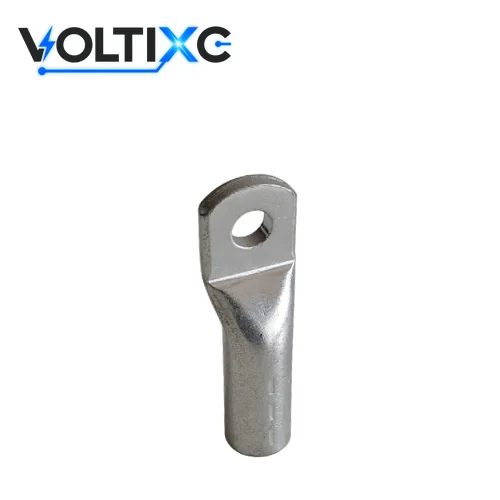
A DIN 46235 cable lug holds the conductor by cold compression: the copper barrel is pressed around the stripped strands until lug and conductor act as one piece. No solder or set screw is involved. The joint depends on three parts matching each other, namely the lug, the conductor and the die.
Prepare the conductor. Strip it to the barrel depth, and round a sector-shaped conductor before it goes in. According to Klauke, sector conductors should be pre-rounded with the corresponding tool before processing.
Insert the stripped conductor into the barrel to its full depth, so that no bare strands stay outside the compressed zone.
Compress the barrel with a hexagonal die. According to Klauke, the standard recommends hexagonal crimping dies according to DIN 48083-4 for processing compression cable lugs.
Check the code on the lug against the die before the next joint. According to Klauke, a code number provides clear tool assignment for the DIN cable lugs.
A mismatch costs time on site rather than money at the counter. A tubular barrel that is too large for the conductor leaves the strands loose after compression. A barrel that is too small will not take every strand, and each strand cut away to make it fit removes copper from the joint. A die that does not match the lug code leaves the hex profile under-pressed or over-pressed.
Each of these faults ends the same way: the installer cuts the cable back and fits a new lug. On large codes such as DIN400 to DIN1000, that also shortens a cable run that was measured to length. Getting the item code, conductor class and die code right on the enquiry avoids all three faults, and the next two sections list the codes and the checks.
VoltixC lists DIN 46235 copper lugs in 18 cross-sections, DIN6 to DIN1000, and in 68 part numbers once the stud-hole options are counted. The table below shows one part number per cross-section, with the values printed on the supplier specification sheet.
A part number reads as item code plus hole: DIN120-14 is the 120 mm² lug with a stud hole diameter of 15 mm. Each row shows the middle stud-hole option of its size, and the hole table in the next section lists the rest. AWG labels of 250 and above are kcmil. The sheet prints no AWG label or current for DIN800 and DIN1000, and prints 600 mm² against DIN625, so confirm that cross-section per order.
The DIN 46235 series is the only series on this page, so every part number below shares one lug form and one supplier sheet.
| Part No. | mm² | AWG / kcmil | Stud hole Ø (mm) | Barrel ID d (mm) | Barrel OD D (mm) | Length L (mm) | Max current (A) |
|---|---|---|---|---|---|---|---|
| DIN6-6 | 4.0-6.0 | 12-10 | 6.4 | 3.8 | 5.5 | 31.5 | 50 |
| DIN10-8 | 10.0 | 8 | 8.4 | 4.5 | 6 | 37 | 70 |
| DIN16-10 | 16.0 | 6 | 10.5 | 5.5 | 8.5 | 48 | 95 |
| DIN25-10 | 25.0 | 4 | 10.5 | 7 | 10 | 50 | 125 |
| DIN35-10 | 35.0 | 2 | 10.5 | 8.2 | 12.5 | 54 | 170 |
| DIN50-12 | 50.0 | 1/0 | 13 | 10 | 14.5 | 65 | 230 |
| DIN70-12 | 70.0 | 2/0 | 13 | 11.5 | 16.5 | 68 | 265 |
| DIN95-12 | 95.0 | 3/0 | 13 | 13.5 | 19 | 78 | 310 |
| Part No. | mm² | AWG / kcmil | Stud hole Ø (mm) | Barrel ID d (mm) | Barrel OD D (mm) | Length L (mm) | Max current (A) |
|---|---|---|---|---|---|---|---|
| DIN120-14 | 120.0 | 4/0 | 15 | 15.5 | 21 | 88 | 360 |
| DIN150-14 | 150.0 | 250/300 | 15 | 17 | 23.5 | 97 | 445 |
| DIN185-14 | 185.0 | 300/350 | 15 | 19 | 25.5 | 101 | 505 |
| DIN240-16 | 240.0 | 400/450 | 17 | 21.5 | 29 | 111 | 545 |
| DIN300-16 | 300.0 | 500 | 17 | 24.5 | 32 | 119 | 620 |
| DIN400-16 | 400.0 | 600/750 | 17 | 27.5 | 38.5 | 140 | 785 |
| DIN500-20 | 500.0 | 800/1000 | 21 | 31 | 42 | 150 | 935 |
| DIN625-20 | 600.0 | 1000/1250 | 21 | 34.5 | 44 | 160 | 1065 |
| DIN800-20 | 800.0 | — | 21 | 40 | 52 | 195 | — |
| DIN1000-20 | 1000.0 | — | 21 | 44 | 58 | 195 | — |
Source: per supplier specification sheet (DIN Copper Tube Terminal), values as printed, not individually re-tested; max current = the sheet’s maximum sustainable current value; — = no value printed.
68 part numbers in the full specification table — request the complete list with your quote. Palm width and barrel length are on the same sheet and come with that list; plating thickness is not printed, so it is confirmed per order. For what the standard itself says about dimensions and designation, the guide to the DIN 46235 standard is the place to start.
Request a QuoteChoose DIN 46235 cable lugs in this order: conductor size, conductor class, bolt hole, die code and plating. The table shows where each value comes from, so you can see which ones the page settles and which ones your enquiry has to carry.
| Check | What to confirm | Where the value comes from |
|---|---|---|
| Conductor size | Cross-section in mm², or the AWG / kcmil label of your cable | mm² and AWG / kcmil columns in the table above (per supplier specification sheet) |
| Conductor class and shape | Solid, stranded, fine-stranded or sector-shaped | Klauke application notes cited on this page; sector conductors are rounded first |
| Bolt hole | Stud diameter on the busbar, breaker or terminal pad | Stud hole Ø per part number; every option in the hole table below |
| Die code | Hexagonal die that matches the code on the lug | Code marking on the lug; die assignment confirmed per order |
| Plating | Tin-plated or bare copper | Tin on every row of the supplier sheet; bare copper is not on the current list, so ask before you specify |
The table leaves three errors open, and each has its own fix:
Use the AWG label when your cable is sized in AWG. On the supplier sheet, 4/0 AWG sits at DIN120 (120 mm²) and 1/0 AWG at DIN50 (50 mm²).
Measure the stud, not the old lug. According to Klauke, the DIN 46235 range covers connecting-bolt holes from M5 to M20. As one example, according to Phoenix Contact, its RBO 16 connection for DIN 46235 cable lugs specifies a 17 mm hole for an M16 bolt.
Send the cable datasheet when your conductor falls between two codes, instead of picking the larger lug. The datasheet shows the class and strand count, and those settle the code.
The suffix after the dash gives the stud hole: -10 is a 10.5 mm hole, -20 a 21 mm hole. The table shows which cross-sections the sheet offers with each hole.
| Part-number suffix | Stud hole Ø (mm) | Cross-sections with this hole (item code) |
|---|---|---|
| -5 | 5.3 | DIN6, DIN10 |
| -6 | 6.4 | DIN6, DIN10, DIN16, DIN25, DIN35 |
| -8 | 8.4 | DIN6, DIN10, DIN16, DIN25, DIN35, DIN50, DIN70, DIN95 |
| -10 | 10.5 | DIN10, DIN16, DIN25, DIN35, DIN50, DIN70, DIN95, DIN120, DIN150, DIN185 |
| -12 | 13 | DIN16, DIN25, DIN35, DIN50, DIN70, DIN95, DIN120, DIN150, DIN185, DIN240, DIN300 |
| -14 | 15 | DIN35, DIN50, DIN70, DIN95, DIN120, DIN150, DIN185, DIN240, DIN300, DIN400 |
| -16 | 17 | DIN70, DIN95, DIN120, DIN150, DIN185, DIN240, DIN300, DIN400, DIN500, DIN625, DIN800, DIN1000 |
| -20 | 21 | DIN120, DIN150, DIN185, DIN240, DIN300, DIN400, DIN500, DIN625, DIN800, DIN1000 |
Source: per supplier specification sheet, hole Ø as printed.
If you need to convert between AWG, kcmil and mm² before you write, the lug size chart tool does the lookup by conductor size.
Send My Size ListStay with DIN 46235 copper lugs when your drawing, cable and dies are metric and the conductor is copper. If the job is specified in AWG, another VoltixC page fits better. The same goes for a job that needs two bolts on one palm, or one with an aluminum conductor. The table sets the four routes side by side.
| Connector route | Sized by | Pick it when | Switch to it when |
|---|---|---|---|
| DIN 46235 copper compression cable lugs (this page) | Item code DIN6 to DIN1000 | The drawing names DIN codes and the site uses hexagonal dies | — |
| Battery lugs in AWG sizes | AWG gauge | The bill of materials is written in AWG for heavy-duty copper cable | Your parts list has AWG sizes and no DIN code anywhere |
| Two-hole lugs | Conductor size plus two bolt holes | The pad has two studs and the lug must not turn | Your terminal pad or busbar is drilled for two bolts |
| One-hole compression lugs | Conductor size, copper or aluminum body | One-hole compression on copper or aluminum conductor | The conductor is aluminum, which this copper page does not cover |
There is also a second DIN family to keep apart from DIN 46235. According to Weidmüller, its accessory range lists compression cable lugs to DIN 46235 and sheet-metal cable lugs to DIN 46234. This page covers the compression type only, so a sheet-metal lug on an old drawing needs a separate check before you quote it against a DIN 46235 code.
If you switch pages, the size you quote moves from a DIN item code to an AWG or kcmil label, and the die set on site changes with it, since the compression profile follows the lug family. The palm may go from one hole to two, and then the hole spacing has to be on the enquiry. You can’t see any of this from the part number alone, so name the family as well as the size when you enquire.
Some jobs mix both systems, for example a European panel fed with cable bought in AWG. Quote that lug by the cable you’ll actually install and take only the bolt hole from the drawing. If you’re unsure which family the drawing calls for, send it with the cable datasheet and ask which page and item code fit.
DIN 46235 copper compression cable lugs suit copper power cable that ends on a bolt and is compressed with hexagonal dies. They do not suit aluminum conductors, conductors under mechanical tension, or drawings that call for AWG lugs only. The cards below are inferred from how the lug is built and from the cited application notes, not taken from VoltixC order records.
The lug is suitable where a copper cable lands on a bolted busbar, breaker terminal or transformer pad and the drawing gives sizes in mm². It needs a matching bolt hole and a die of the right code. It fails when the palm is drilled for the wrong stud and someone opens the hole on site, which leaves less copper around the bolt.
According to Klauke, DIN 46235 compression cable lugs may be used for one, several, fine and super-fine stranded conductors. According to Klauke, the DIN compression cable lugs are for round conductors of EN 60228 classes 1, 2, 5 and 6. The condition is a full-depth insertion, because fine strands that stay outside the barrel are not held by the compression.
According to Klauke, the lugs are for non-tension copper cables such as DIN 48201-1 and pre-rounded multi-stranded sector conductors. A sector conductor goes into a round barrel only after it has been rounded, so the site needs the rounding tool as well as the die.
Distributors who hold spares for European-built panels can stock one series and cover the whole ladder from DIN6 to DIN1000, since all 18 item codes share one form. What matters here is labelling: each carton should carry the item code, so the installer can match it to the die code without opening the drawing.
This page lists copper lugs for copper cable only, and every row in the supplier table names copper as the terminal material. For an aluminum conductor, go to the compression lugs for copper and aluminum page.
Klauke’s note above limits these lugs to non-tension copper cables. An overhead span or any conductor that pulls on the joint is past that technical limit and needs a tension-rated fitting, which is outside this page.
When a US drawing calls every lug by AWG and names no DIN code, quoting a DIN item adds a translation step that the installer did not ask for. The AWG copper cable lugs page keeps the order in the same units as the drawing.
DIN 46235 copper lugs are made from copper tube, and the supplier specification sheet prints a copper body with tin plating for all 68 part numbers. In the table, each cited industry reference sits next to what the supplier lists, which shows what a quotation still has to confirm.
| Item | Industry reference (cited) | VoltixC supplier listing |
|---|---|---|
| Body material | According to Klauke, its DIN cable lugs are copper under EN 13600 and tin plated to protect against corrosion. | Copper on all 68 part numbers (spec sheet); series summary: red copper with Cu above 99% (13 of 18 product entries) |
| Tube standard | EN 13600 covers seamless drawn copper tubes for electrical purposes, including composition, electrical properties and tolerances. | Tube grade not stated; confirmed per order |
| Tube size range in that standard | Straight lengths from 3 mm to 450 mm outside diameter, walls from 0.3 mm to 10 mm. | Barrel ID 3.8 to 44 mm and OD 5.5 to 58 mm across the sheet |
| Copper designations | The EN 13600 overview names Cu-ETP/CW004A and Cu-OF/CW008A among its material designations. | Grade confirmed per order |
| Plating | According to Klauke, compression cable lugs are made from electrolyte copper and tin plated as standard for corrosion protection. | Tin on all 68 part numbers (spec sheet); plating thickness not printed |
Source: Klauke product notes; EN 13600 scope as given in the standard’s published overview; right column = per supplier specification sheet, values as printed, not individually re-tested.
The copper grade of the tube and the plating thickness are settled at the quotation. If your specification names a grade such as Cu-ETP, or a bare copper finish instead of tin, write it on the enquiry. VoltixC can manufacture to a stated grade, because materials are set to the buyer’s requirement; the grade then becomes part of the order rather than an assumption.
VoltixC holds CE covering the full terminal range, is UL certified, and has a RoHS test report available (SGS); the three documents are shown below. Certificate numbers and dates are not published here, and four questions for any supplier follow.
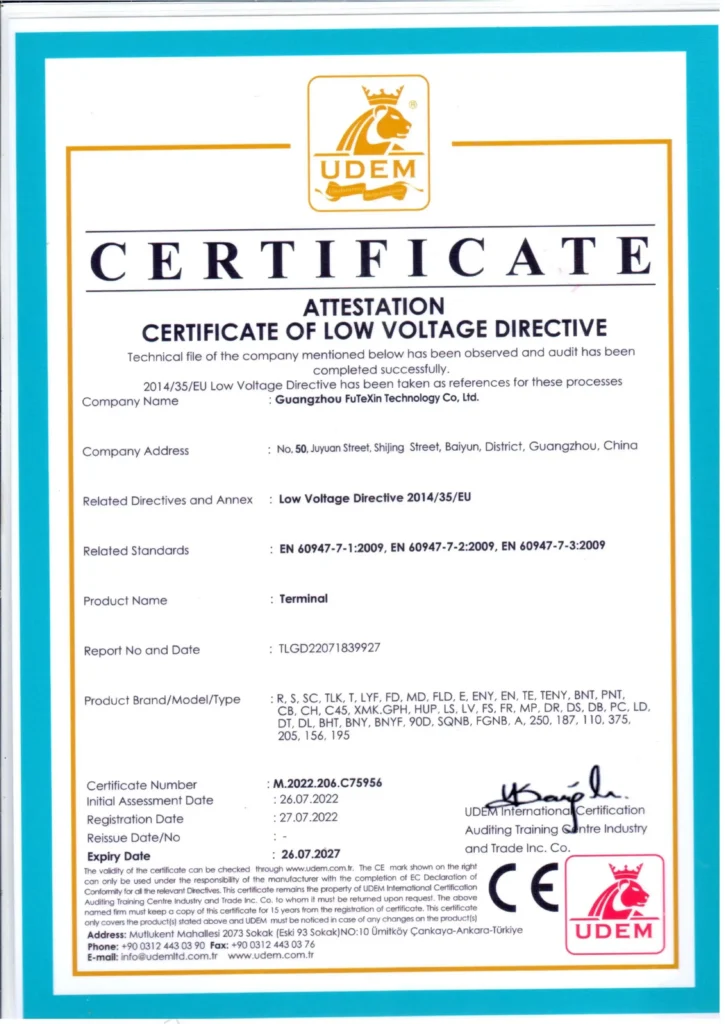
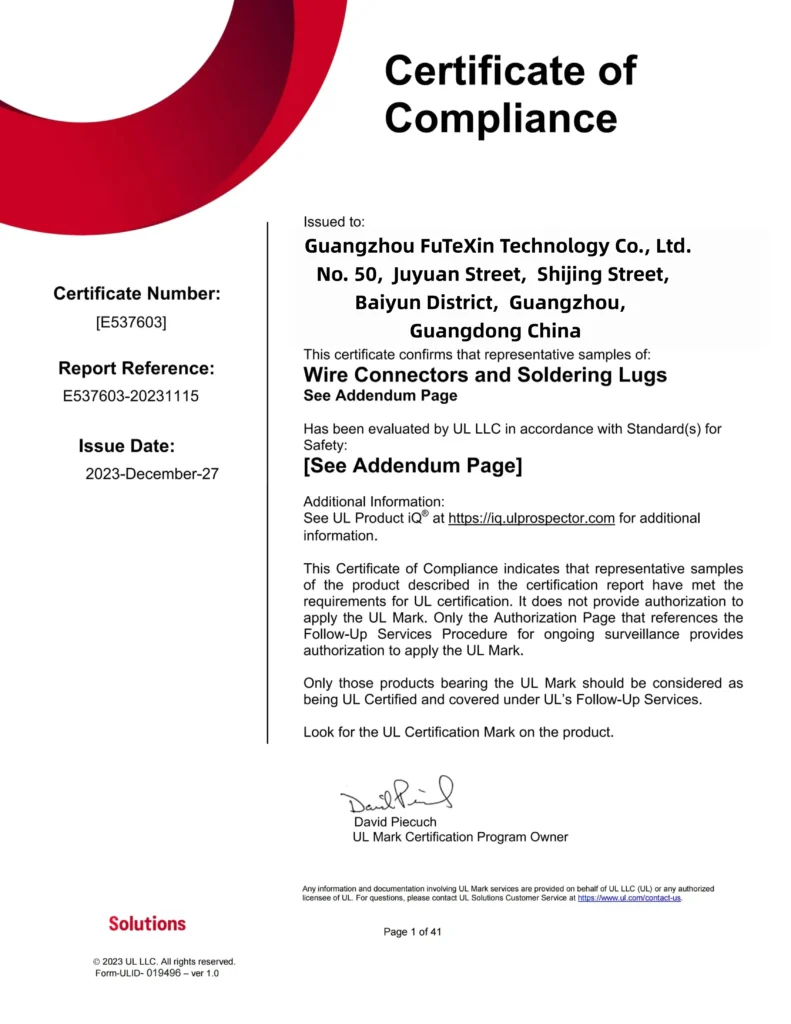
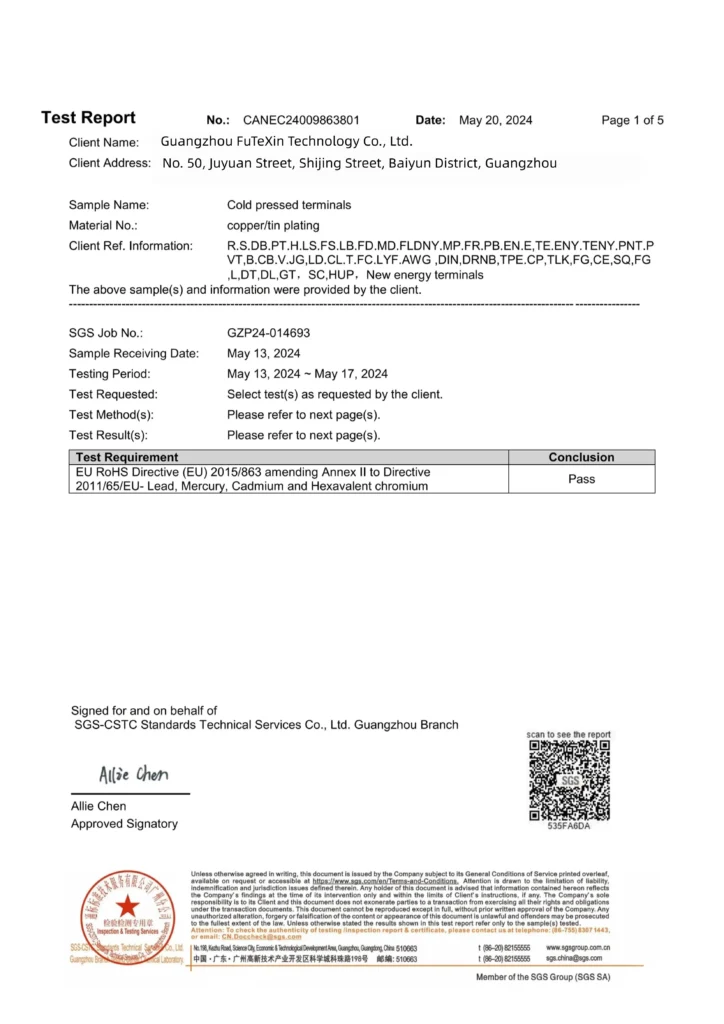
All three documents are issued to Guangzhou FuTeXin Technology Co., Ltd., the company behind the VoltixC brand. Naming DIN 46235 on this page is not a claim of certification. The supplier data holds no DIN test record for these item codes.
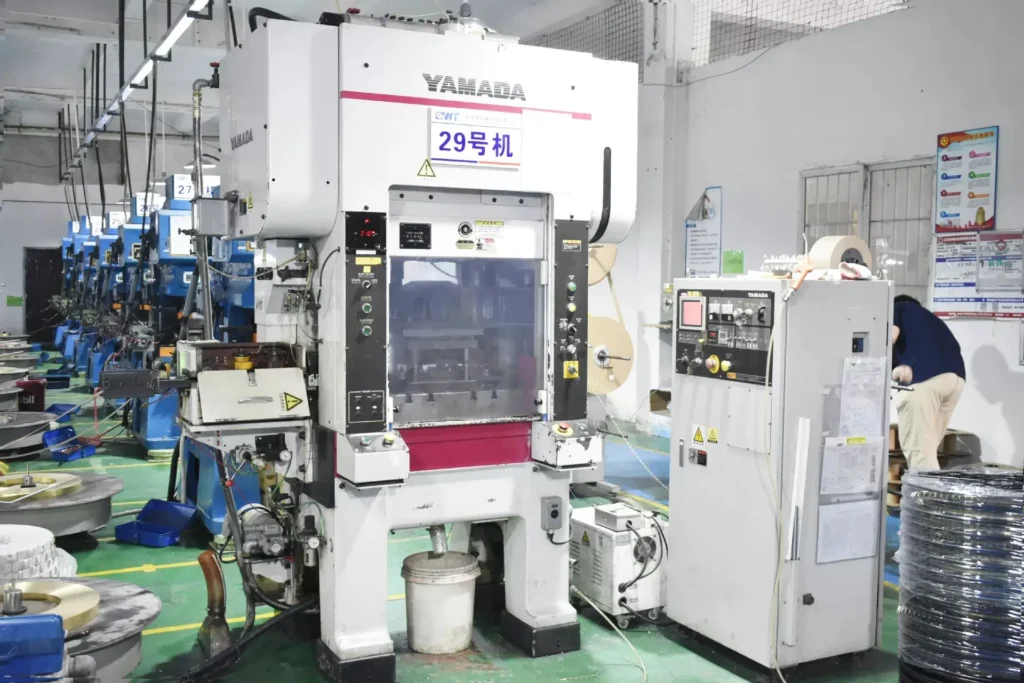
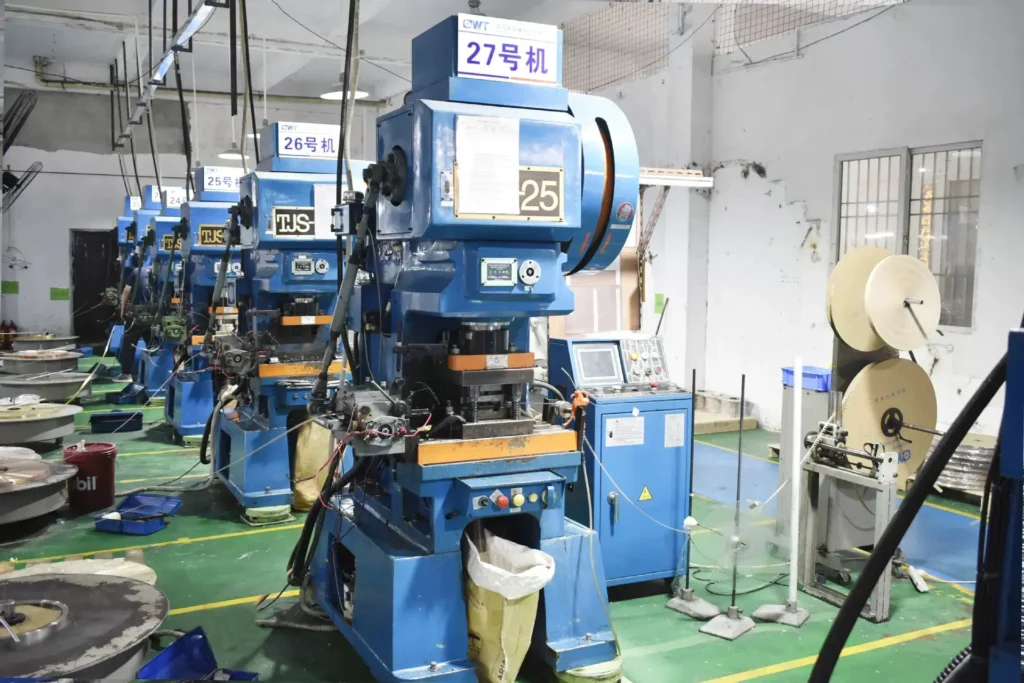
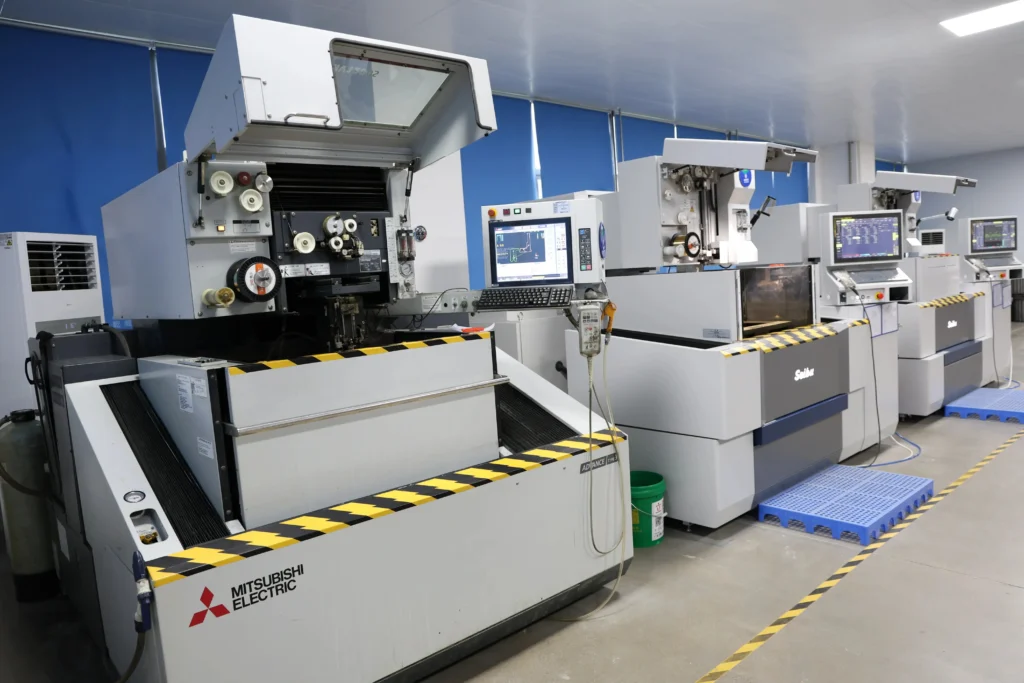
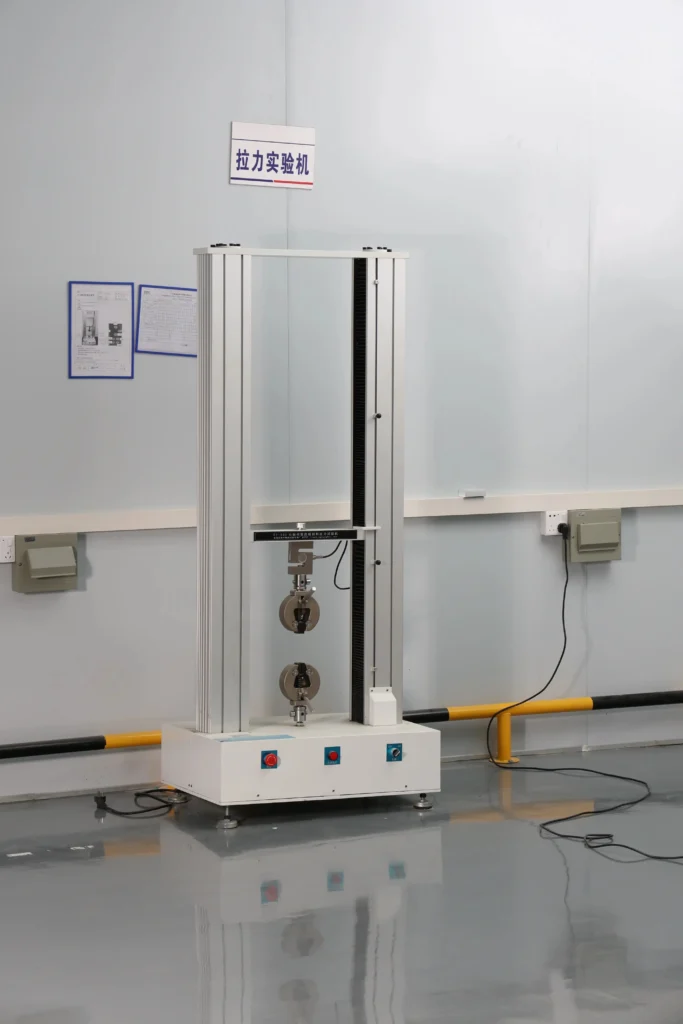
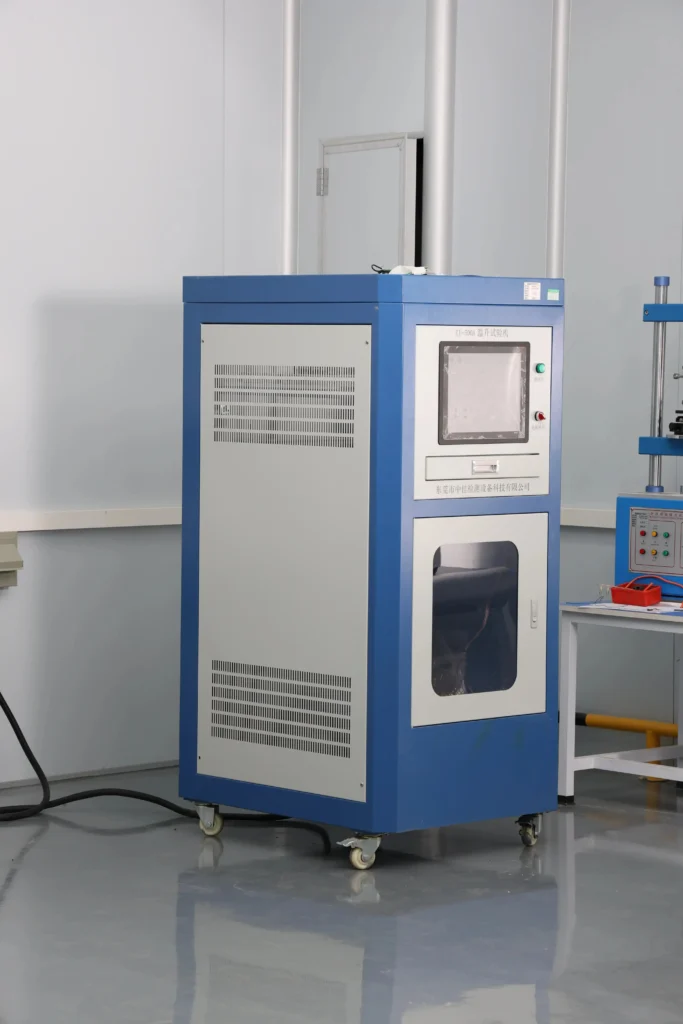
Equipment photos come from the VoltixC plant in Guangzhou, a 1,200 m² site with 135 production machines. They say nothing about how a given DIN 46235 order is made or checked.

Seven drivers set the price of a DIN 46235 cable lug order, and the biggest is the item code itself, because copper content rises with the cross-section. Each driver has a row below; the last column is the choice on your side.
| Driver | Effect on cost | What you control |
|---|---|---|
| Item code (cross-section) | A DIN1000 lug carries far more copper tube than a DIN6 lug | Quote exact part numbers, not a size range |
| Plating | Tin plating adds a process step over bare copper | State tin-plated or bare on the enquiry |
| Quantity per item code | A longer run of one code spreads setup over more pieces | Group your quantities by code |
| Number of codes in one order | A long list of codes in small lots adds changeovers | Combine call-offs where the schedule allows |
| Changes to hole, palm or length | A non-standard hole or palm may need new tooling, confirmed per order | Use the listed form unless the drawing requires otherwise |
| Marking and packing | Custom marking, bags or carton labels add handling | Say what each bag and carton must show |
| Documents | Extra paperwork per shipment adds preparation time | List the documents you need at the first enquiry |
MOQ, payment terms and lead time are confirmed per order by email or the enquiry form; this page doesn’t list them. For samples alone, 7 days is the fastest turnaround.
If your size list already follows the table above, you skip a round of questions. Write each line as part number, quantity and plating, and add the conductor class where the cable is fine-stranded or sector-shaped. Say whether the order is for stock or for a single project: the two can be split into different call-offs, which changes the quantity per code. Distributors can keep the same line format for a first stock order and for later top-ups, since every line already names the part number and plating.
Wholesale and distributor orders are handled the same way as project orders at the quotation stage. As the manufacturer, VoltixC sells through direct enquiry rather than an online cart, so prices are quoted per order and not shown on the site. To start, send the list through the DIN lug quote request form.
After your DIN 46235 size list arrives, the order passes through a reply, a quotation, a sample and production, and the sample is the last point where you can change an item code. Only the sample step has a published figure; the other dates are set per order.
Send the list. Give the item code or cross-section, conductor class, bolt hole and quantity per code, plus the destination country. Use the enquiry form or write to hugo@voltixconnect.com; drawings and cable photos go by email, since the form has no upload field.
Get the reply. It either maps each line to an item code or asks for the field that is missing.
Agree the quotation. Price, MOQ, payment and lead time are confirmed per order in this exchange, along with plating and marking.
Approve a sample. The fastest sample turnaround is 7 days, and the sample is where you check the bolt hole and the fit with your die.
Production and packing. Packing method and shipping terms are confirmed per order, and each carton can carry the item code for the installer.
The enquiry form has fields for name, company, email, country, product line, conductor size, quantity and a message. Put the full size list in the message field, one line per item code, and send any drawing by email with the same subject line.
You can settle the conductor size and the lug family on your own before the enquiry, using the four pages below; the copper cable lugs overview covers the other families. Carry the result into your size list as an item code or a cross-section.
The cable lug size chart finds listed lugs by AWG, kcmil or mm² and by hole count, which helps when your cable is sized in one system and your drawing in another.
The DIN 46235 guide covers the standard itself and how to read it, and leaves the item codes and buying detail to this page.
The cable lug dimensions guide walks through the measurements on a lug drawing, from barrel to palm and hole.
The cable lug type guide sets out the lug forms side by side, for when you are still deciding between a DIN compression lug and another family.
DIN 46235 is a German standard for compression cable lugs. According to Klauke, DIN 46235 defines the applications, dimensions and designation of compression cable lugs. The DIN 46235 guide covers the standard in more depth; this page stays with the listed item codes and buying.
The supplier sheet lists 18 cross-sections: DIN6, DIN10, DIN16, DIN25, DIN35, DIN50, DIN70, DIN95, DIN120, DIN150, DIN185, DIN240, DIN300, DIN400, DIN500, DIN625, DIN800 and DIN1000. They run from 4–6 mm² (12-10 AWG) at DIN6 to 1000 mm² at DIN1000, and each comes in two to five stud-hole versions, 68 part numbers in all. DIN625 is printed against 600 mm², so confirm that one per order.
Use a hexagonal die that matches the code on the lug. According to Klauke, the standard recommends hexagonal crimping dies according to DIN 48083-4 for processing compression cable lugs. The die code for each VoltixC item code is confirmed per order, so name the dies your site already holds on the enquiry.
On the supplier sheet, DIN120 (120 mm²) carries the 4/0 AWG label, DIN95 carries 3/0 and DIN70 carries 2/0. DIN120 comes with stud holes from 10.5 to 21 mm. Check the conductor class of your cable as well and name it on the enquiry, because the size label alone does not say whether the cable is fine-stranded.
The supplier sheet prints a copper body with tin plating for every part number. A bare copper finish is not on the current list; ask before you specify. As one reference point, according to Klauke, compression cable lugs are made from electrolyte copper and are tin plated as standard for corrosion protection.
According to Klauke, the DIN 46235 range covers connecting-bolt holes from M5 to M20. The VoltixC supplier sheet prints a hole for each part number, from 5.3 mm on DIN6-5 and DIN10-5 up to 21 mm on the -20 versions from DIN120 upward.
Conductor class is not stated in the supplier data; ask before you specify. As one example, Klauke lists its DIN compression cable lugs for round conductors of EN 60228 classes 1, 2, 5 and 6. Push the conductor in to full depth so that no fine strands stay outside the barrel.
No. This page lists copper lugs for copper cable, and every row in the supplier table names copper as the terminal material. For an aluminum conductor, use the one-hole compression lugs page, which covers copper and aluminum bodies.
No. The two numbers name different lug families. According to Weidmüller, its accessory range lists compression cable lugs to DIN 46235 and sheet-metal cable lugs to DIN 46234. This page covers the DIN 46235 compression type only, so check which number your drawing or old part carries before you quote an item code from the table.
No. The part numbers and dimensions come from the supplier specification sheet and were not individually re-tested. As one reference point, according to Klauke, its listed DIN cable lugs cover 10–800 mm² with IEC testing. Ask any supplier which test record applies to the part number you order. A sample, with a fastest turnaround of 7 days, is the way to check the fit with your cable and dies before a full order.
Item codes or cross-sections, bolt holes and quantities are all the first message needs, and each line is then matched to one of the 68 part numbers.