VOLTIXC / ENQUIRY
Request a Quote
Tell us what you need and we will review your enquiry.

RV vinyl and RNY nylon crimp ring terminals for stud and screw connections
Fast answer: Ring terminals end a wire in a closed ring that fits around a stud or screw, so it stays captive once the nut or screw is fitted. VoltixC lists 69 of them here: RV with PVC (vinyl) sleeves and RNY with nylon sleeves, for 16-14 AWG to 6 AWG wire and #2 to 3/4 in studs. Send your wire gauge and stud size for a quote.
The spec tables start at 16-14 AWG (1.5-2.5 mm²), where RV and RNY both come in blue sleeves, and end at 6 AWG (14 mm²) with RNY14. The 14-12 AWG band is tabled in RV only, while 12-10, 8 and 6 AWG are tabled in RNY only.
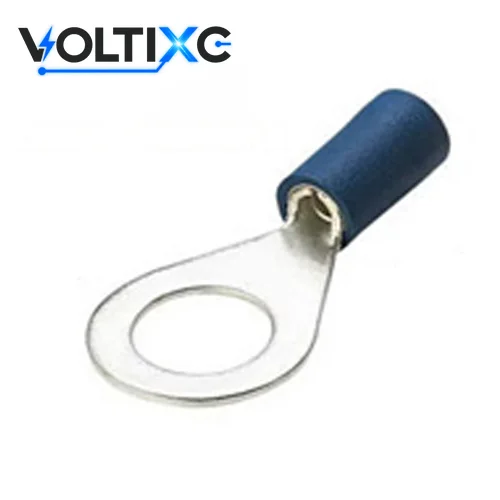
The crimp tool closes a ring terminal’s barrel on the stripped wire, the nut or screw head clamps its flat ring tongue, and a wrong size at either end spoils the joint. Drawings and catalogues also call it a ring connector or a wire eyelet. Loop or eye connections at screw terminals are inexpensive and suit joints that are seldom disconnected (Electrical Engineering Portal).
In TE Connectivity’s guide, the wire barrel makes the electrical and mechanical connection, while the insulation barrel gives strain relief, takes a more relaxed crimp and carries no electrical connection.
Strip the conductor, push it into the metal wire barrel and crimp so the barrel closes around the strands.
Over that barrel sits the vinyl or nylon insulation sleeve, which supports the wire jacket behind the crimp.
When the closed ring tongue is on the stud, tightening the nut presses it flat against the mounting face.
A barrel from a heavier wire band than your wire leaves the strands loose after the crimp, and one from a lighter band won’t take them all. A ring hole larger than the stud lets the tongue sit off center under the nut. You then cut the joint off and crimp again, so write the wire band and the stud size on every order line.
UL 486A-486B, as UL Standards & Engagement describes it, applies to single-polarity connectors used with copper, aluminum or copper-clad aluminum conductors in installations governed by the Canadian Electrical Code, NFPA 70 or NOM-001-SEDE. UL 486A-486B is cited for its scope, and the page does not claim that RV or RNY parts are certified to it.
The supplier specification sheets list 69 ring terminals across two series: 24 RV parts for 16-14 and 14-12 AWG wire, and 45 RNY parts for 16-14, 12-10, 8 and 6 AWG. Each table gives one row per wire band and stud, and the last column holds the other tongue sizes for that stud and the studs above 1/2 in. RV1.25 and RNY1.25 for 22-16 AWG, and RV5.5 for 12-10 AWG, appear in supplier documentation without a checked sheet, so they are not tabled; ask before you specify them.
RV vinyl insulated ring terminals carry a PVC (vinyl) sleeve over the crimp barrel. The RV sheet covers two bands: 16-14 AWG in blue on studs from #2 to 3/4 in, and 14-12 AWG in black on #8 to 1/4 in studs.
| Part No. | Wire (AWG) | mm² | Stud size | Hole Ø d2 (mm) | Tongue width W (mm) | Length L (mm) | Insulation color | Also listed (same wire band) |
|---|---|---|---|---|---|---|---|---|
| RV2-2 | 16-14 | 1.5-2.5 | #2 | 2.2 | 6.6 | 18 | Blue | RV2-2.5 (hole 2.5) |
| RV2-3.2 | 16-14 | 1.5-2.5 | #4 | 3.2 | 6.6 | 17.8 | Blue | RVS2-3.2 (W 5.5, L 18.4) |
| RVS2-3.7 | 16-14 | 1.5-2.5 | #6 | 3.7 | 6.6 | 17.8 | Blue | RVM2-3.7 (W 6.6, L 19.4), RVL2-3.7 (W 8.5, L 21.8) |
| RVS2-4 | 16-14 | 1.5-2.5 | #8 | 4.3 | 6.6 | 19.4 | Blue | RVL2-4 (W 8.5, L 21.8) |
| RVS2-5 | 16-14 | 1.5-2.5 | #10 | 5.3 | 8.5 | 21.8 | Blue | RVL2-5 (W 9.5, L 21.8) |
| RV2-6 | 16-14 | 1.5-2.5 | 1/4 in | 6.4 | 12 | 26.8 | Blue | — |
| RV2-8 | 16-14 | 1.5-2.5 | 5/16 in | 8.4 | 12 | 26.8 | Blue | RV2-7 (hole 7.4) |
| RV2-10 | 16-14 | 1.5-2.5 | 3/8 in | 10.5 | 13.6 | 30.5 | Blue | RVL2-10 (W 19.2, L 35.6) |
| Part No. | Wire (AWG) | mm² | Stud size | Hole Ø d2 (mm) | Tongue width W (mm) | Length L (mm) | Insulation color | Also listed (same wire band) |
|---|---|---|---|---|---|---|---|---|
| RV2-12 | 16-14 | 1.5-2.5 | 1/2 in | 13 | 19.2 | 35.4 | Blue | RV2-14 (9/16 in stud), RV2-16 (5/8 in stud), RV2-20 (3/4 in stud) |
| RV3.5-4 | 14-12 | 2.5-4 | #8 | 4.3 | 8 | 25 | Black | — |
| RVS3.5-5 | 14-12 | 2.5-4 | #10 | 5.3 | 8 | 25 | Black | RVL3.5-5 (W 12, L 28.4) |
| RV3.5-6 | 14-12 | 2.5-4 | 1/4 in | 6.4 | 12 | 28.4 | Black | — |
Source: supplier specification sheet, RV series; dimensions in mm.
RNY nylon ring terminals swap the vinyl sleeve for nylon and run further up the wire range: 16-14 AWG in blue, 12-10 AWG in yellow, 8 AWG in red and 6 AWG in blue again, on studs from #4 to 3/4 in.
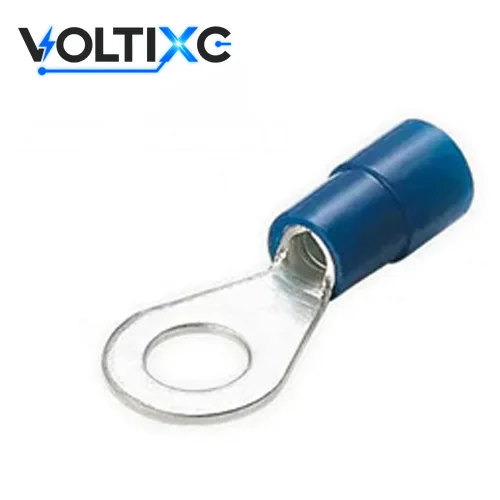
| Part No. | Wire (AWG) | mm² | Stud size | Hole Ø d2 (mm) | Tongue width W (mm) | Length L (mm) | Insulation color | Also listed (same wire band) |
|---|---|---|---|---|---|---|---|---|
| RNY2-3.2 | 16-14 | 1.5-2.5 | #4 | 3.2 | 6.6 | 18.8 | Blue | — |
| RNYS2-3.7 | 16-14 | 1.5-2.5 | #6 | 3.7 | 6.6 | 18.8 | Blue | RNYM2-3.7 (W 6.6, L 20.4), RNYL2-3.7 (W 8.5, L 22.8) |
| RNYS2-4 | 16-14 | 1.5-2.5 | #8 | 4.3 | 6.6 | 20.4 | Blue | RNYL2-4 (W 8.5, L 22.8) |
| RNYS2-5 | 16-14 | 1.5-2.5 | #10 | 5.3 | 8.5 | 22.8 | Blue | RNYL2-5 (W 9.5, L 22.8) |
| RNY2-6 | 16-14 | 1.5-2.5 | 1/4 in | 6.4 | 12 | 27.8 | Blue | — |
| RNY2-8 | 16-14 | 1.5-2.5 | 5/16 in | 8.4 | 12 | 27.8 | Blue | — |
| RNY2-10 | 16-14 | 1.5-2.5 | 3/8 in | 10.5 | 13.6 | 31.5 | Blue | — |
| RNY2-12 | 16-14 | 1.5-2.5 | 1/2 in | 13 | 19.2 | 36.4 | Blue | RNY2-14 (9/16 in stud), RNY2-16 (5/8 in stud), RNY2-20 (3/4 in stud) |
| Part No. | Wire (AWG) | mm² | Stud size | Hole Ø d2 (mm) | Tongue width W (mm) | Length L (mm) | Insulation color | Also listed (same wire band) |
|---|---|---|---|---|---|---|---|---|
| RNY5.5-3.7 | 12-10 | 4-6 | #6 | 3.7 | 7.2 | 22.7 | Yellow | — |
| RNYS5.5-4 | 12-10 | 4-6 | #8 | 4.3 | 7.2 | 22.7 | Yellow | RNYL5.5-4 (W 9.5, L 26) |
| RNY5.5-5 | 12-10 | 4-6 | #10 | 5.3 | 9.5 | 26 | Yellow | — |
| RNY5.5-6 | 12-10 | 4-6 | 1/4 in | 6.4 | 12 | 29.5 | Yellow | RNYM5.5-6 (W 12, L 32) |
| RNY5.5-8 | 12-10 | 4-6 | 5/16 in | 8.4 | 15 | 34 | Yellow | — |
| RNY5.5-10 | 12-10 | 4-6 | 3/8 in | 10.5 | 15 | 34 | Yellow | — |
| RNY5.5-12 | 12-10 | 4-6 | 1/2 in | 13 | 19.2 | 38.6 | Yellow | RNY5.5-14 (9/16 in stud), RNY5.5-16 (5/8 in stud), RNY5.5-20 (3/4 in stud) |
| RNY8-3.7 | 8 | 8 | #6 | 3.7 | 8 | 29 | Red | — |
| RNYS8-4 | 8 | 8 | #8 | 4.3 | 8 | 29 | Red | RNYL8-4 (W 12, L 31.3) |
| RNYS8-5 | 8 | 8 | #10 | 5.3 | 8.8 | 31.3 | Red | RNYM8-5 (W 12, L 31.3), RNYL8-5 (W 15, L 37.3) |
| RNYL8-6 | 8 | 8 | 1/4 in | 6.4 | 15 | 37.3 | Red | — |
| RNY8-8 | 8 | 8 | 5/16 in | 8.4 | 15 | 37.3 | Red | — |
| RNY8-10 | 8 | 8 | 3/8 in | 10.5 | 15 | 37.3 | Red | — |
| RNY8-12 | 8 | 8 | 1/2 in | 13 | 20 | 41 | Red | — |
| RNY14-4 | 6 | 14 | #8 | 4.3 | 12 | 40.8 | Blue | — |
| RNY14-5 | 6 | 14 | #10 | 5.3 | 12 | 40.8 | Blue | — |
| RNYS14-6 | 6 | 14 | 1/4 in | 6.4 | 12 | 40.8 | Blue | RNYL14-6 (W 16, L 43.5) |
| RNY14-8 | 6 | 14 | 5/16 in | 8.4 | 16 | 43.5 | Blue | — |
| RNY14-10 | 6 | 14 | 3/8 in | 10.5 | 16 | 43.5 | Blue | — |
| RNY14-11 | 6 | 14 | 7/16 in | 11.5 | 22 | 52 | Blue | — |
| RNY14-12 | 6 | 14 | 1/2 in | 13 | 22 | 52 | Blue | — |
Source: supplier specification sheet, RNY series; dimensions in mm.
Data note: every value in both tables is per supplier specification sheet and not individually re-tested by VoltixC; the sheets give no temperature rating. 69 part numbers are in the full specification table, with dimensions F, E, D, d1 and T and box quantities; request the complete list with your quote.
Buyers and drawings use several names for the same part. The table maps each one to the rows above.
| Name used in searches or on drawings | What it refers to on this page |
|---|---|
| ring terminal connectors, wire ring terminal connectors, ring wire connectors | The RV and RNY parts in the two tables above |
| electrical ring terminal, electrical ring connector, ring connectors electrical | The same parts, named for electrical work |
| wire eyelet, electrical eyelet, electrical eyelet connectors, crimp eyelet, eyelet crimp | The same parts; “eyelet” refers to the closed ring |
| ring lugs, ring lug terminal | The same parts at these wire sizes |
| crimp ring terminals, ring crimp connectors | The same parts; every row here is fitted with a crimp tool |
| vinyl insulated ring terminals | The RV table (PVC sleeve) |
| nylon ring terminals | The RNY table |
| non insulated ring terminals | Not on this page; bare copper ring terminals made from tube are on the copper tube ring terminals page |
Your wire gauge picks the barrel and your stud picks the ring hole, and both go on the same order line. The first table maps each wire band to its RV and RNY parts and the sleeve color printed on the supplier sheet; the second reads a stud size into the hole diameter d2.
| Wire band (AWG) | mm² | Sleeve color on the sheet | RV vinyl | RNY nylon | Also searched as |
|---|---|---|---|---|---|
| 16-14 | 1.5-2.5 | Blue | RV2: 20 parts, #2 to 3/4 in | RNY2: 15 parts, #4 to 3/4 in | 16-14 AWG ring terminal |
| 14-12 | 2.5-4 | Black | RV3.5: 4 parts, #8 to 1/4 in | — | 12 gauge ring terminal |
| 12-10 | 4-6 | Yellow | Not tabled; ask before you specify | RNY5.5: 12 parts, #6 to 3/4 in | 10 gauge ring terminal |
| 8 | 8 | Red | — | RNY8: 10 parts, #6 to 1/2 in | 8 AWG ring terminal |
| 6 | 14 | Blue | — | RNY14: 8 parts, #8 to 1/2 in | 6 AWG ring terminal |
| Stud on your drawing | Hole Ø d2 on the sheet (mm) | Also searched as | Wire bands with this stud |
|---|---|---|---|
| #2 | 2.2 (also 2.5) | — | 16-14 |
| #4 | 3.2 | #4 ring terminal | 16-14 |
| #6 | 3.7 | 6 ring terminal, #6 ring terminal | 16-14, 12-10, 8 |
| #8 | 4.3 | 8 ring terminal, #8 ring terminal | 16-14, 14-12, 12-10, 8, 6 |
| #10 | 5.3 | 10 ring terminal, #10 ring terminal | 16-14, 14-12, 12-10, 8, 6 |
| 1/4 in | 6.4 | 1/4 ring terminal | 16-14, 14-12, 12-10, 8, 6 |
| 5/16 in | 8.4 (also 7.4) | 5/16 ring terminal | 16-14, 12-10, 8, 6 |
| 3/8 in | 10.5 | 3/8 ring terminal | 16-14, 12-10, 8, 6 |
| 7/16 in | 11.5 | — | 6 |
| 1/2 in | 13 | 1/2 ring terminal | 16-14, 12-10, 8, 6 |
| 9/16 in | 15 | — | 16-14, 12-10 |
| 5/8 in | 17 | — | 16-14, 12-10 |
| 3/4 in | 21 | — | 16-14, 12-10 |
Before the list goes out, work through these points:
Every table row names its stud and hole, so check both against your drawing. According to West Marine, ABYC guidance calls for ring and captive-spade terminal connectors of the same nominal size as the stud. One wire band can pair with a wide spread of holes; as one example, ABB’s Spec-Kon table offers non-insulated copper ring terminals for 1.5–2.5 mm² wire with stud holes from M3 to M12.
Sleeve color alone is not a safe way to order: on these supplier sheets blue marks both 16-14 AWG and the RNY 6 AWG parts, and red marks 8 AWG. According to ABB’s Spec-Kon table, red denotes 0.5–1.5 mm², blue 1.5–2.5 mm² and yellow 4.0–6.0 mm² conductors. Phoenix Contact’s RBO 5-T identification maps red to 1 mm² instead.
A 14 AWG wire sits in both the 16-14 and 14-12 bands, and a 12 AWG wire in both the 14-12 and 12-10 bands. Name the band you want and say whether the wire is stranded or solid, and the quote confirms the fit.
Stack height has a limit too: according to West Marine, ABYC guidance allows no more than four terminals on one stud; extra connections need another stud joined by jumpers or copper straps.
Both series are copper with a tin finish on the supplier specification sheet, RV with a PVC (vinyl) sleeve and RNY with nylon. That build matches the category: according to ABB’s Spec-Kon selection table, insulated ring terminals are copper, tin plated, marked for wire size and bolt size, and available with PC, PVC or PA insulation.
| Part | RV | RNY | Where the entry comes from |
|---|---|---|---|
| Body | Copper | Copper | Supplier specification sheet |
| Finish | Tin plated | Tin plated | Supplier specification sheet |
| Sleeve | PVC (vinyl) | Nylon | Supplier specification sheet |
| Sleeve color | Blue (16-14), black (14-12) | Blue (16-14 and 6), yellow (12-10), red (8) | Supplier specification sheet, by wire band in AWG |
| Temperature rating | Not listed | Not listed | Not stated in the supplier data; ask before you specify |
Neither sleeve has a temperature rating in the supplier data, so this page doesn’t rank vinyl against nylon. If your panel or machine sets a temperature limit, ask before you specify RV or RNY for it.
Only the metal barrel carries current; the sleeve insulates and supports the wire. Crimp the barrel with a die sized for the terminal’s wire band. The crimping guide covers the full method, from stripping to the pull check.
For 16-14 AWG to 6 AWG wire on a stud or screw that is rarely undone, ring terminals remain the right part. If the screw must stay in while wires are swapped, go to a spade. Cable heavier than 6 AWG moves to a copper tube lug, and a sealed splice takes over when two wires join each other with no stud involved.
| Route | Pick it when | What you give up against a ring terminal | Where it is listed |
|---|---|---|---|
| Insulated ring terminals (RV, RNY) | Stud or screw joint that stays closed for long periods; 16-14 AWG to 6 AWG | The nut or screw has to come off to fit or remove the wire | This page |
| Insulated spade terminals | The wire is changed while the screw stays loosely in place | The open fork can slide out if the screw backs off | insulated spade terminal page |
| Copper tubular ring terminals | Battery or power cable above 6 AWG, or a bare copper tube with an inspection hole | No plastic sleeve over the barrel | copper tubular ring terminals |
| Quick disconnects | The wire is unplugged from a flat tab for service | Needs a matching male tab on the equipment | quick disconnects page |
| Solder-seal splices | Two wires joined end to end with a sealed sleeve | Not made for a stud at all | solder-seal splice page |
| Heat-shrink crimp terminals | A crimped end that needs a heat shrink ring or sleeve against moisture | Covered as a separate family with its own sizing | heat-shrink terminal page |
Count how often someone will open the joint. Electrical Engineering Portal says loop or eye connections at screw terminals suit joints that are seldom disconnected. A closed ring keeps hold of the wire even if the nut backs off slightly. Swapping wires on the same terminal screw goes faster with a spade, as long as that screw stays tight.
The RNY14 parts for 6 AWG are the heaviest ring terminals on this page. Battery and power cable above that size goes on copper ring lugs made from tube; some of those series add an inspection or sight hole so you can check how far the conductor went in.
Your order line changes with the route:
To compare every insulated type from rings to ferrules, open the insulated terminals page.
Insulated ring terminals fit stud and screw joints on copper wire from 16-14 AWG to 6 AWG that stay closed once installed. They are the wrong part for cable above 6 AWG, for joints opened again and again, and for aluminum wire. These job cards reason from the ring-and-sleeve design and the guidance cited on this page; no VoltixC order record sits behind them.
Fits: industrial control wiring from 16-14 AWG to 12-10 AWG landing on screw terminals inside an enclosure.
Check: the screw size on the device and the number of wires per screw, because the ring hole is chosen per screw. The closed ring stays on the screw even while the installer tightens it.
Fits: a bonding wire from 12-10 AWG to 6 AWG bolted to a frame or enclosure stud, where a loose nut must not release the wire.
Check: the stud diameter and whether the grounding point calls for a tin-plated terminal against the mounting surface.
Fits: branch wiring on a positive or negative distribution stud.
Check the count per stud: according to West Marine, ABYC guidance allows no more than four terminals on one stud, with extra connections moved to another stud joined by jumpers or copper straps.
The RV and RNY lists stop at 6 AWG. Heavier battery and power cable needs a copper tube ring terminal instead.
Loop or eye connections suit joints that are seldom disconnected, according to Electrical Engineering Portal. Where wires come off every service visit, a spade or quick disconnect saves removing the nut each time.
The supplier data lists these terminals with a copper body, and no aluminum rating is given; state the conductor metal on the enquiry. Joints exposed to water spray need a sealed sleeve, covered on the heat shrink butt connectors page.
VoltixC is UL certified, holds a CE attestation that covers its full terminal range, and has a RoHS test report available (SGS). All three documents name Guangzhou FuTeXin Technology Co., Ltd., the company behind the VoltixC brand. Certificate numbers are not printed here, so ask for the documents against the item numbers on your order.
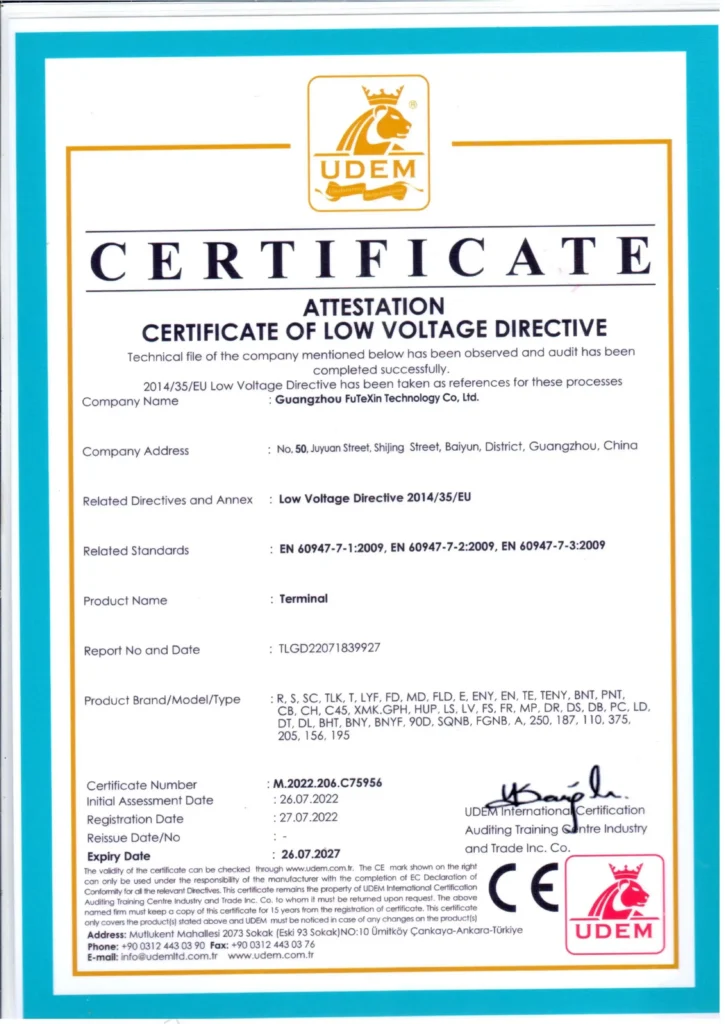
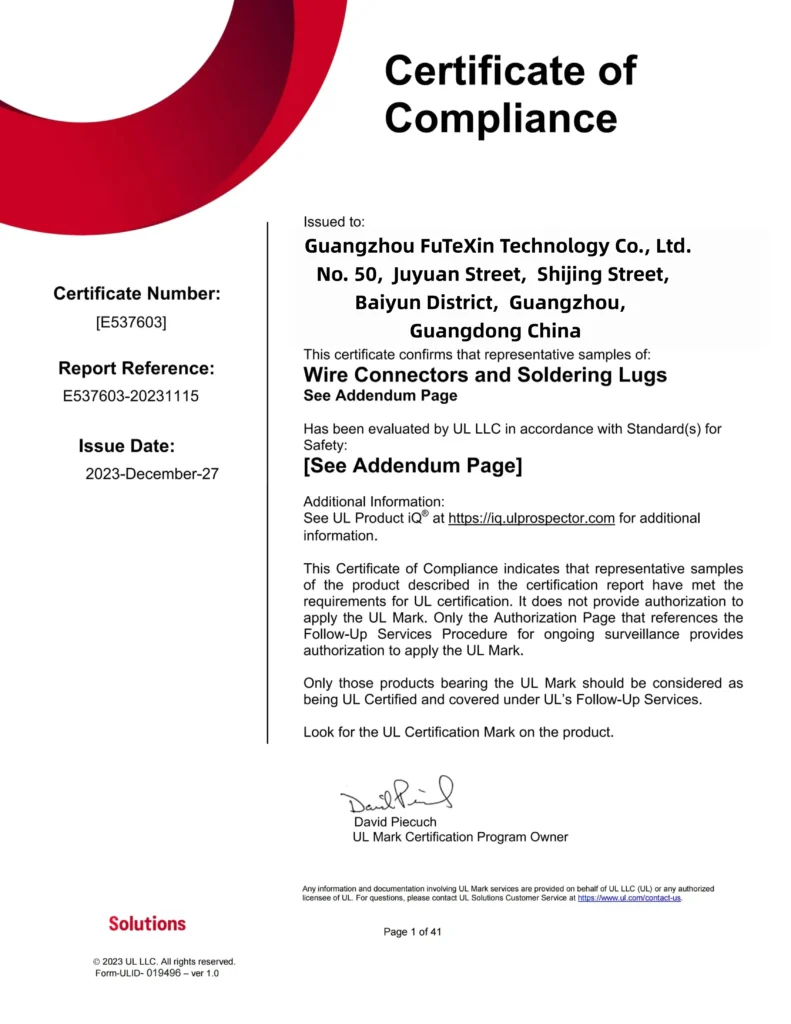
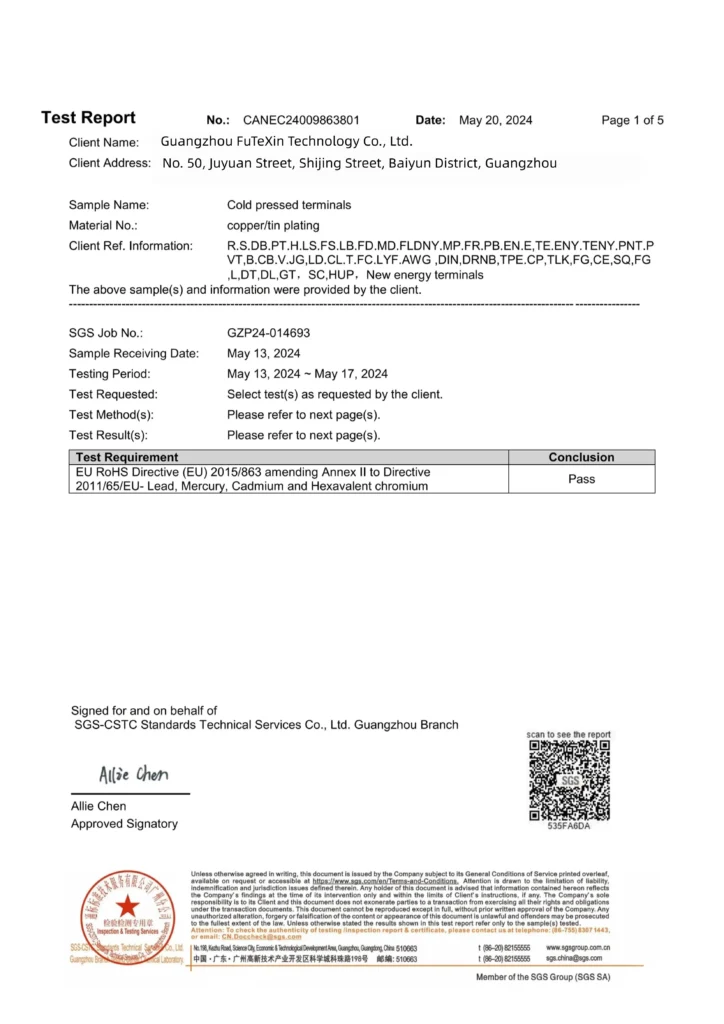
The CE attestation lists EN 60947-7-1, EN 60947-7-2 and EN 60947-7-3 under Directive 2014/35/EU, and the SGS report tested lead, mercury, cadmium and hexavalent chromium on tin-plated copper terminal samples. For PVC or nylon sleeves sold into the EU, Directive (EU) 2015/863 amended RoHS Annex II to set DEHP, BBP, DBP and DIBP each at 0.1% by weight in homogeneous materials. Those four phthalates are not in the SGS report, so ask for a sleeve declaration. Ring terminals can also be tied to DIN drawings: according to Cembre, its Q family is a ring terminal identified with DIN 46234 for copper conductors. VoltixC does not state DIN 46234 conformity for the RV or RNY parts.
Before you sign off a sample, request these records against your item numbers:
| Record | What it tells you |
|---|---|
| Certificate copy with its scope or addendum page | Which standards and product listings apply to the ring terminal you are buying |
| Material statement for body and plating | The copper and tin finish for that item number |
| RoHS declaration for the sleeve | Whether the vinyl or nylon sleeve is declared within the phthalate limits |
| Crimp die reference | Which die profile the barrel is sized for |
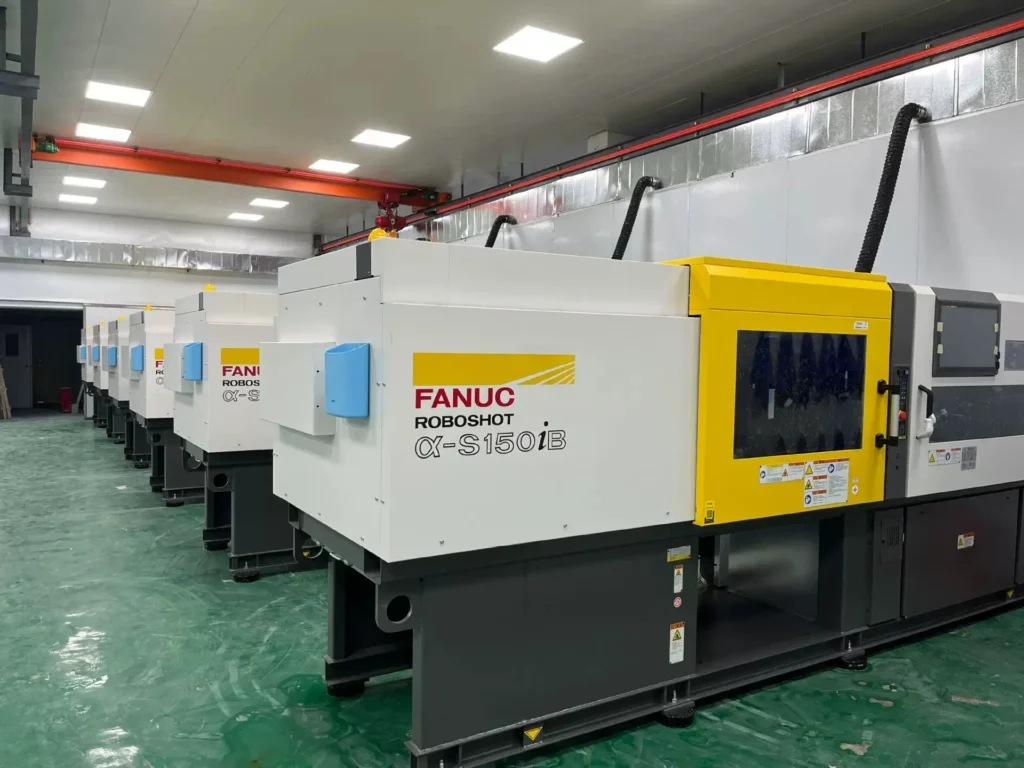
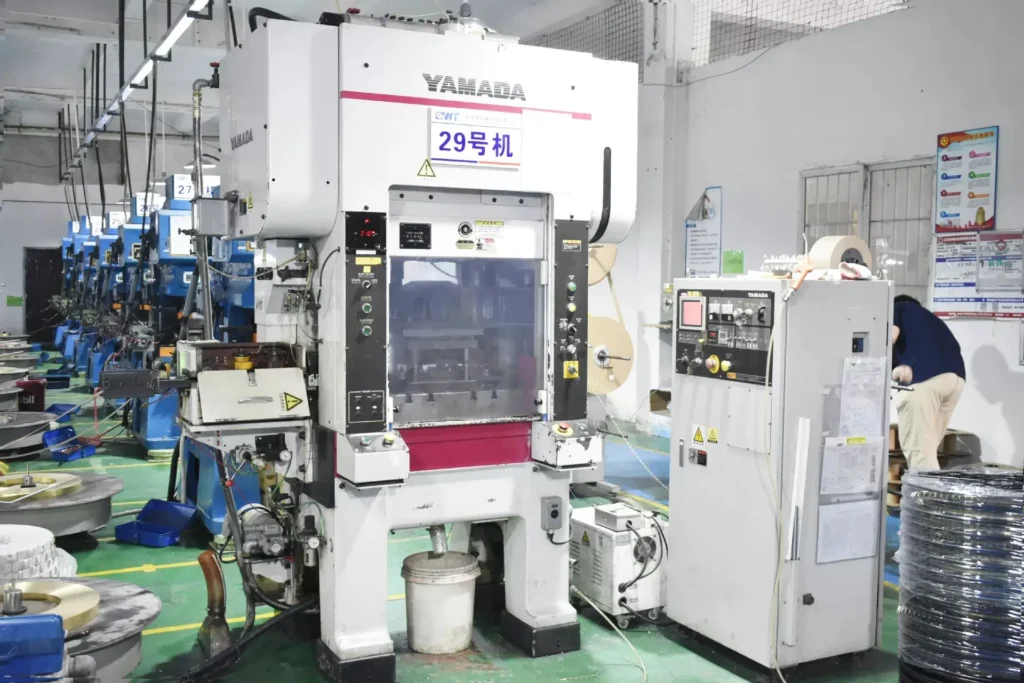
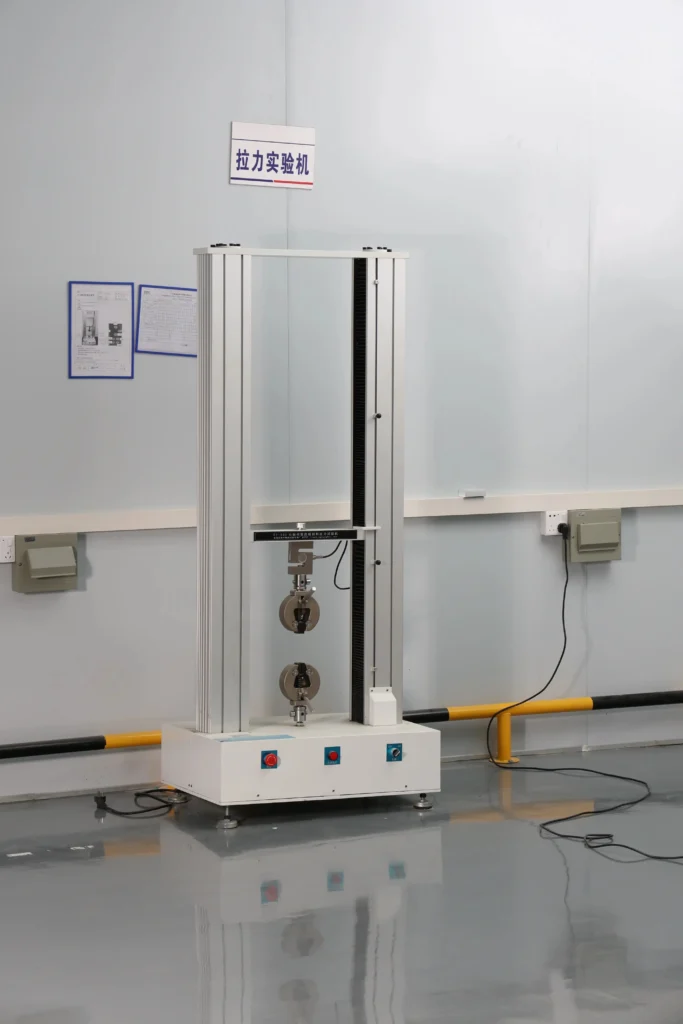
These machines stand on the VoltixC floor. The photos don’t tell you which checks a given order goes through.

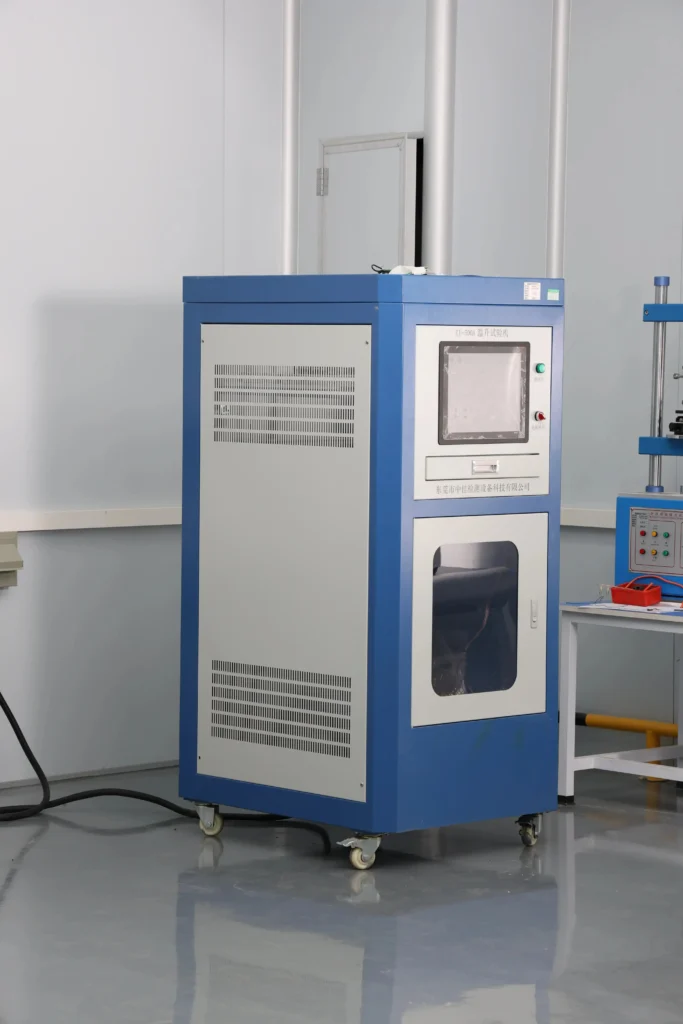
A ring terminal quote is priced line by line from your size list, so each line’s cost follows the choices written on it. Ring terminal connectors that differ only in sleeve, such as RV2-6 and RNY2-6 for 16-14 AWG wire on a 1/4 in stud, are separate items, and so are two stud holes on the same wire band; each one is priced on its own.
| Driver | Effect on cost | What you control |
|---|---|---|
| Wire band | Heavier bands, such as the 8 AWG and 6 AWG RNY rows, use more copper per piece | The AWG on each line |
| Sleeve material | Vinyl (RV) and nylon (RNY) are separate items with separate prices | Which series you name |
| Stud hole | Every hole size is its own item, even within one wire band | The stud size on your drawing |
| Sleeve color or marking | A color outside the standard set, or printed marking, adds a setup step | Accept the standard color or specify one |
| Packing and labels | Bag counts, label text and carton marks change packing work | Pieces per bag and label wording |
| Quantity per item | Setup cost is shared by the pieces of each item, so a small quantity carries more of it; each size is quoted on its own, not as a retail kit | How many items the order is split across |
| Drawing-based changes | A new tongue shape or hole needs tooling, confirmed per order | Standard part or custom part |
You get your list back in the quotation, with the part number, stud size, sleeve color and packing for each item, and can check it line by line before a sample is approved. A line sent without a stud size is marked open rather than guessed, and its price follows once the size is known.
Commercial terms stay off this page. MOQ, warranty, payment and production lead time are confirmed per order by email or the enquiry form. For a listed RV or RNY model, 7 days is the fastest sample time. The quotation states the production timing.
Send these four items for a quote:
There’s no upload field on the enquiry form. Submit the form with your list, then email any drawing or wire photo to hugo@voltixconnect.com.
Stud sizing, ring dimensions and the crimp itself each have a page on this site, so you can settle the numbers before the enquiry.
A lookup for ring terminal stud sizes by wire gauge. Use it to settle the stud size, then write that size on each order line: ring terminal size chart.
How ring terminal dimensions and stud sizes are named, so you can read a supplier drawing and check it against your own: ring terminal sizes.
Stripping length, die choice and the pull check for insulated barrels: how to crimp wires.
Choose a ring terminal when the wire must stay on the stud even if the nut loosens slightly; a closed ring cannot slide out from under it, while an open spade can. According to Electrical Engineering Portal, loop or eye connections suit joints that are seldom disconnected. If the wire is changed while the screw stays in place, the spade terminals page is the better start.
The sleeve material and the wire range set them apart here. RV uses a PVC (vinyl) sleeve and covers 16-14 and 14-12 AWG on the supplier sheet. RNY uses nylon and covers 16-14, 12-10, 8 and 6 AWG. The supplier data gives no temperature rating for either sleeve, so ask before you specify one against a temperature limit.
Match the ring hole to the stud. According to West Marine, ABYC guidance calls for ring terminals of the same nominal size as the stud. Each table row gives the stud and its hole diameter, such as 5.3 mm for a #10 stud or 6.4 mm for a 1/4 in stud. The stud size chart helps you find the stud first.
The colors mark wire bands. According to ABB’s Spec-Kon table, red denotes 0.5–1.5 mm², blue 1.5–2.5 mm² and yellow 4.0–6.0 mm² conductors. Other makers place the points a little differently; Phoenix Contact’s OTTA 6-T identification maps red to 1.5 mm², blue to 2.5 mm² and yellow to 6 mm². On the RV and RNY sheets, blue marks 16-14 AWG and 6 AWG, black 14-12 AWG, yellow 12-10 AWG and red 8 AWG, so order by the wire band, not the color.
On the supplier sheets, RNY5.5 takes 12-10 AWG in 12 part numbers with yellow nylon sleeves, from a #6 to a 3/4 in stud. RV5.5 for 12-10 AWG appears in supplier documentation without a checked sheet, so ask before you specify it. For 14-12 AWG the tabled parts are the four RV3.5 terminals, #8 to 1/4 in.
Yes, in the nylon series only: RNY8 takes 8 AWG in 10 part numbers on #6 to 1/2 in studs, and RNY14 takes 6 AWG in 8 part numbers on #8 to 1/2 in studs. Nothing heavier than 6 AWG is listed on this page. Larger battery and power cable is covered on the copper ring terminals page.
According to West Marine, ABYC guidance allows no more than four terminals on one terminal stud, and extra connections go on another stud joined by jumpers or copper straps. That guidance comes from boat wiring. Where your equipment maker sets its own limit, follow the equipment instructions.
For the EU, Directive (EU) 2015/863 set DEHP, BBP, DBP and DIBP at 0.1% by weight each in homogeneous materials. A vinyl sleeve is one homogeneous material, so those four phthalates are the ones to ask about. VoltixC has a RoHS test report available (SGS), and it covers lead, mercury, cadmium and hexavalent chromium, not the phthalates; request a sleeve declaration against your item numbers.
Not quite, although both end in a hole that fits over a stud. On this site, ring terminals are insulated crimp parts for 16-14 AWG to 6 AWG wire, and a lug terminal is a heavier copper tube lug for power and battery cable. The heavier parts are on the copper cable lugs page.
No. Every value in the tables is per supplier specification sheet, transcribed from the supplier’s drawings and not individually re-tested by VoltixC. The quotation states the part number, stud size and sleeve color for each line.
Write each line as wire gauge, stud size, sleeve and quantity, and the reply names the RV or RNY model for every line and flags any value still missing.