VOLTIXC / ENQUIRY
Request a Quote
Tell us what you need and we will review your enquiry.

AD two-hole copper cable lugs and CL-2H two-hole copper tube lugs for bolting large copper conductors to busbars and equipment pads.
Fast answer: Two-hole lugs use two bolt holes on the palm so the connection cannot rotate on a busbar or terminal pad. VoltixC groups two copper series here: AD two-hole copper cable lugs and CL-2H two-hole copper tube lugs. Confirm hole spacing, bolt size and conductor size, then request a quotation.
The supplier specification sheets behind this page list 66 part numbers, from a 6 AWG (16 mm²) tube lug up to an 800/1000 kcmil (500 mm²) cable lug, all in tin-plated copper. Each row gives the stud hole, the hole spacing, the barrel inside and outside diameter and the overall length in mm, so you can match a lug to a busbar before you ask for a quote.
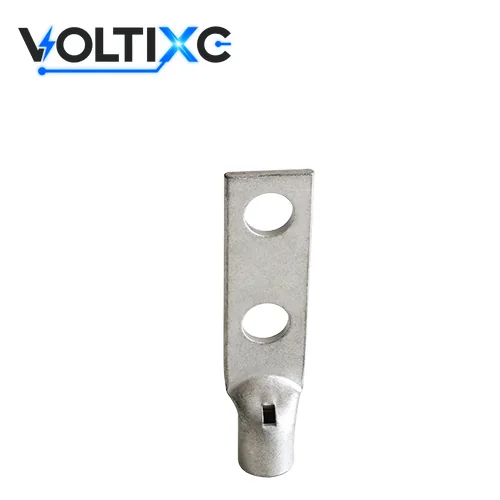
A two-hole lug is a cable lug whose flat palm has two bolt holes side by side, so two bolts clamp it to the busbar or equipment pad instead of one. With a single bolt, the palm can pivot around that bolt while the nut is tightened or when a stiff cable pushes against it. A second bolt removes the pivot. Catalogs also list it as 2 hole crimp lugs, double hole cable lugs or 2 hole terminal lugs, and each of those names means the two-bolt palm described here.
Buyers on trade forums ask the same thing in practical terms: whether a two-hole lug should go wherever the bus bar is drilled for two holes, and whether a one-hole lug on a larger wire size twists when it is tightened. The answer on this page comes from the part itself: the two-bolt palm described above has no single pivot, and the steps below show where that matters.
How a two-hole copper lug joint is made:
The stripped conductor goes fully into the barrel, the round tube end of the lug.
The barrel is crimped with a die matched to that lug and that conductor size.
The flat palm is laid over the two drilled holes on the busbar or pad.
Two bolts go through both holes and are tightened to the equipment maker’s torque value.
With both bolts in, the palm stays square to the pad and the cable leaves in the direction it was set.
A joint that turns while it is tightened can press the cable against a neighboring phase or the cabinet wall, and a palm that is not flat on the pad has less contact face. Both problems start at step 4, and a second hole is the fix for them on large, stiff conductors.
Heat is the other question buyers raise. Installers on one forum thread tie two-hole lugs, long barrels and die-type crimps to current that flows for months or years, as against the short, occasional current on grounding and bonding joints. This page does not turn that into a sizing rule: the equipment maker’s terminal instructions decide which lug form a joint needs.
VoltixC lists 66 two-hole lugs in two copper series: 12 AD two-hole copper cable lugs and 54 CL-2H two-hole copper tube lugs. Both tables run from the smallest conductor to the largest and give the stud hole, the hole spacing, the barrel diameters and the length from the supplier specification sheets. Every listed row is tin-plated copper.
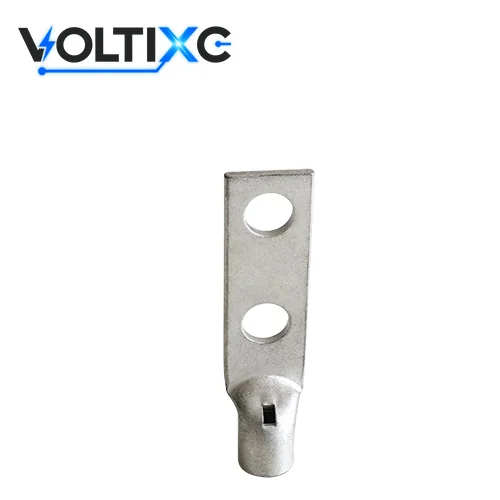
The AD series is a two-hole copper cable lug with a straight palm in the series photo. It reaches the largest conductors on this page, from 2 AWG (38 mm²) to 800/1000 kcmil (500 mm²). Hole spacing steps from 25.4 mm on AD38 to AD150 up to 44.5 mm from AD185 upward, where the stud hole also grows to 14 mm.
| Part No. | AWG / kcmil | mm² | Stud hole Ø (mm) | Hole spacing (mm) | Barrel ID d (mm) | Barrel OD D (mm) | Length L (mm) |
|---|---|---|---|---|---|---|---|
| AD38 | 2 AWG | 38 | 9 | 25.4 | 9.5 | 11.7 | 65.8 |
| AD60 | 1/0 AWG | 60 | 11 | 25.4 | 11.9 | 14.4 | 74.7 |
| AD80 | 3/0 AWG | 80 | 11 | 25.4 | 14.9 | 17.9 | 82.3 |
| AD100 | 4/0 AWG | 100 | 11 | 25.4 | 16.8 | 20.1 | 86.6 |
| AD125-10 | — | 125 | 11 | 25.4 | 17.8 | 21.3 | 89.7 |
| AD150 | 250/300 kcmil | 150 | 11 | 25.4 | 19.6 | 23.4 | 94.5 |
| AD185 | 300/350 kcmil | 185 | 14 | 44.5 | 21.1 | 25.3 | 117 |
| AD200 | 400/500 kcmil | 200 | 14 | 44.5 | 22.5 | 27 | 119.6 |
| Part No. | AWG / kcmil | mm² | Stud hole Ø (mm) | Hole spacing (mm) | Barrel ID d (mm) | Barrel OD D (mm) | Length L (mm) |
|---|---|---|---|---|---|---|---|
| AD250 | 400/500 kcmil | 250 | 14 | 44.5 | 25.2 | 30.2 | 120.7 |
| AD325 | 500/600 kcmil | 325 | 14 | 44.5 | 27.6 | 33.1 | 130.2 |
| AD400 | 600/750 kcmil | 400 | 14 | 44.5 | 31.8 | 38.2 | 136.8 |
| AD500 | 800/1000 kcmil | 500 | 14 | 44.5 | 35.6 | 42.7 | 147.5 |
Source: per supplier specification sheet (AD series); values as printed, not individually re-tested. The sheet gives conductor size in mm²; the AWG / kcmil column comes from the supplier’s product titles, and AD125-10 has no AWG entry.
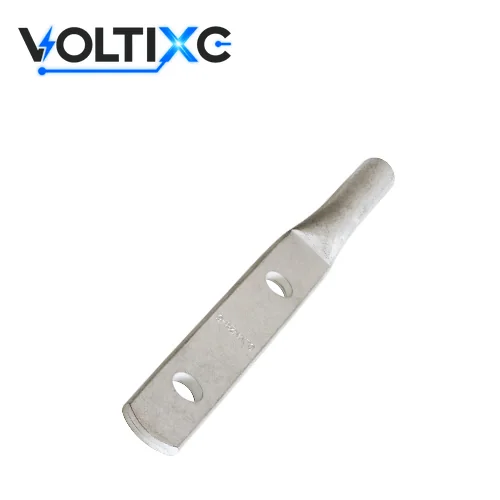
CL-2H is the two-hole branch of the CL copper tube-lug range. Compared with AD, it covers smaller conductors: 6 AWG (16 mm²) to 400/500 kcmil (250 mm²). Every CL-2H part number has the same 45 mm hole spacing, and the suffix after 2H sets the stud hole, from 6.4 mm on a -6 part to 17 mm on a -16 part.
| Part No. | AWG / kcmil | mm² | Stud hole Ø (mm) | Hole spacing (mm) | Barrel ID d (mm) | Barrel OD D (mm) | Length L (mm) |
|---|---|---|---|---|---|---|---|
| CL14-2H-6 to -12 | 6 AWG | 16 | 6.4 / 8.4 / 10.5 / 13 | 45 | 5.8 | 8.8 | 117.5 |
| CL22-2H-6 to -12 | 4 AWG | 25 | 6.4 / 8.4 / 10.5 / 13 | 45 | 7.7 | 11.3 | 119.2 |
| CL38-2H-6 to -12 | 2 AWG | 35 | 6.4 / 8.4 / 10.5 / 13 | 45 | 9.8 | 12.4 | 120 |
| CL60-2H-6 to -14 | 1/0 AWG | 60 | 6.4 / 8.4 / 10.5 / 13 / 15 | 45 | 11 | 14 | 130 |
| CL70-2H-8 to -14 | 2/0 AWG | 70 | 8.4 / 10.5 / 13 / 15 | 45 | 12 | 15 | 130 |
| CL80-2H-8 to -14 | 3/0 AWG | 80 | 8.4 / 10.5 / 13 / 15 | 45 | 13 | 16 | 130 |
| CL95-2H-8 to -14 | 3/0 AWG | 95 | 8.4 / 10.5 / 13 / 15 | 45 | 13.5 | 17.4 | 132 |
| CL100-2H-8 to -16 | 3/0 AWG | 100 | 8.4 / 10.5 / 13 / 15 / 17 | 45 | 14 | 18 | 132 |
| Part No. | AWG / kcmil | mm² | Stud hole Ø (mm) | Hole spacing (mm) | Barrel ID d (mm) | Barrel OD D (mm) | Length L (mm) |
|---|---|---|---|---|---|---|---|
| CL125-2H-10 to -16 | 4/0 AWG | 120 | 10.5 / 13 / 15 / 17 | 45 | 16 | 20 | 135 |
| CL150-2H-10 to -16 | 250/300 kcmil | 150 | 10.5 / 13 / 15 / 17 | 45 | 17 | 22 | 150 |
| CL180-2H-10 to -16 | 300/350 kcmil | 185 | 10.5 / 13 / 15 / 17 | 45 | 18.2 | 23 | 150 |
| CL200-2H-10 to -16 | 350/400 kcmil | 200 | 10.5 / 13 / 15 / 17 | 45 | 20 | 26 | 150 |
| CL250-2H-10 to -16 | 400/500 kcmil | 250 | 10.5 / 13 / 15 / 17 | 45 | 22 | 28 | 150 |
Source: per supplier specification sheet (CL-2H series); values as printed, not individually re-tested. Each row groups one conductor size by stud hole suffix; 54 part numbers in the full specification table — request the complete list with your quote.
How to read these tables: all values are in mm and come from the supplier specification sheets, not from VoltixC re-testing. The sheets label every size A.W.G.; US practice states sizes above 4/0 AWG in kcmil, so entries from 250 upward are shown here as kcmil. A paired entry such as 400/500 names the two conductor sizes listed against one lug. Values on your approved drawing are the ones an order is made to.
Some AWG sizes carry more than one part number because the sheets size each barrel in mm². AD200 (200 mm²) and AD250 (250 mm²) are both listed at 400/500 kcmil, and CL80-2H, CL95-2H and CL100-2H are 80, 95 and 100 mm², all at 3/0 AWG. Pick by the mm² size of your conductor, or send its outside diameter with your enquiry.
Choose two-hole lugs by conductor size first, then check hole spacing, bolt size and barrel fit against the equipment you are bolting to. The model tables give the conductor size, stud hole, hole spacing and barrel for every listed part number; your busbar drawing gives the other side of each check.
| Check | What to measure or read | Where the answer comes from |
|---|---|---|
| Conductor size | AWG or kcmil on the cable jacket, plus the strand class | Model tables above: AWG / kcmil and mm² |
| Hole spacing | Center-to-center distance between the two holes on the busbar or pad | Model tables: 25.4 or 44.5 mm on AD, 45 mm on CL-2H |
| Bolt and hole size | Bolt diameter used on the busbar or ground plate, and the clearance hole it needs | Model tables: stud hole 9 to 14 mm on AD, 6.4 to 17 mm on CL-2H |
| Barrel and die | Barrel diameters and the crimp die your tool takes | Barrel ID and OD in the model tables; die matched to lug and conductor per order |
| Pad width and clearance | Palm width against pad width, and room for two bolt heads | Your drawing and equipment photos |
| Plating | Tinned or bare copper surface | Tin on every listed row; another finish is not on the current list, so ask before you specify it |
A request for a NEMA 2 hole lug points to one spacing figure: 3M states that the center-to-center spacing of its two-hole mounting holes meets the NEMA standard of 1.75 in (44.5 mm). The same 1.75 in spacing appears in 3M’s selection table for its two-hole 40000 Series. For hole size, CMC gives one example: a 0.562 in mounting hole for 1/2 in bolts on its AHL400-2 aluminum two-hole lug. These are other makers’ published values; on the VoltixC sheets, AD185 to AD500 list the same 44.5 mm between hole centers; AD38 to AD150 list 25.4 mm, and every CL-2H part lists 45 mm. The sheets do not name NEMA, so check the spacing column against your busbar rather than a NEMA label.
Measure the busbar, not an old lug. A worn or re-drilled lug can mislead you about both spacing and hole size, while the busbar holes are what the new lug has to match.
When a cable falls between two listed entries, send the conductor construction and outside diameter with the size. A fine-stranded or flexible conductor of the same nominal size can need a different barrel than a standard stranded one, and that choice is confirmed per order.
Every AD and CL-2H part number is listed with a tin-plated copper body. The supplier documents describe the copper differently by series:
Two-hole copper tube lugs are made from a length of copper tube. The round end stays as the barrel that takes the conductor, and the other end is flattened into the palm and pierced with two bolt holes. Your drawing has to fix the barrel wall thickness, and any palm width or hole position that differs from the sheet.
Which copper stock standard applies depends on the product form. EN 13601, for one, covers copper rod, bar and wire for general electrical purposes and sets sampling procedures and test methods for checking conformity. Naming the standard here is not a claim that VoltixC stock is certified to it; the copper grade is confirmed per order, but no stock standard is stated in the supplier data, so ask before you specify one.
Two-hole copper lugs suit a copper conductor bolted to a pad with two drilled holes. An aluminum conductor, a single stud, a narrow pad or a panel built to DIN sizes each sends you to a different page in the same copper cable lug range, and the table lists each route with the page that covers it. Two-hole compression lugs with color-coded barrels, such as brown or blue for the matching die, sit on their own page; the AD and CL-2H lugs here carry no color code.
| Route | What the part is | Pick it when | Where to look |
|---|---|---|---|
| Two-hole copper lugs (this page) | AD and CL-2H copper lugs, 2 bolt holes, 6 AWG to 800/1000 kcmil as listed | Copper conductor; busbar or pad drilled for two bolts | Model tables above |
| Two-hole compression lugs | Copper and aluminum two-hole lugs with color-coded barrels matched to die colors | Aluminum conductor, or your crews work by die color | two-hole compression lugs |
| One-hole compression lugs | Copper and aluminum lugs with a single bolt hole | The terminal has one stud, or the space fits only one bolt | one-hole compression lugs |
| Tinned copper tube lugs | Tinned copper tube lugs across five series | A tinned tube lug outside the AD and CL-2H rows | tinned copper tube lugs |
| Narrow-palm copper lugs | Copper lugs with a narrowed palm or tongue | Breaker or terminal pads narrower than a standard palm | narrow-palm and narrow-tongue lugs |
| DIN 46235 copper lugs | Metric compression lugs sized to DIN 46235 | Panels and drawings specified in mm² to DIN sizes | DIN 46235 cable lugs |
Other lug makers publish two-hole ranges in the same size band. As one example, 3M lists two-hole models in its 40000 Series from 1/0 AWG through 1000 kcmil, and its 31000 Series includes two-hole long-barrel lugs for 6 AWG through 1000 kcmil. Burndy’s two-hole copper compression range has a two-hole standard-barrel form, identified as YA-2L, next to its other barrel types. Those figures belong to those makers; for AD and CL-2H, use the spans in the model tables.
Four cases call for another lug page.
Changing route changes the die and the model numbers, and the hole pattern on your drawing moves with them. Send the busbar drawing with the conductor size, and the route is confirmed per order.
Two-hole copper lugs fit large copper conductors that bolt to pads drilled for two bolts; they are the wrong choice for single-stud terminals and aluminum conductors. The rows below are application types worked out from the two-bolt palm and the listed sizes. They are not VoltixC project records.
| Application | Needs | Watch |
|---|---|---|
| Switchgear and panelboard busbars | A large copper feeder cable within the listed sizes and a bar drilled for two bolts | Phase-to-phase clearance once both bolt heads are in; when the stiff feeder cable pushes on the palm, two bolts hold it square to the bar |
| Transformer and equipment terminal pads | A flat pad with two holes and a conductor inside the AD or CL-2H rows | The cable bend from the pad to the tray; a long barrel adds length before the cable can turn |
| DC busbars in battery rooms and UPS cabinets | Large copper cable bolted to a flat bar, and a bar that must not twist when someone moves a heavy cable | Bar thickness and bolt length, both taken from the cabinet drawing |
| Stacked terminations | Room for two lugs on one set of holes; the AD and CL-2H series photos show straight palms, so any stacking fit is confirmed per order | Matched offsets: CMC describes offset heights and pad dimensions that let its ATL lugs stack on its AHL lugs, joining two conductors at each NEMA two-hole spade position |
| Single-stud or single-hole terminals (not a fit) | Two holes to bolt through, and a single stud gives only one | Start with a one-hole lug; the FAQ below explains why cutting one hole off is not the fix |
| Aluminum conductors (not a fit) | An aluminum lug, because the AD and CL-2H rows are copper bodies only | The two-hole compression lug page linked in the route table carries aluminum lugs |
| Grounding and bonding jumpers (check first) | The lug form set by the grounding design and the equipment maker’s instructions | A ground bar drilled for one bolt falls under the single-hole row above; one drilled for two can take an AD or CL-2H size, quoted for the jumper conductor |
The three limit rows are the short form of the route table above, which links each of those lug pages. If your joint is in none of the seven rows, send the pad drawing and the conductor size with your enquiry, and the fit is checked against that drawing.
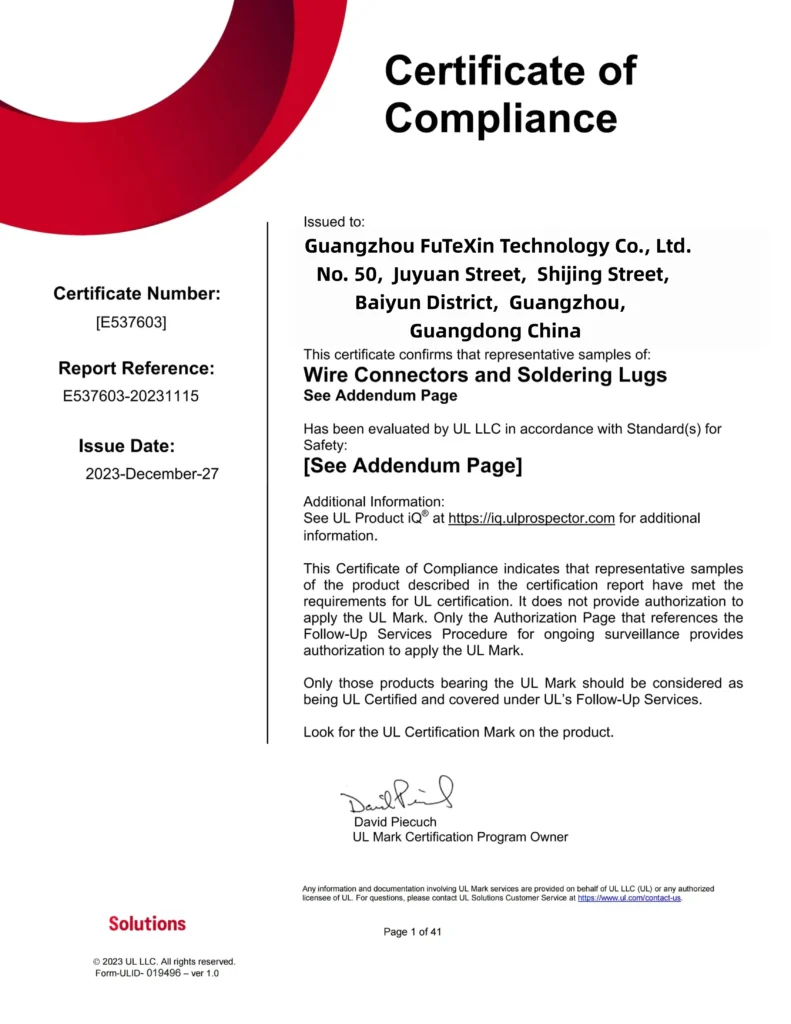
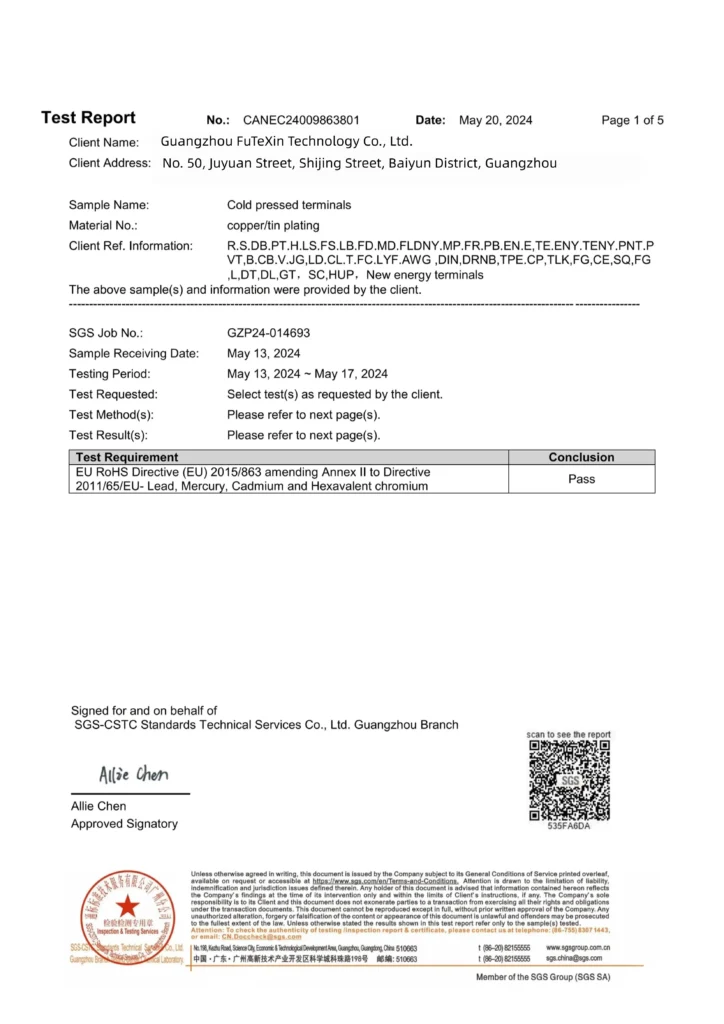
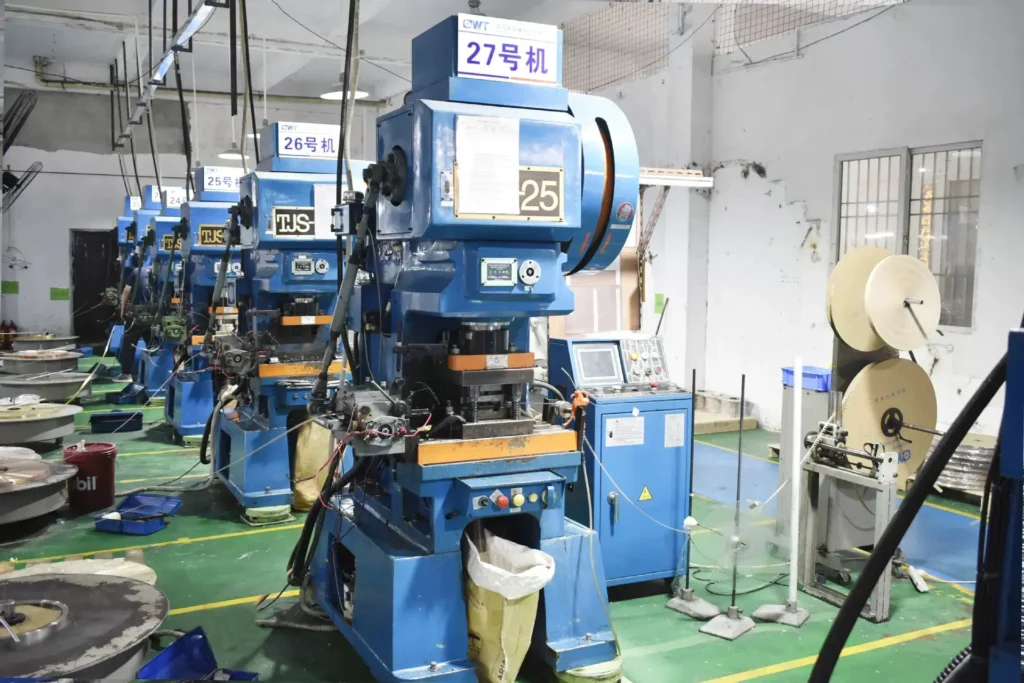
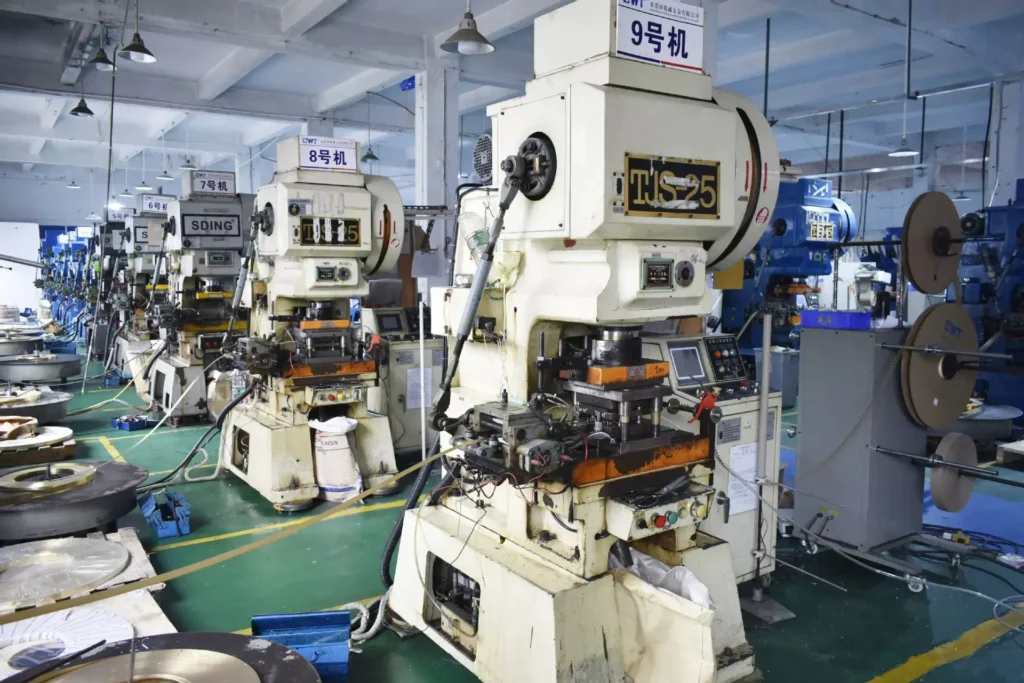
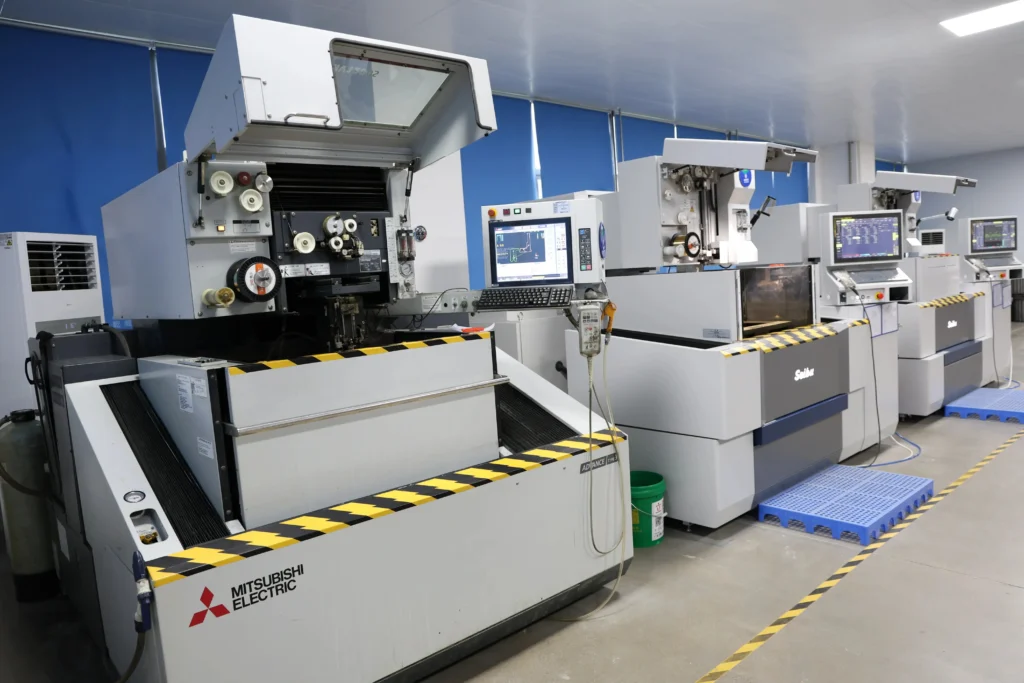
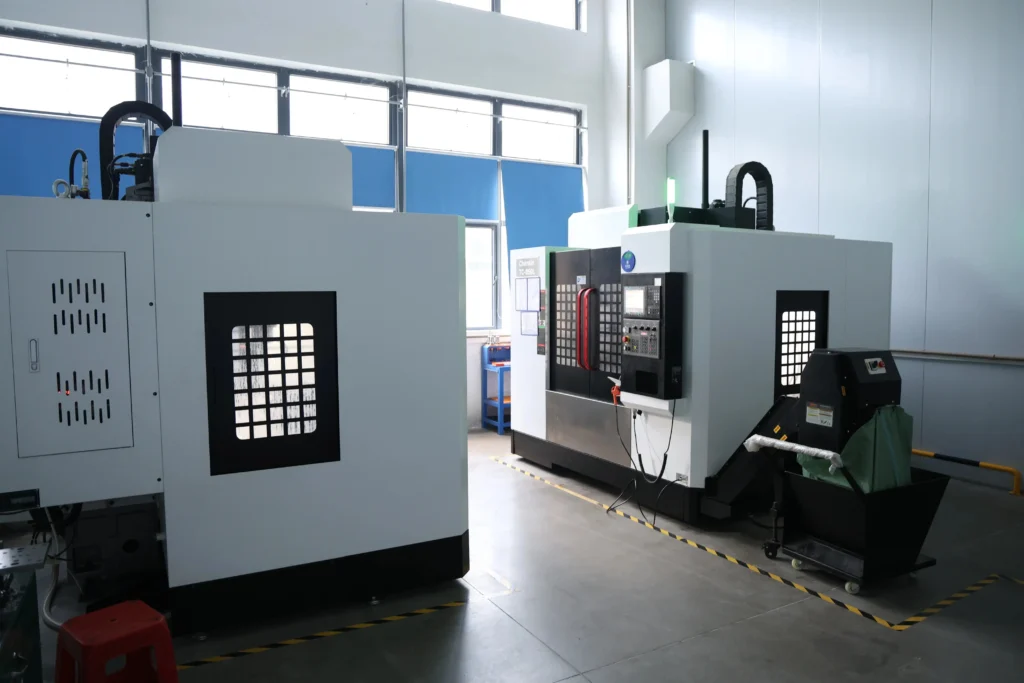
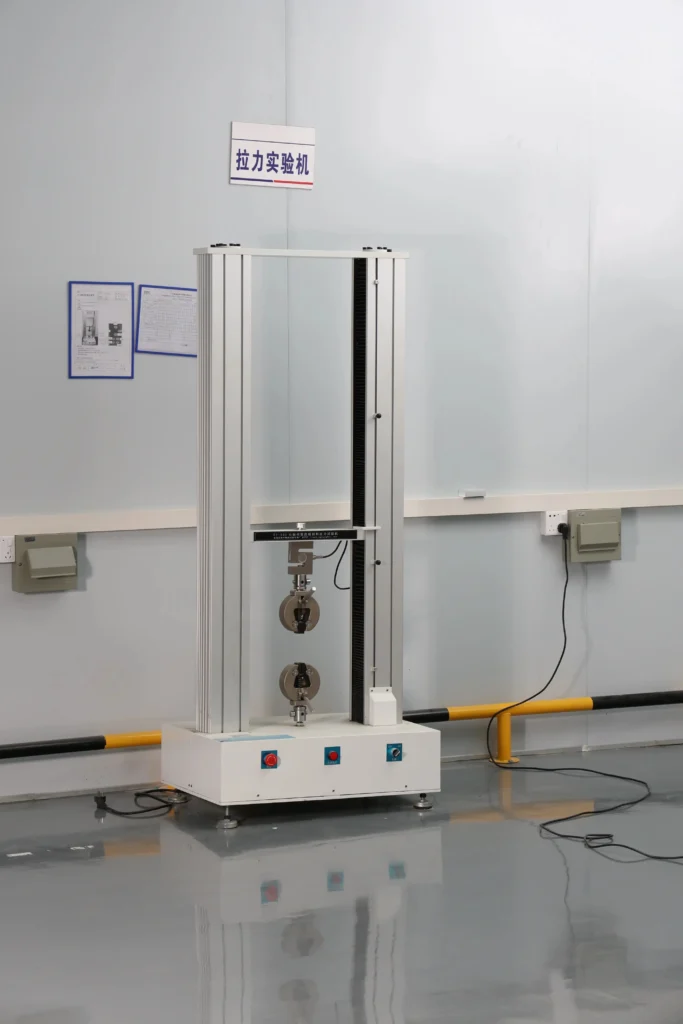
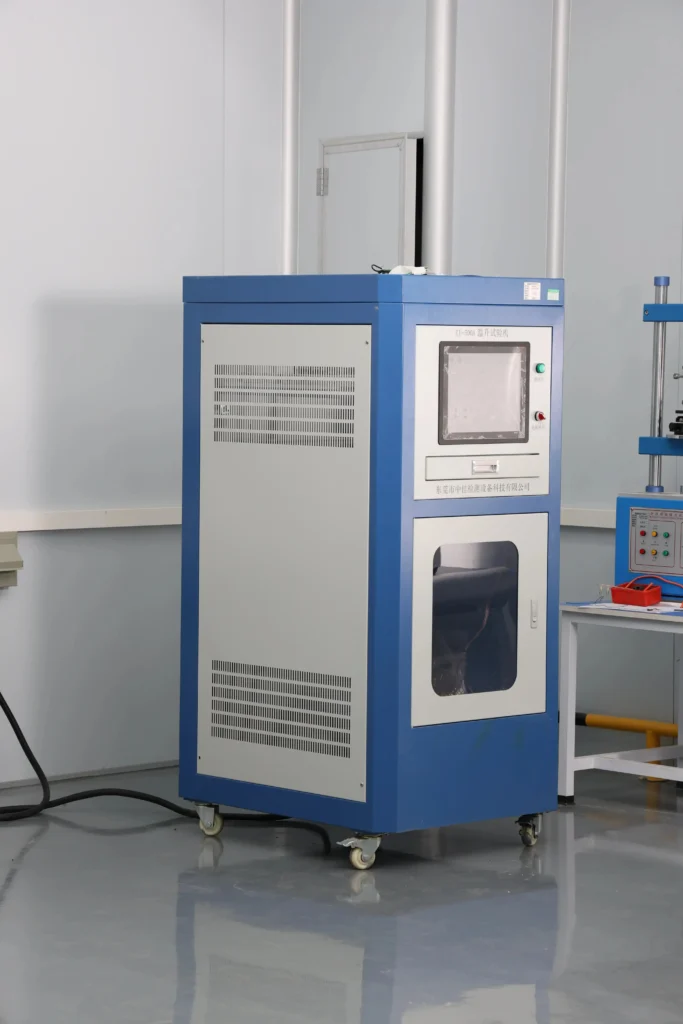
You can check three things before ordering: the certificate images, the machines in the factory photos and the answers to four supplier questions. VoltixC is an industry-and-trade business with its own plant in Guangzhou: a 1,200 m² factory, 25 staff and 135 production machines.
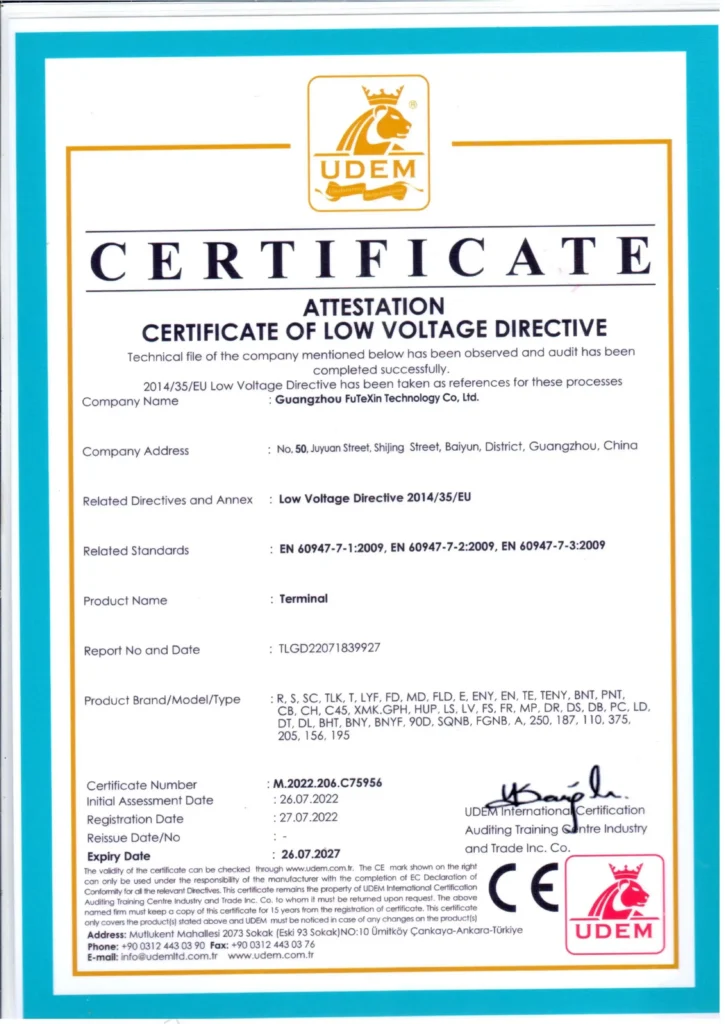
The CE attestation covers the full VoltixC terminal range, AD and CL-2H included: it is issued under the Low Voltage Directive 2014/35/EU against EN 60947-7-1, EN 60947-7-2 and EN 60947-7-3. VoltixC is UL certified. RoHS test report available (SGS): lead, mercury, cadmium and hexavalent chromium were tested to EU RoHS limits on tin-plated copper terminal samples. All three documents name Guangzhou FuTeXin Technology Co., Ltd., the company behind the VoltixC brand. Numbers and dates are not printed here; ask for the documents with your quote.
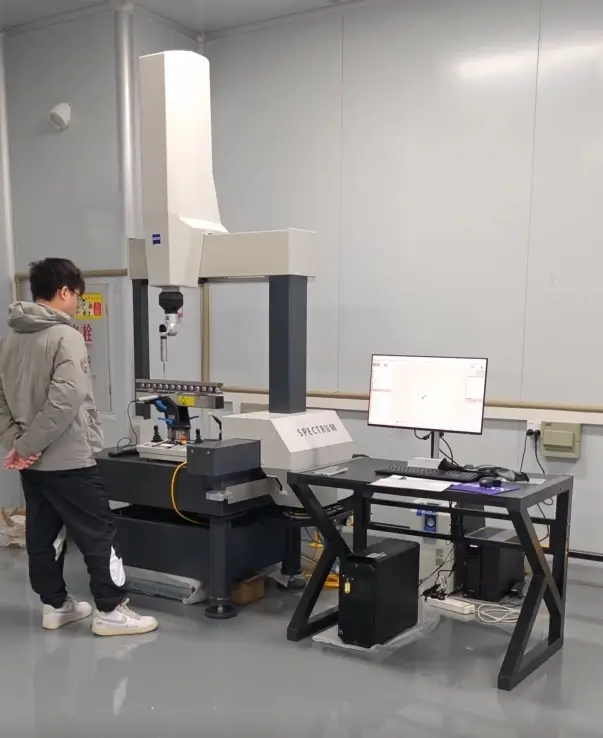
The photos below were taken on the Guangzhou floor. Each shows a machine that is there; none of them is a test result for an AD or CL-2H model.
Put these four points to each two-hole lug source you compare, then set the answers side by side:
Naming EN 13601 or another maker’s NEMA figure on this page is not a claim that AD or CL-2H parts are certified to them; the CE, UL and RoHS documents above are the ones on file.
The price of two-hole lugs follows the copper in the part and the work done to it: conductor size, series, plating, hole pattern, quantity per model and packing. No prices are published here. Each line on the quotation is priced against your drawing and size list.
| Driver | Effect on cost | What you control |
|---|---|---|
| Conductor size | A larger barrel and palm use more copper per piece | The AWG or kcmil size on each line |
| Series (AD or CL-2H) | Barrel length and form differ between the two series | Which series your drawing calls for |
| Plating | Every listed row is tin-plated; a different finish is a special request | Any finish other than tin, stated on the enquiry |
| Hole spacing and hole diameter | A pattern that differs from the supplier drawing may need new tooling, confirmed per order | Spacing and bolt size from your busbar |
| Quantity per model | Set-up is spread over the pieces in each model line | The piece count for each model you order |
| Packing and labels | Custom bags, labels or carton marks add handling | Your packing and marking instructions |
| Documents | Drawing approval and certificate copies are prepared per order | Which documents your project file needs |
Two of these drivers are fixed once the busbar and cable are chosen: conductor size and hole pattern. The rest are buyer choices, so a quote can be run again with a different finish, pack size or document set without changing the lug itself. When a size list mixes AD and CL-2H models, list each model on its own line so the quotation can price them one by one.
MOQ, warranty and payment terms are confirmed per order by email or the enquiry form. For a first sample of an AD or CL-2H model, VoltixC quotes fastest sampling from 7 days, confirmed per order.
What to send with a two-hole lug enquiry:
The enquiry form asks for name, company, email, country, product line, conductor size, quantity and a message. It has no upload field, so send drawings and photos of the busbar to hugo@voltixconnect.com after you submit the form.
Before you write, the pages below answer the size, form, drawing and crimping questions that come up when two-hole lugs are specified.
Look up lug sizes against a conductor size in the cable lug size chart.
How lug forms differ, and which form suits a given joint, is set out in the guide on how to choose cable lugs.
How barrel, palm and hole sizes are read on a lug drawing is covered in the guide to reading cable lug dimensions.
Tool and die choice, stripping, crimping and a pull check are walked through in the guide on how to crimp wire terminals.
The full copper range sits on the cable lugs page.
A two-hole lug is bolted at two points, so it cannot pivot on the pad while the nuts are tightened or when a heavy cable is moved. A one-hole lug has a single bolt and can turn around it. Where the busbar or pad is already drilled for two holes, the two-hole palm uses both; the hole spacing for each part number is in the model tables.
AD38 to AD150 list 25.4 mm between hole centers, and AD185 to AD500 list 44.5 mm; every CL-2H part number lists 45 mm. For reference, 3M states that its two-hole mounting-hole spacing meets the NEMA standard of 1.75 in (44.5 mm). The supplier sheets do not name NEMA, so send the center-to-center distance of your busbar holes and compare it with the table.
Yes. Copper and aluminum two-hole compression lugs with color-coded barrels matched to die colors are on the two-hole compression lug page. This page holds the AD and CL-2H copper series, which are listed by model number and conductor size without die color codes.
The AD and CL-2H specification sheets show no inspection window, so a window is not on the current list for either series; ask before you specify one. The barrel inside diameter for each size is in the model tables.
The AD series lists 12 part numbers from 2 AWG (AD38, 38 mm²) to 800/1000 kcmil (AD500, 500 mm²); AD125-10 is listed at 125 mm² only. The CL-2H series lists 54 part numbers over 13 conductor sizes from 6 AWG (16 mm², CL14-2H) to 400/500 kcmil (250 mm², CL250-2H); its entries run 6, 4, 2, 1/0, 2/0, 3/0 and 4/0 AWG, then 250/300, 300/350, 350/400 and 400/500 kcmil. Every row is tin-plated copper, per supplier specification sheet.
The specification sheets size each barrel in mm², and two or three mm² sizes can share one AWG label. AD200 (200 mm²) and AD250 (250 mm²) are both listed at 400/500 kcmil, and CL80-2H, CL95-2H and CL100-2H (80, 95 and 100 mm²) are all listed at 3/0 AWG. Match the mm² size of your conductor, or send its outside diameter with your enquiry.
This page does not interpret the electrical code for your installation. The lug type on a switchgear or transformer terminal is set by the equipment maker’s instructions, so check those first and follow them if they name a lug type; the AD or CL-2H model to match is then confirmed per order.
Avoid it. A two-hole lug cut down to one hole is no longer the part described in the supplier data, so the values on this page stop applying to it. A one-hole lug sized for the stud is the cleaner fix; the one-hole route is in the comparison table above, and the model is confirmed per order.
No. The part numbers, sizes and dimensions come from the supplier specification sheets as printed and were not individually re-tested. The approved drawing for your order is the document the parts are made to.
Yes. Send the drawing with hole spacing, hole diameter, barrel size and finish, and the part is quoted against it. Fastest sampling is from 7 days, confirmed per order. Changes that need new tooling are confirmed per order before work starts.
Send your size list, busbar drawing and quantity per model, and a VoltixC engineer checks them against the AD and CL-2H rows. Use email or the enquiry form for the list.