VOLTIXC / ENQUIRY
Request a Quote
Tell us what you need and we will review your enquiry.

Copper crimp lugs with a slim mounting palm for breaker and terminal pockets that leave little side room, in the TPE narrow-palm and XK narrow-tongue series.
Fast answer: Narrow-palm copper lugs have a slimmer palm than standard tube lugs, so they fit breakers and terminal blocks with limited width. VoltixC groups the TPE narrow-palm and XK narrow-tongue series here. Measure the terminal width, confirm conductor size and stud, then request a quotation.
The two series list 40 part numbers from 2 AWG (35 mm²) up to 500 kcmil (300 mm²), all tin-plated copper, with stud holes of 6.4 to 17 mm and tongue widths of 15 to 31 mm.
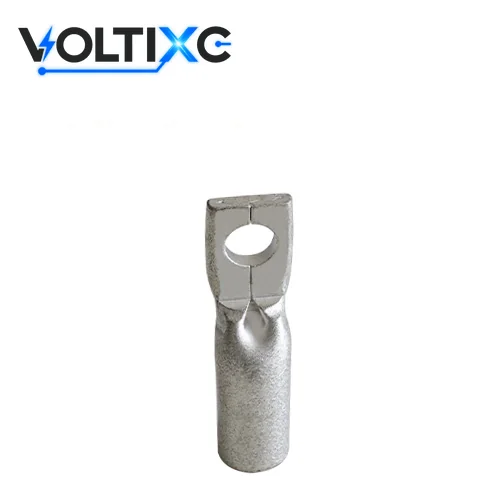
A narrow-palm copper lug is a crimp lug whose flat palm is narrower than a standard lug’s for the same conductor, so it fits between the side walls of a breaker or switch terminal or onto a small pad. You crimp the copper barrel onto the stripped conductor and bolt the palm to the terminal stud. Some makers call that flat part a tongue, and their catalogs list the same form as narrow tongue lugs.
Cembre lists its A-M “contained palm” family as a ring terminal with a narrow connection for copper conductors and low-voltage circuit breakers. Reach for one when a large cable has to land in a small terminal opening.
A palm wider than the terminal leaves the installer three bad options.
Bolted down as it is, the palm can’t sit flat, and the bolt or clamp bears on an edge instead of the full contact face.
Filing or trimming the palm to fit takes copper out of the path the current follows.
If a different lug shape goes in, the cable has to bend harder to reach the stud.
In one thread on Mike Holt’s Forum, a participant notes that a specification may call for two-hole, long-barrel lugs that then fail the allowed cable bend or the space inside the equipment. A narrow palm keeps the lug inside the terminal width.
You fit the lug with a crimp tool and a wrench.
Strip the conductor to the depth of the barrel.
With the die set matched to the lug and the conductor size, crimp the barrel.
The palm then bolts to the terminal, tightened to the equipment maker’s instructions.
VoltixC lists a range of copper narrow-palm and narrow-tongue lugs in two series: TPE with 21 part numbers in 7 conductor sizes and XK with 19 part numbers in 9 sizes, all tin-plated copper. The seven TPE sizes, 1/0 AWG to 400/450 kcmil, also appear in XK; XK adds 2 AWG at the small end and 500 kcmil at the large end.
Each table gives one row per conductor size in mm², with tongue width W, length L and barrel ID d for the part shown. Where a size comes with more than one stud hole, the Other stud holes column lists the rest; in XK a different hole can also change W and L, given in brackets. Sizes of 250 and above are kcmil, printed the way the supplier writes them (for example 250/300). All values are per supplier specification sheet, not VoltixC test results.
TPE is the narrow-palm series: 7 conductor sizes from 1/0 AWG (50 mm²) to 400/450 kcmil (240 mm²), tongue width 15 to 26 mm, stud holes 6.4 to 16.5 mm.
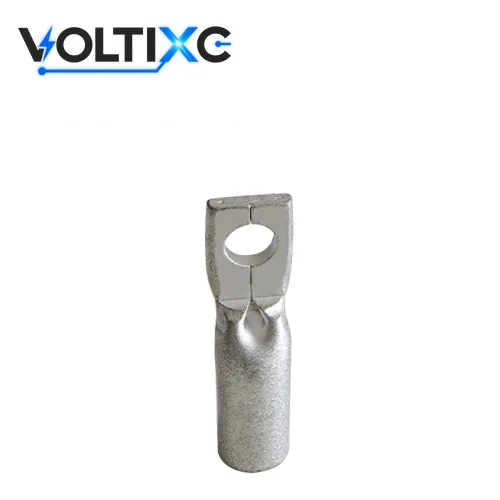
| Part No. | AWG / kcmil* | mm² | Stud hole Ø (mm) | Other stud holes Ø (mm) | Tongue width W (mm) | Length L (mm) | Barrel ID d (mm) |
|---|---|---|---|---|---|---|---|
| TPE-50-8 | 1/0 | 50 | 8.5 | 6.4, 10.5 | 15 | 50 | 9.8 |
| TPE-70-8 | 2/0 | 70 | 8.5 | 6.4, 10.5 | 15 | 55 | 11.5 |
| TPE-95-10 | 3/0 | 95 | 10.5 | 8.5 | 15 | 60 | 13.5 |
| TPE-120-10 | 4/0 | 120 | 10.5 | 8.5, 13 | 21 | 65 | 15.6 |
| TPE-150-10 | 250/300 | 150 | 10.5 | 12.5 | 21 | 72 | 16.5 |
| TPE-185-10 | 300/350 | 185 | 10.5 | 8.5, 12.5 | 26 | 75 | 18.8 |
| TPE-240-10 | 400/450 | 240 | 10.5 | 8.5, 12.5, 15, 16.5 | 26 | 85 | 21.2 |
Source: per supplier specification sheet; 21 part numbers in the full specification table — request the complete list with your quote. * Sizes 250 and above are kcmil, written as the supplier prints them.
XK is the narrow-tongue series and covers the widest span on this page: 9 conductor sizes from 2 AWG (35 mm²) to 500 kcmil (300 mm²), tongue width 15 to 31 mm, stud holes 6.4 to 17 mm.
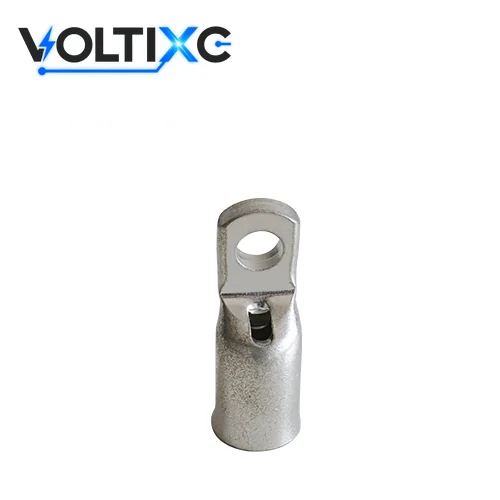
| Part No. | AWG / kcmil* | mm² | Stud hole Ø (mm) | Other stud holes Ø (mm) | Tongue width W (mm) | Length L (mm) | Barrel ID d (mm) |
|---|---|---|---|---|---|---|---|
| — | 2 | 35 | 6.5 | — | 15 | 41 | 8.2 |
| XK50-8 | 1/0 | 50 | 8.4 | 6.5 (W 15, L 43), 10.5 | 19 | 49 | 9.5 |
| XK70-8 | 2/0 | 70 | 8.4 | 6.4 (W 17, L 45), 10.5 | 19 | 51 | 11.2 |
| XK95-10 | 3/0 | 95 | 10.5 | 8.4 (W 19, L 51) | 19 | 55 | 13.4 |
| XK120-10 | 4/0 | 120 | 10.5 | 13 | 19 | 61 | 15.6 |
| — | 250/300 | 150 | 10.5 | — | 19 | 66 | 16.7 |
| XK185-10 | 300/350 | 185 | 10.5 | 13 | 24.5 | 74 | 18.4 |
| XK240-10 | 400/450 | 240 | 10.5 | 13 | 31 | 82 | 21.2 |
| XK300-10 | 500 | 300 | 10.5 | 13, 17 | 31 | 87 | 23.5 |
Source: per supplier specification sheet; 19 part numbers in the full specification table — request the complete list with your quote. Rows marked — have their part number confirmed with your quote. * Sizes 250 and above are kcmil, written as the supplier prints them.
Choose the terminal first and the conductor second: measure the terminal opening, pick the TPE or XK size for your cable, then check the stud hole and tongue width W in the tables before you approve a sample.
| Check | What to measure or read | Where the answer comes from |
|---|---|---|
| Terminal width | Inside width of the breaker or block terminal, wall to wall | The equipment drawing sets the width requirement; compare it with tongue width W, 15 to 31 mm in the tables |
| Conductor size | AWG, kcmil or mm² printed on the cable jacket | TPE and XK tables above: 2 AWG to 500 kcmil (35 to 300 mm²) |
| Stud or screw | Stud diameter and position in the terminal | Equipment data sheet, against stud holes of 6.4 to 17 mm in the tables |
| Conductor metal | Copper or aluminum | Copper conductors here; aluminum goes to the compression lug page |
| Cable build | Strand class and outside diameter | Cable data sheet, against barrel ID d in the tables |
| Crimp dies | Die set you will use on site | Your tooling list; die match confirmed per order |
Before you order, hold the listed values against your own terminal:
Palm width against the pocket: put tongue width W next to the pocket width on paper. With the bolt centered, the palm has to clear both terminal walls.
Stud against hole: a hole drilled for a larger stud leaves less palm on each side, and on a narrow part that matters more than on a standard one.
Size between two rows: if your conductor falls between two rows, have the drawing checked instead of picking the nearest row, since TPE and XK list fixed sizes.
One practical point came up on Mike Holt’s Forum, where an electrician described choosing a lug that fits both the conductor and the crimp tooling already on hand. List your die set in the enquiry so the barrel is matched to it.
Send My Size ListUse narrow palm lugs only when the terminal width rules out a standard palm; if the pad has room, is drilled for two bolts, or takes aluminum cable, another VoltixC page fits the job better.
| Route | Choose it when | Where to go |
|---|---|---|
| Narrow-palm copper lugs (TPE, XK) | The terminal pocket is narrower than a standard palm and the conductor is copper, 2 AWG to 500 kcmil | This page |
| Standard one-hole compression lug | The terminal has room for a full-width palm, or the conductor is aluminum | one-hole compression lugs |
| Two-hole lug | The pad is drilled for two bolts and the lug must not turn | two-hole copper lugs |
| Standard tinned copper tube lug | A general copper termination with no width limit | tinned copper tube lugs |
| Trimming a standard lug | Not a route VoltixC recommends: cutting a palm to reduce width takes copper out of the part | Order a narrow palm instead |
Conductor size alone does not decide between these routes. As one example of a standard-palm range, 3M lists its 30000 Series one-hole standard-barrel lugs for 6 AWG through 4/0 AWG copper and its 31000 Series one-hole long-barrel lugs for 2 AWG through 600 kcmil. Those sizes overlap the TPE and XK tables, so choose between a narrow and a standard palm by the terminal width.
Two-hole lugs answer a different problem. A two-hole palm needs a pad drilled for two bolts and room for both bolt heads, which is the space a narrow palm is chosen to avoid. Installers on Mike Holt’s Forum raise the question from the other side, asking whether every bar drilled for two holes should get a two-hole lug. On this page the answer comes from the terminal drawing: two holes at fixed centers point to the two-hole lug page, one narrow pocket points here.
Cutting a standard lug down is the route to rule out. Trimming the palm or cutting off a hole takes copper out of the part and changes the shape it was made to, and none of the listed values then apply. VoltixC does not recommend it.
Switch away from this page when one of these is true:
Your terminal drawing shows a full-width pad: go to standard compression lugs.
The pad has two holes at fixed centers: go to two-hole lugs.
The cable is aluminum: go to the compression lug page, which covers copper and aluminum. A mixed-metal joint has no stated rating in the supplier data; ask before you specify.
You need a size outside 2 AWG to 500 kcmil: it is not on the current list, so send the drawing and ask before you specify.
The cable lugs page lists every copper lug form side by side.
Narrow tongue lugs fit copper cable terminations where the terminal pocket is narrower than a standard palm, such as molded-case breakers and compact switch terminals; they are the wrong part for aluminum cable, two-hole pads and sizes outside the table. Each card rests on a cited source or on the product geometry; VoltixC publishes no installation records for this range.
According to Electrical Engineering Portal, an MCCB has terminals that may be mechanical lugs, compression lugs or a solid bar. Where an LV breaker takes a compression lug in a walled pocket, a narrow palm lets the lug sit between the walls. Check the pocket width and stud size in the breaker maker’s data.
According to Electrical Engineering Portal, breaker line and load connections can use cable lugs for single or multiple conductors, specified for copper only or for copper and aluminum. TPE and XK bodies are copper, so read the terminal marking for the conductor it accepts before you connect the cable.
A switch or terminal block whose pad is narrower than the standard palm for your cable size is the same fit problem in a smaller housing. Measure the pad width and the distance from the hole to the pad edge, then compare them with tongue width W and the stud hole in the tables.
When a standard palm will not fit, trimming it on site is the shortcut that gets considered. Filing the palm down leaves less metal where the bolt clamps, on a part that was never sized for that cut. A narrow palm avoids that trade, because the width is set when the part is made rather than on site.
These narrow tongue copper lugs have copper bodies and are listed for copper cable. Aluminum or copper-aluminum cable belongs on the compression lugs page, which lists both metals.
A pad drilled for two bolts needs a two-hole lug with matching centers. A single narrow palm on that pad leaves one hole empty and lets the lug turn.
The tables stop at 2 AWG (35 mm²) and 500 kcmil (300 mm²). Smaller or larger conductors are not on the current list; send the drawing and ask before you specify.
A matching AWG number does not prove that a flexible, fine-strand cable fits the barrel. Compare the cable with barrel ID d in the tables and send its data sheet before the sample.
Both series have a tin-plated copper body: all 40 part numbers on the supplier specification sheets list copper with tin plating, and the series description adds red copper with purity above 99%.
| Property | Supplier listing | How it is confirmed |
|---|---|---|
| Body metal | Copper, all 40 part numbers | Supplier specification sheet |
| Copper grade | Red copper, purity above 99% (series description) | Confirmed per order |
| Plating | Tin, all 40 part numbers | Tin or bare copper stated on your order |
| Dimensions | Stud hole, tongue width, length and barrel ID per part number (tables above) | Supplier specification sheet; any change on your drawing |
Copper is used for the body because of its electrical conductivity; the specification sheets give no conductivity value. Tin plating covers the copper surface so the palm and barrel resist oxidation in storage and on the contact face; bare copper can be supplied when your drawing calls for it. The crimped joint forms when the barrel is pressed onto the conductor with a die matched to the lug, the conductor and the tool. That is why the die set belongs in the enquiry, next to the conductor size.
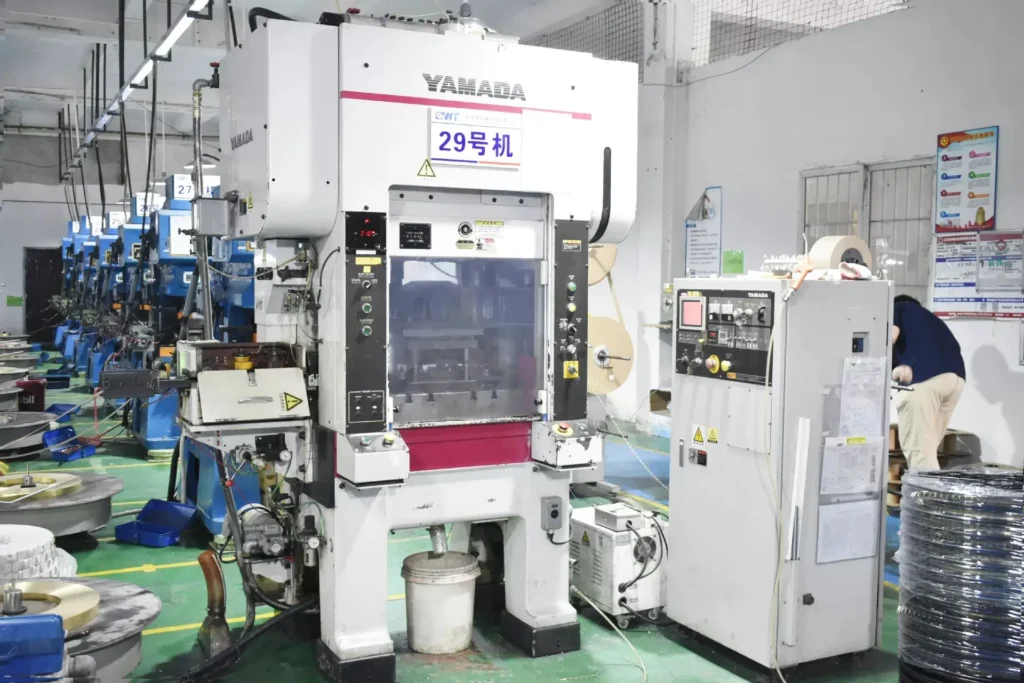
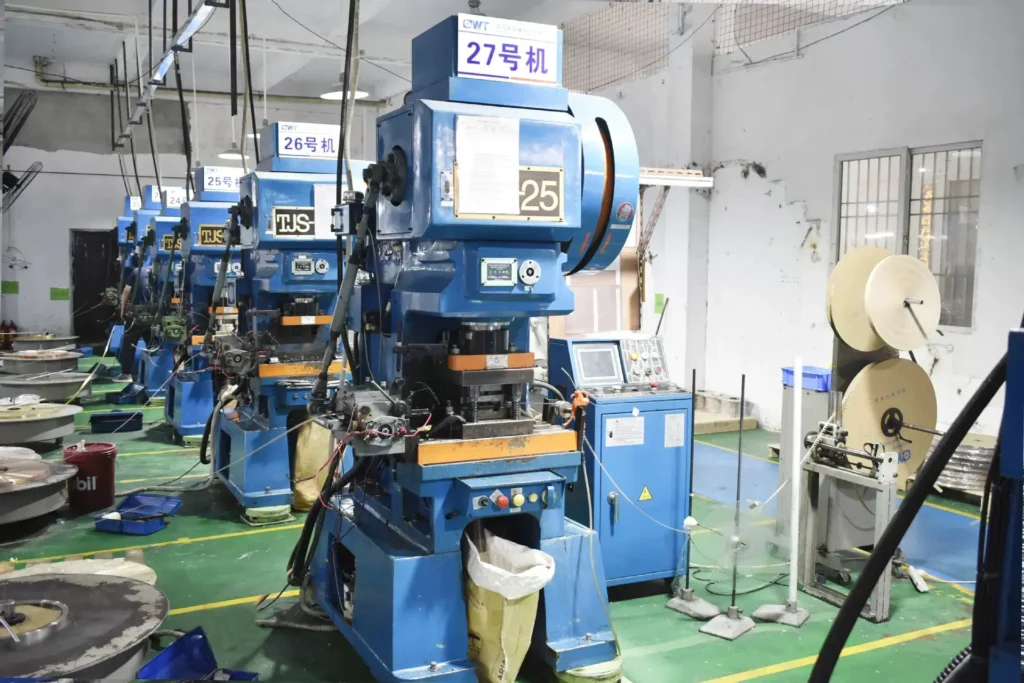
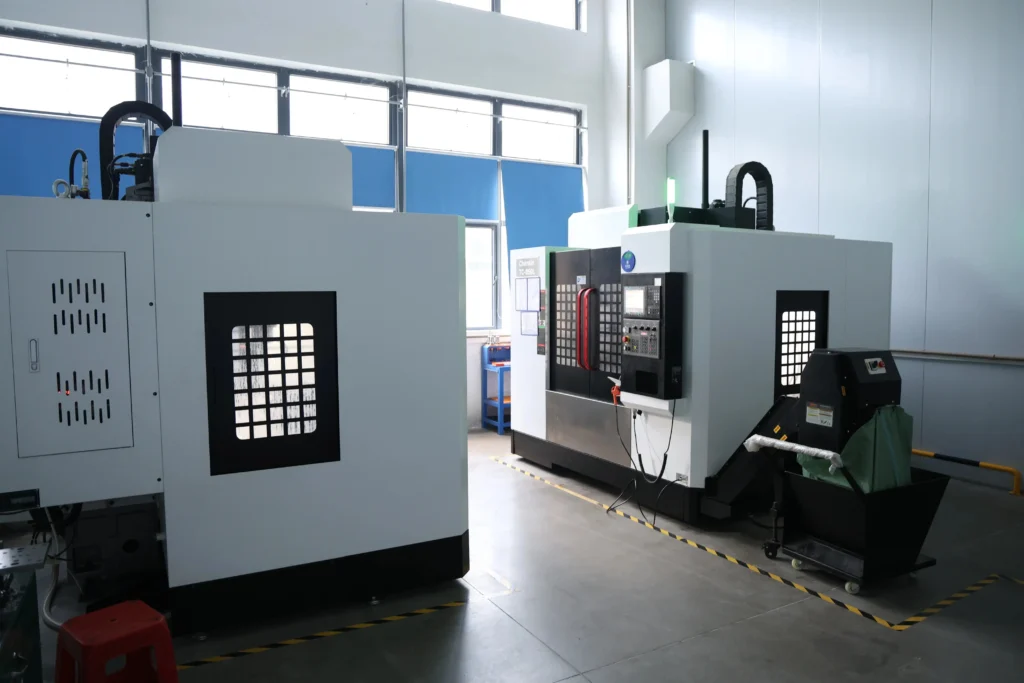
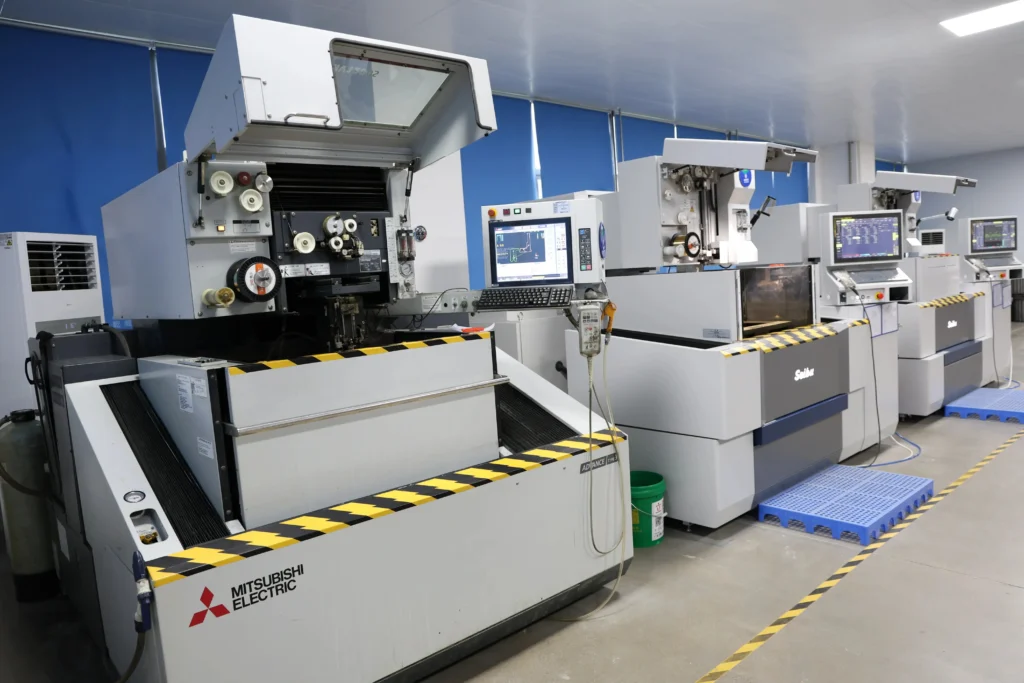
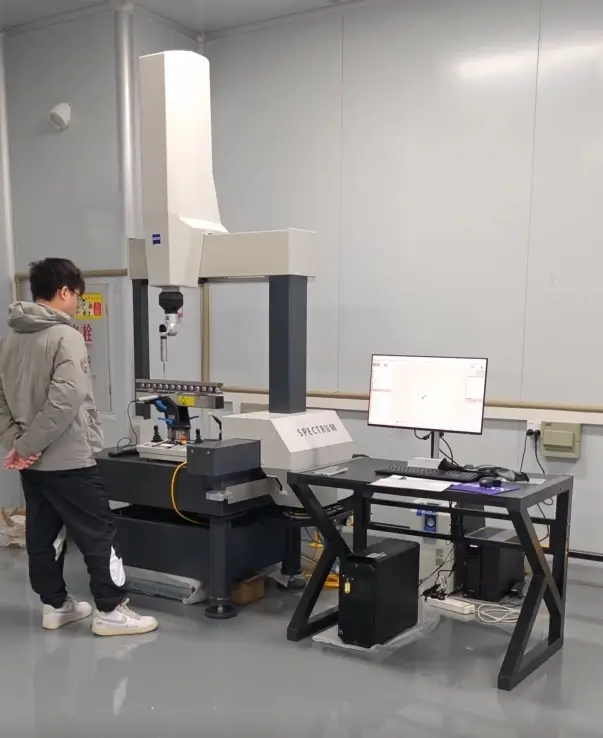
VoltixC works from a 1,200 m² factory in Guangzhou with 135 production machines. The photos below show press and tooling equipment on site. They do not state which machine forms a given TPE or XK part.
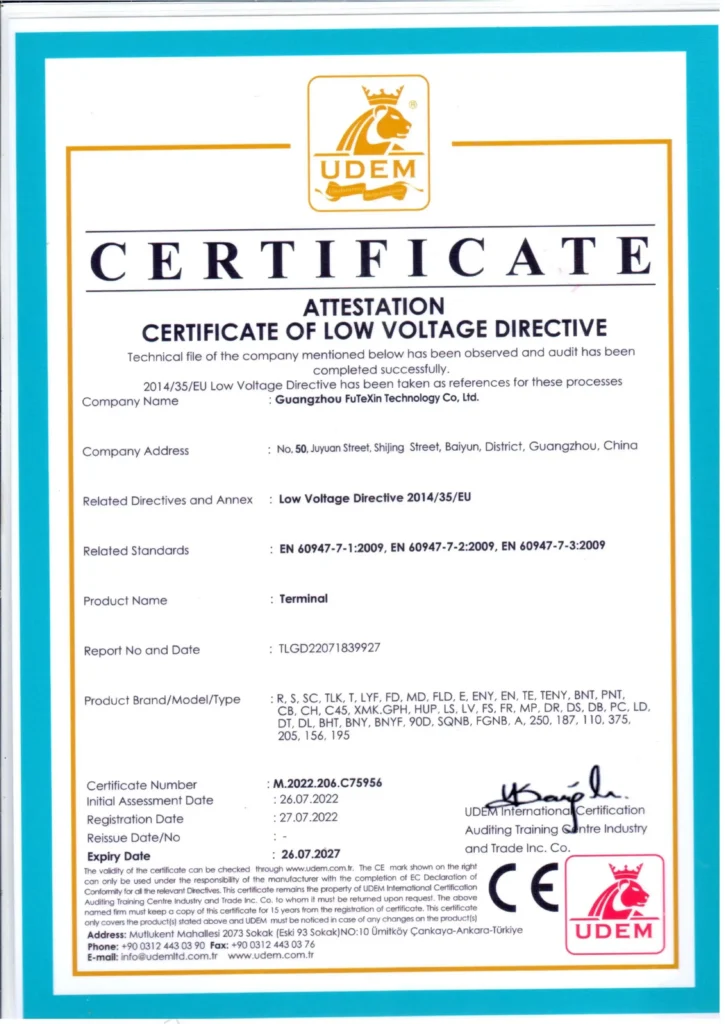
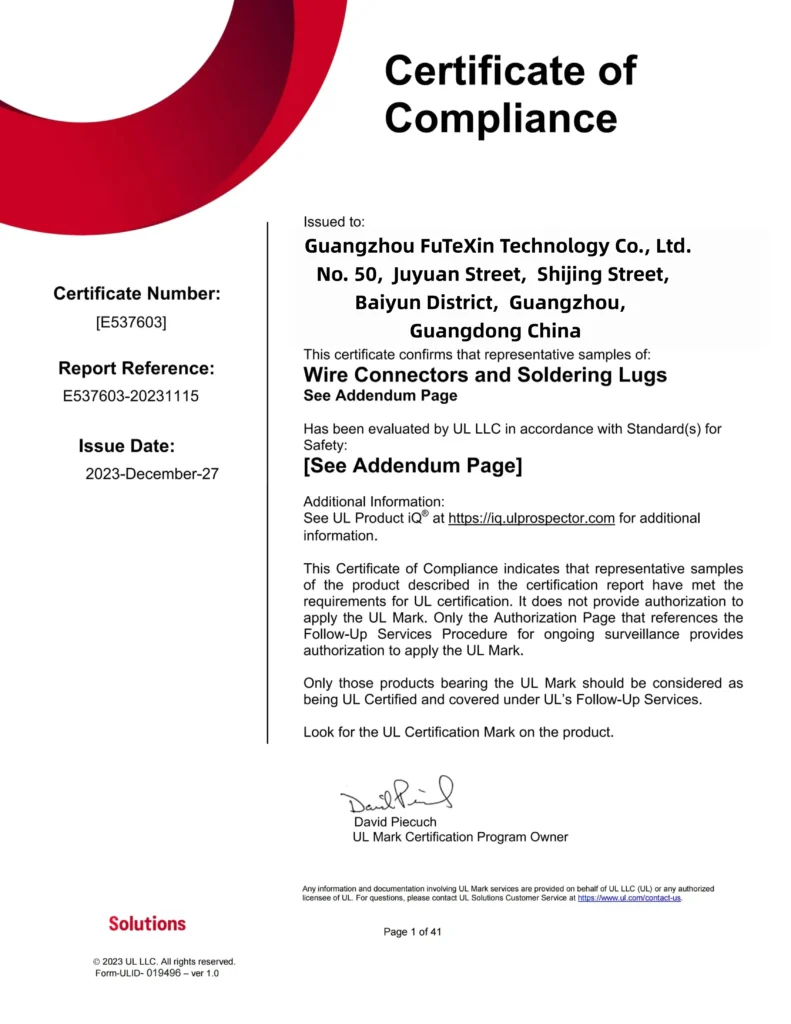
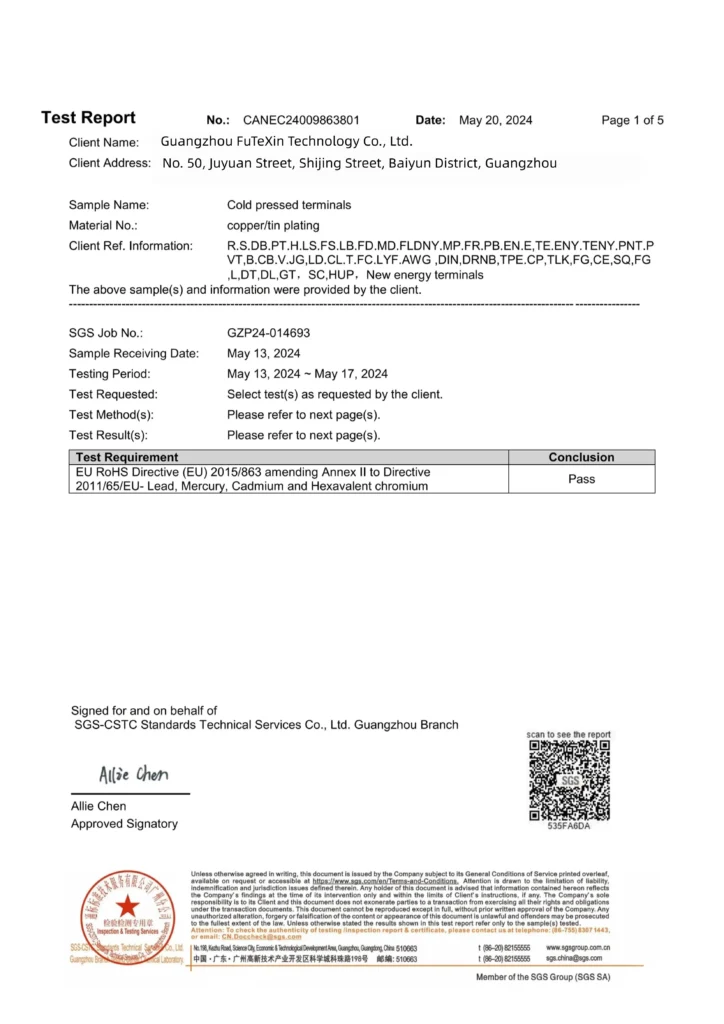
The VoltixC CE attestation under the Low Voltage Directive 2014/35/EU, assessed against EN 60947-7-1, EN 60947-7-2 and EN 60947-7-3, covers the full terminal range, TPE and XK included. VoltixC is UL certified. RoHS test report available (SGS), covering lead, mercury, cadmium and hexavalent chromium on tin-plated copper terminal samples. The documents are issued to Guangzhou FuTeXin Technology Co., Ltd., the company behind the VoltixC brand. Certificate numbers and dates are not shown on this page; ask for copies with your quote.
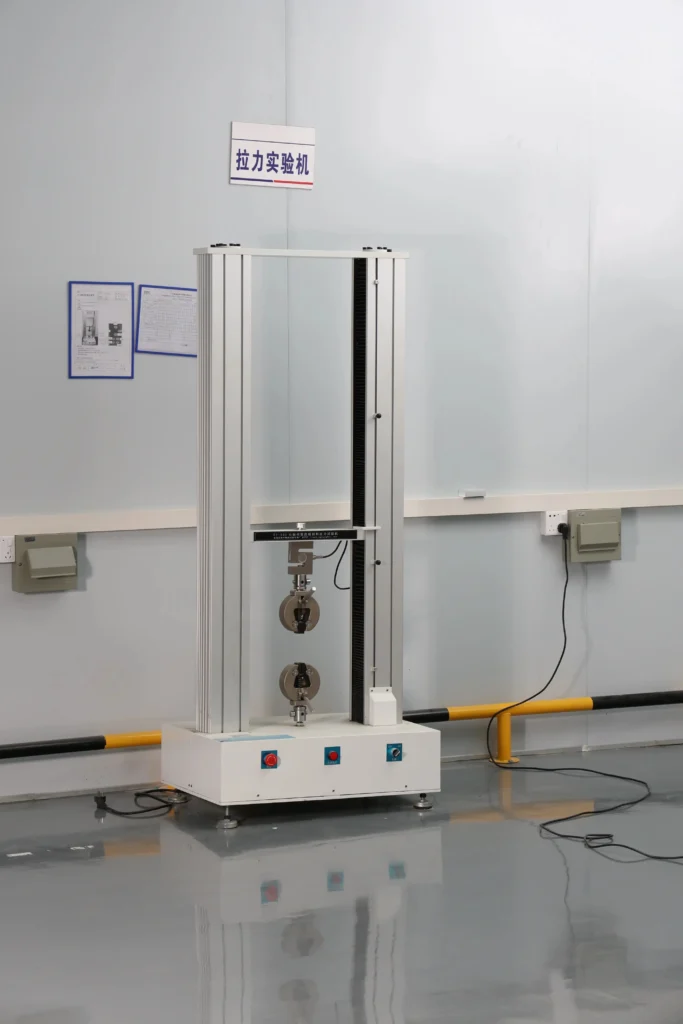
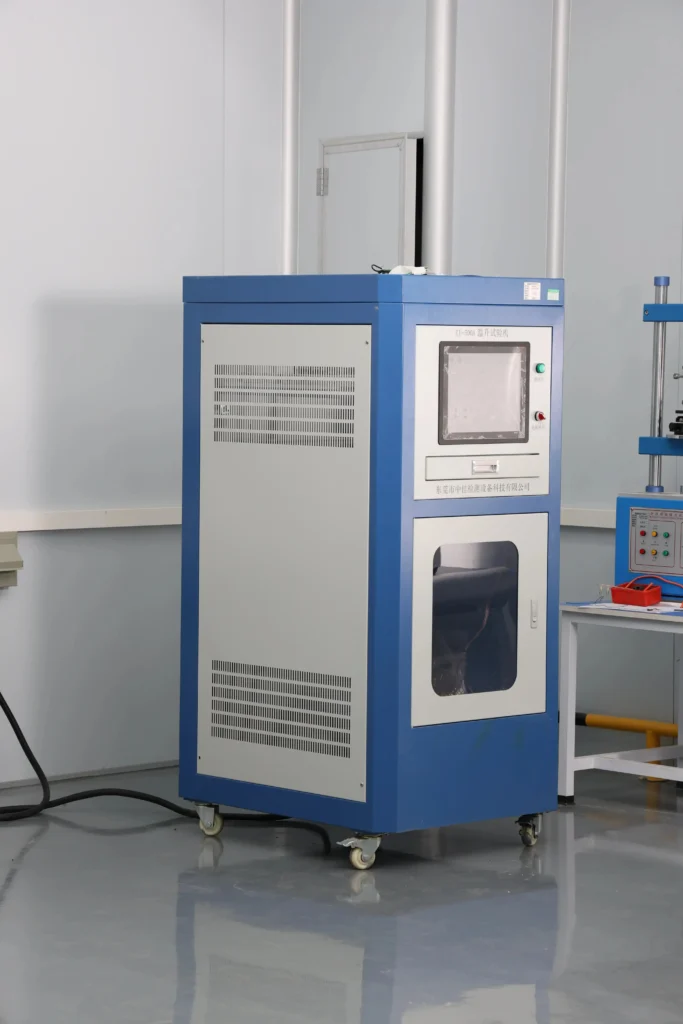
The factory photos also show test equipment on site. No test values, test frequency or sampling plan is published on this page.
The drawing and the quote should settle four points before a TPE or XK size is approved:
The price of narrow-palm copper lugs moves with conductor size, the copper in each part, plating, quantity per size and any change to the palm or hole; lead time, MOQ and payment are confirmed per order by email or the enquiry form.
| Driver | Effect on cost | What you control |
|---|---|---|
| Conductor size | A 500 kcmil lug carries more copper than a 2 AWG lug, so unit cost rises with size | Quote only the sizes on your bill of materials |
| Palm width or hole change | A width or hole that differs from the listed TPE or XK parts may need new tooling | Use a listed part number wherever your terminal allows |
| Plating | Tin plating adds a process step compared with bare copper | State tin or bare on the enquiry |
| Quantity per size | A few pieces spread across many sizes cost more per piece than a larger run of one size | Group sizes and give a quantity for each |
| Packing and labels | Custom bag counts, labels or cartons add handling | List packing needs at the first enquiry |
| Samples | A sample round comes before bulk production; fastest sampling is 7 days | Approve the sample against your terminal before bulk |
| Documents | Certificates or reports for a shipment add paperwork | Name the documents you need up front |
Source: drivers follow the TPE and XK ranges listed on this page; the table names cost drivers only, without prices, and every value is set per order.
Sampling is the only step with a stated time, and for a TPE or XK sample that time is 7 days at the fastest. Bulk quantity, packing and shipping terms are agreed on the order itself.
The enquiry form has no upload field, so send the terminal drawing or a photo of the pocket by email to hugo@voltixconnect.com after you submit it. You can open the quote request form from any button on this page.
A complete narrow-palm enquiry carries these details:
Check the conductor size and the lug form with these three pages, then bring the result to your narrow palm cable lug enquiry. The copper cable lugs overview lists the other lug forms.
Look up the lug size for a conductor in AWG, kcmil or mm² with the cable lug size chart, then find the same size in the TPE or XK table.
The cable lug type guide explains palm, barrel and hole options, which helps when you are unsure a narrow palm is the right form.
The cable lug dimensions guide shows which measurements set palm width and hole position on a drawing.
Both names describe a copper lug whose flat mounting part is narrower than a standard lug for the same conductor; “palm” and “tongue” are two words for that flat part. On this page the difference is the series and its range: TPE, sold as narrow-palm, lists 7 sizes from 1/0 AWG to 400/450 kcmil, and XK, sold as narrow-tongue, lists 9 sizes from 2 AWG to 500 kcmil. Tongue width runs 15 to 26 mm in TPE and 15 to 31 mm in XK.
Measure the inside width of the breaker terminal from wall to wall and note the stud size, then compare both with tongue width W and the stud hole for your TPE or XK size in the tables. The narrowest listed tongue is 15 mm. Send a photo of the terminal pocket by email if you have no breaker data.
TPE lists seven conductor sizes: 1/0, 2/0, 3/0, 4/0, 250/300, 300/350 and 400/450, or 50 to 240 mm². The 21 part numbers run from TPE-50-6 to TPE-240-16, all tin-plated copper, and sizes above 4/0 are kcmil values written the supplier’s way.
Yes, both ends of the range are in the XK series only: 2 AWG (35 mm²) with a 6.5 mm stud hole, and 500 kcmil (300 mm²) as XK300-10, XK300-12 and XK300-16. The other seven XK sizes match the TPE sizes, from 1/0 AWG to 400/450 kcmil. A conductor outside 2 AWG to 500 kcmil is not on the current list; ask before you specify.
No. The TPE and XK bodies are listed as copper and this page quotes them for copper conductors. According to Electrical Engineering Portal, breaker line and load connections are specified either for copper only or for copper and aluminum, so read the terminal marking first. Aluminum cable belongs on the compression lug page.
VoltixC does not recommend it. The listed values describe each lug as made, not after it has been trimmed. A narrow palm gets you the smaller width with the copper left in place.
Follow the breaker maker’s terminal instructions, which show the lug form the terminal takes. If they show a one-bolt pocket that is narrow, a TPE or XK size is the matching part; if they show a pad drilled for two bolts, go to the two-hole lug page.
It is a crimp-on copper lug with a slimmer mounting palm, also called a narrow tongue or contained palm, made for terminals with little side room. According to Cembre, its contained palm family is a ring terminal with a narrow connection for copper conductors and low-voltage circuit breakers. On this page the form comes in 40 part numbers across TPE and XK.
Battery cable use is not stated in the supplier data; ask before you specify. The tables include 1/0, 2/0, 3/0 and 4/0; check the stud hole and tongue width against your terminal, and state tin plating or bare copper on the enquiry.
No. The values come from the supplier specification sheets and have not been re-tested by VoltixC. Any change to tongue width or stud hole is confirmed on the drawing for your order.
Send the terminal width, conductor size and quantity per size, and VoltixC replies with the matching TPE or XK part number or a question about your drawing. Terminal drawings and pocket photos go by email to hugo@voltixconnect.com, since the form takes text only.