VOLTIXC / ENQUIRY
Request a Quote
Tell us what you need and we will review your enquiry.

Set-screw mechanical lugs in two series, AM aluminum and CM copper, for conductor terminations made without a crimp
Fast answer: Copper mechanical lugs and aluminum mechanical lugs clamp the conductor with a set screw instead of a crimp, so they go on with hand tools. VoltixC groups two series here: 48 AM aluminum mechanical lugs and 52 CM copper mechanical lugs, each with a wire range and bolt size. Confirm conductor material and size, port count and mounting hole, then request a quotation.
On the supplier specification sheets, AM wire ranges run from #14 AWG on AM0614 to 1000 kcmil on AM1151, and CM ranges run from #14 on CM1414A to 1000 on CM116143. The CM name says copper, while the supplier series summary lists the CM body as aluminum alloy.
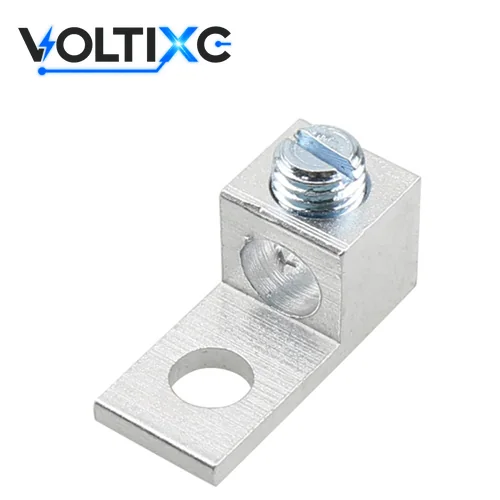
Copper mechanical lugs are bolted terminals in which a set screw presses the stripped conductor against the inside of the barrel, while the tongue bolts to a bus bar, breaker or terminal. Screw lugs and set-screw lugs are catalogue names for the same parts. No die or press is involved, so the joint is made and checked at the panel with a hex key or a screwdriver.
The weak points of a set-screw joint sit at the contact faces. According to NASA Kennedy Space Center, galvanic corrosion needs two dissimilar metals, an electrolyte and an electron-conductive path. NASA KSC identifies the more active metal as the anode, the metal that corrodes; in a copper-aluminum joint that is the aluminum. The same source adds that the farther apart two metals sit in the galvanic series, the greater the corrosion effect or rate.
Heat and oxide are the other two loss paths. According to Electrical Engineering Portal, aluminium expands more than the other metals in a joint, which can loosen connections, so aluminium or alloy terminals, or elastic devices, are used to make up the difference. The ILSCO installation guide says aluminum conductors should be brushed with a stainless steel wire brush to remove the oxide film and then treated with an oxide inhibitor compound.
At the panel, a set-screw termination goes like this:
Strip the conductor to the barrel depth given for the lug model.
On aluminum conductor, brush off the oxide film and apply inhibitor, as the ILSCO guide describes.
Push the conductor in until it reaches the end of the barrel.
Tighten the set screw to the torque stated for that model; the mechanical lug torque specs guide explains how those values are read.
Bolt the tongue to the bus or terminal and check the hardware for movement.
The supplier specification sheets list 100 part numbers: 48 in the AM aluminum series and 52 in the CM series, each with a printed wire range, bolt size and main dimensions. AM runs from single-barrel lugs to multi-conductor bodies such as AM2506-44; CM runs from the #14-#10 CM1414A to the 600–1000 CM116143 and includes four CML connector sizes.
Every row comes from the supplier specification sheet. A, B, C and H are the letters on the supplier’s dimension drawing, converted from inches (×25.4); a slot in the hex column means a slotted screw. Wire ranges are shown as printed: SOL. and STR mean solid and stranded, and sizes above 4/0 are kcmil. Each table has one row per wire range, and other catalogue numbers with the same range sit in the last column, with their bolt size where it differs. The sheets print no material or plating, and every part is packed 100 to a box; material and finish are confirmed per order.
AM aluminum mechanical lugs differ from the CM series in layout: the AM range reaches two to four conductors, holes or barrels on one body and includes two stacked forms, while CM stops at one conductor or two holes.
| Cat. No. | Wire range (as printed) | Bolt / stud size (in) | Hex size (in) | A (mm) | B (mm) | C (mm) | H (mm) | Other cat. nos., same wire range |
|---|---|---|---|---|---|---|---|---|
| AM0614 | #14 AWG–#6 AWG | 1/4 | Slot | 26.92 | 17.53 | 9.40 | 12.45 | — |
| AM0214 | #14 AWG–#2 AWG | 1/4 | Slot | 29.46 | 17.53 | 12.45 | 13.97 | AM0214-32 (5/16) |
| AM1014 | #14 AWG–1/0 AWG | 1/4 | Slot | 37.34 | 21.59 | 15.49 | 20.32 | AM1014-21 |
| AM2014 | #14 AWG–2/0 AWG | 1/4 | Slot | 37.34 | 21.59 | 15.49 | 20.32 | AM2014-21 |
| AM1012-32 | #12 AWG–1/0 AWG | 3/8 | Slot | 74.68 | 58.67 | 49.02 | 15.75 | — |
| AM3006-32 | #6 AWG–3/0 AWG | 1/2 | 1/4 | 106.43 | 85.85 | 71.12 | 20.32 | AM3006-34 |
| AM2506 | #6 AWG–250 kcmil | 5/16 | 3/8 | 50.80 | 25.40 | 22.61 | 26.67 | AM2506-44 (1/2), AM2506-21 (3/8), AM2506-32 (1/2), AM2506-34 (1/2) |
| AM3106 | #6 AWG–300 kcmil | 5/16 | 3/8 | 50.80 | 25.40 | 22.61 | 26.67 | AM3106-21S |
| Cat. No. | Wire range (as printed) | Bolt / stud size (in) | Hex size (in) | A (mm) | B (mm) | C (mm) | H (mm) | Other cat. nos., same wire range |
|---|---|---|---|---|---|---|---|---|
| AM3506 | #6 AWG–350 kcmil | 3/8 | 3/8 | 57.15 | 28.70 | 28.45 | 31.50 | AM3506-12 (1/2), AM3506-21 (1/2), AM3506-22 (1/2), AM3506-32 (1/2), AM3506-34 (1/2) |
| AM5104 | #4 AWG–500 kcmil | 3/8 | 1/2 | 69.85 | 38.10 | 34.80 | 37.85 | — |
| AM6104 | #4 AWG–600 kcmil | 3/8 | 1/2 | 69.85 | 38.10 | 34.80 | 37.85 | AM6104-12 (1/2), AM6104-21 (1/2), AM6104-22 (1/2) |
| AM6104A | #4 AWG–600 kcmil or (2)1/0 AWG–250 kcmil | 3/8 | 1/2 | 71.37 | 38.10 | 34.80 | 45.72 | — |
| AM6102-32 | #2 AWG–600 kcmil | 1/2 | 1/2 | 119.13 | 84.07 | 95.00 | 39.37 | AM6102-22S (3/8), AM6102-32S (3/8), AM6102-34, AM6102-42S (3/8) |
| AM7510-42S | 1/0 AWG–750 kcmil | 3/8 | 1/2 | 124.71 | 59.44 | 66.55 | 75.95 | — |
| AM7530-22S | 3/0 AWG–750 kcmil | 3/8 | 1/2 | 124.71 | 59.44 | 37.85 | 75.95 | AM7530-32S |
| AM5140-22S | 4/0 AWG–500 kcmil | 1/4 | 3/8 | 73.91 | 42.93 | 36.32 | 60.20 | — |
| AM8135 | 350 kcmil–800 kcmil | 5/8 | 9/16 | 85.85 | 44.45 | 41.15 | 49.02 | AM8135-12 (1/2), AM8135-21, AM8135-42 (1/2), AM8135-62 (1/2), AM8135-64 (1/2) |
| AM1151 | 500 kcmil–1000 kcmil | 5/8 | 9/16 | 88.90 | 44.45 | 44.20 | 53.85 | AM1151-21, AM1151-62 (1/2), AM1151-64 (1/2) |
Source: supplier specification sheets, AM series, per supplier specification sheet; all 48 AM part numbers appear above, as a row or in the last column. Ask for the full dimension drawing with your quote.
The supplier series summary lists the CM body as aluminum alloy; the CM name refers to the copper conductor. The CML connectors carry a thread size on the sheet instead of a hex size, so their hex column shows a dash.
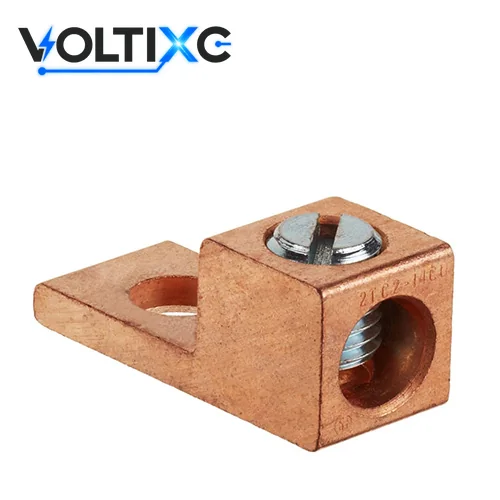
| Cat. No. | Wire range (as printed) | Bolt / stud size (in) | Hex size (in) | A (mm) | B (mm) | C (mm) | H (mm) | Other cat. nos., same wire range |
|---|---|---|---|---|---|---|---|---|
| CM1414A | #14-#10 | 1/8 | Slot | 29.46 | 19.05 | 8.13 | 9.40 | CM1014B |
| CM0614 | #14-#6 | 3/16 | Slot | 25.91 | 11.18 | 9.65 | 12.19 | CM0614T, CM0614A, CM0614B, CM061401, CM061401B |
| CM0414 | #14-#4 | 1/4 | Slot | 32.26 | 14.99 | 12.70 | 14.48 | CM0414T, CM0414A, CM0414B |
| CML0414 | 14 SOL.–4 STR | 0.25 | — | 28.19 | — | 13.72 | 13.97 | CML0414T |
| CML1014 | 14 SOL.–1/0 STR | 0.3125 | — | 39.88 | — | 18.54 | 20.07 | CML1014T |
| CM021201 | 12-2 | 1/4 | Slot | 57.40 | 41.40 | 12.70 | 16.51 | CM0212B |
| CM0112A | #12-#1 | 1/4 | Slot | 38.10 | 20.57 | 12.70 | 16.51 | CM011201B |
| CM200801 | #8–2/0 | 1/4 | Slot | 74.68 | 47.75 | 15.75 | 22.35 | — |
| Cat. No. | Wire range (as printed) | Bolt / stud size (in) | Hex size (in) | A (mm) | B (mm) | C (mm) | H (mm) | Other cat. nos., same wire range |
|---|---|---|---|---|---|---|---|---|
| CM400601 | #6–4/0 | 5/16 | 5/8 | 85.85 | 54.10 | 25.40 | 29.72 | CM4006A, CM4006B, CM400601B |
| CML2506 | 6 STR–250 kcmil | 0.375 | — | 49.28 | — | 23.88 | 26.92 | CML2506T |
| CM1004 | #4-#1/0 | 1/4 | Slot | 38.86 | 21.34 | 15.75 | 19.56 | CM1004T |
| CM3004 | #4-#3/0 | 3/8 | 9/16 | 55.63 | 31.75 | 19.05 | 26.42 | CM3004B |
| CM1002A | #2-#1/0 | 1/4 | Slot | 49.28 | 25.40 | 15.75 | 22.35 | CM1002B, CM100201B |
| CM4002 | #2-#4/0 | 5/16 | 9/16 | 55.63 | 26.92 | 25.40 | 28.70 | CM4002T |
| CM350101 | #1–350 | 3/8 | 3/4 | 125.48 | 84.33 | 25.40 | 35.31 | CM3501A, CM3501B, CM350187B |
| CM511043 | 1/0–500 | 3/8 | 3/4 | 142.75 | 90.68 | 38.10 | 39.62 | CM5110A, CM5110B, CM511043B |
| CM5140 | #4/0-500 | 3/8 | 3/4 | 80.26 | 42.93 | 38.10 | 41.91 | CM5140T |
| CML5140 | 500 kcmil | 0.5 | — | 76.20 | — | 35.81 | 37.34 | CML5140T |
| CM116143 | 600–1000 | 1/2 | 1.125 | 174.75 | 119.13 | 50.80 | 59.44 | CM1161A, CM1161B, CM116143B |
Source: supplier specification sheets, CM series, per supplier specification sheet; all 52 CM part numbers appear above, as a row or in the last column. Ask for the full dimension drawing with your quote.
Copper mechanical lugs are matched to a job by conductor material first, then conductor size and count, then the mounting, with the set-screw torque last. The AM and CM tables give the wire range, bolt size and main dimensions for each catalogue number; conductor metal, rating and torque come from your data and the quotation.
| Check | What you confirm | What the AM and CM tables give |
|---|---|---|
| Conductor material | Copper, aluminum, or both metals on one lug | Body material per series summary; conductor rating not stated in the supplier data |
| Conductor size | AWG, kcmil or mm², plus strand class | Wire range per catalogue number, #14 AWG to 1000 kcmil |
| Number of conductors | One to four wires on one body | Listing titles name 1 to 4 conductors, holes or barrels |
| Mounting | Hole count, bolt size, straight or 90° exit | Bolt size per catalogue number; hole count and exit angle not stated on the sheets |
| Set screw | Torque value and driver type | Hex size or slot per catalogue number; torque not listed, stated per model on the quotation |
| Common names | Alu lugs, screw lugs or mechanical lug connectors in your enquiry | Alu lugs point to the AM table; the other two names cover both tables |
| Chair lugs electrical | The name some buyers search under | Not a name either series uses; send the drawing |
kcmil means thousand circular mils, the US size unit for large conductors.
Before a sample is made, look at three fit points:
Count the wires first. A multi-conductor body such as AM2506-44 is picked for the number of wires it must take, and each port still needs its own size check.
When two cables must land on one breaker position, look at the double lugs page before you pick a multi-conductor AM part.
When your size or shape is missing from both tables, send the drawing; VoltixC quotes against the drawing, not against the nearest listed code.
An AM or CM set-screw lug fits when one to four conductors end on a bus, breaker or pad and the joint has to be made with hand tools. If two lug bodies must stack on one mounting, another page fits better. The same goes for a ground run, and for a specification that asks for a crimped barrel.
| Route | How the conductor is held | Pick it over AM / CM when | Page |
|---|---|---|---|
| AM / CM set-screw lugs | Set screw clamps each conductor in its barrel | You need 1 to 4 conductors on one body and no press on site | This page |
| Stacked mechanical lugs | Lug bodies stacked on one mounting | Two cables land on one breaker or bus position and the multi-conductor AM parts do not fit the layout | stacked double lugs |
| Lay-in grounding lugs | Open lay-in channel closed by a screw | The conductor is a bonding or ground run rather than a feeder | lay-in grounding lugs |
| One-hole compression lugs | Barrel crimped onto the conductor with a die | The drawing or the project specification calls for crimped terminations | one-hole compression lugs |
The case for a set-screw lug rests on the conductor rating. According to Electrical Engineering Portal, ALCU lugs are suitable for either aluminum or copper conductors and save the labor of compression connectors. That saving holds only for a lug rated for the conductor in use. No conductor rating, Al/Cu or CU, is stated in the supplier data for AM or CM, so ask before you specify one.
On the compression side, BURNDY states that its dual-rated AL-CU terminals take both copper and aluminum wire and have an internal chamfer that helps prevent strand damage during insertion. A buyer who needs that crimped form for a mixed-metal job belongs on the compression page, and the step-by-step comparison sits in the compression vs mechanical lugs guide.
Breaker and panel terminals raise one more switch point. According to UL Standards & Engagement, UL 486E requirements apply to field-wired equipment wiring terminals that are integral to equipment or intended for specific equipment. When the terminal comes with the breaker, read the equipment label before you replace it with a separate lug.
Friction-welded bimetallic lugs, another way to join aluminum cable to a copper bus, are not part of this range.
Both series are listed with aluminum bodies in the supplier series summary. The specification sheets print no material, so the AM body is listed as aluminum and the CM body as aluminum alloy, confirmed per order. The supplier descriptions name tin plating for AM and “coated tin plating or oxidation” for CM, and the finish is set per order.
The body metal matters because aluminum and copper behave differently in a joint. The figures below are published reference values for the two metals, not measurements of AM or CM parts.
| Property | Aluminum | Copper | Source |
|---|---|---|---|
| Coefficient of expansion at 20 °C (×10⁻⁶ per °C) | 23 | 16.6 | Electrical Engineering Portal |
| Electrical conductivity at 20 °C | 61% IACS | 101% IACS | Electrical Engineering Portal |
| Standard electrode potential | −1.662 V | +0.337 V | Al-Cu compatibility study |
Lower conductivity is why aluminum conductor runs larger: Electrical Engineering Portal puts the step at one or two larger wire sizes when aluminum replaces copper. The bolted face needs the same care. The same source discourages unplated aluminum-to-copper bolted connections and notes that the joint areas are plated with silver or tin. Ask for the finish on the tongue when an AM or CM lug bolts to a copper bus.
AM and CM lugs fit low-voltage terminations where a conductor ends on a breaker, panel bus, transformer pad or equipment terminal and a set screw can be tightened in place. Each fit note rests on the AM and CM body layouts and on a cited reference, not on a VoltixC installation record.
According to Electrical Engineering Portal, circuit-breaker line and load connections can use cable lugs for single or multiple conductors, specified for copper only or for copper and aluminum. AM-22 and AM-22S are titled as panelboard lugs, so they are the first AM codes to check for circuit breaker lugs. The lug rating has to match the conductor metal and size, and no rating for either code is stated in the supplier data; ask before you specify them.
For cable connections to aluminum-wound transformers, Electrical Engineering Portal points to tin-plated aluminum lugs specifically rated Al/Cu, which connect copper building wire to either metal. The supplier data states no Al/Cu rating for the multi-hole AM-32 and AM-34, the four-conductor AM-44 or any other AM or CM model, so ask before you specify one for a transformer pad.
According to UL Standards & Engagement, UL 486E applies to equipment wiring terminals used with copper, aluminum or copper-clad aluminum conductors under NFPA 70. Single-conductor CM-11, CM-11A and CM-11B bodies suit a terminal of this kind when the equipment drawing names the lug. The same standard limits these terminals to currents no greater than the ampacity of 75 °C or 90 °C insulated conductors, according to the terminal rating.
AM-21, AM-21S and AM-44 take more than one conductor on one body, per their listing titles. Each port needs its own size check, and the torque applies port by port as stated for the model.
According to the IEC, IEC 61238-1-3 applies to compression and mechanical connectors for power cables above 1 kV on non-insulated conductors. AM and CM lugs have no type-test record under that standard, so medium-voltage jobs go to a supplier who can show one.
NASA KSC says galvanic corrosion can be controlled by selecting metals closer in the galvanic series or by electrically isolating them. An aluminum body on a copper bus in a wet location needs a plated face and inhibitor; if neither is possible, the joint is the wrong place for this lug.
When the project specification names compression lugs, a set-screw lug does not meet it, whatever its rating. Use the compression lugs page for that job.
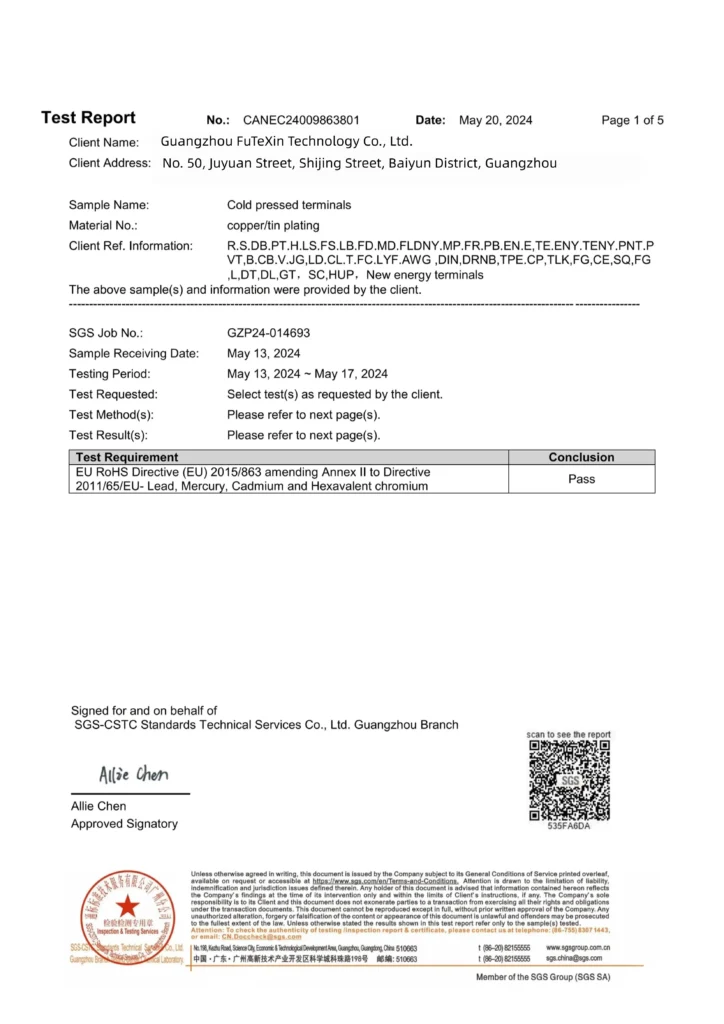
VoltixC is UL certified, and its CE attestation under the Low Voltage Directive 2014/35/EU covers the full terminal range, AM and CM lugs included, citing EN 60947-7-1, EN 60947-7-2 and EN 60947-7-3. RoHS test report available (SGS): lead, mercury, cadmium and hexavalent chromium were tested on a tin-plated copper terminal sample. The three documents are issued to Guangzhou FuTeXin Technology Co., Ltd., the company behind the VoltixC brand, and their numbers and dates are not printed here.
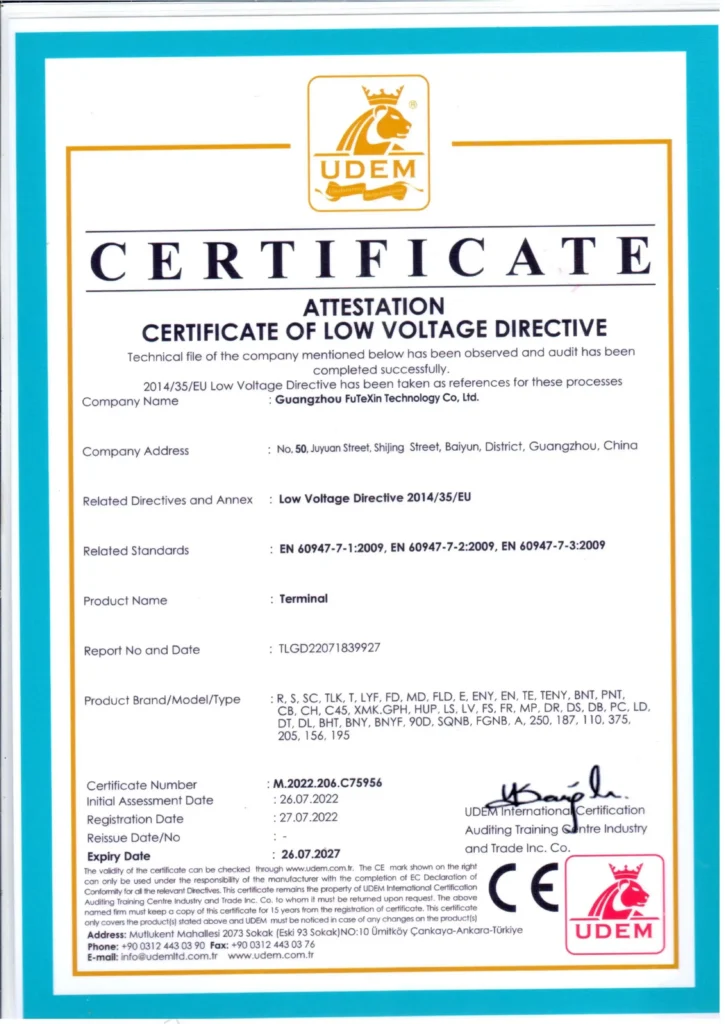
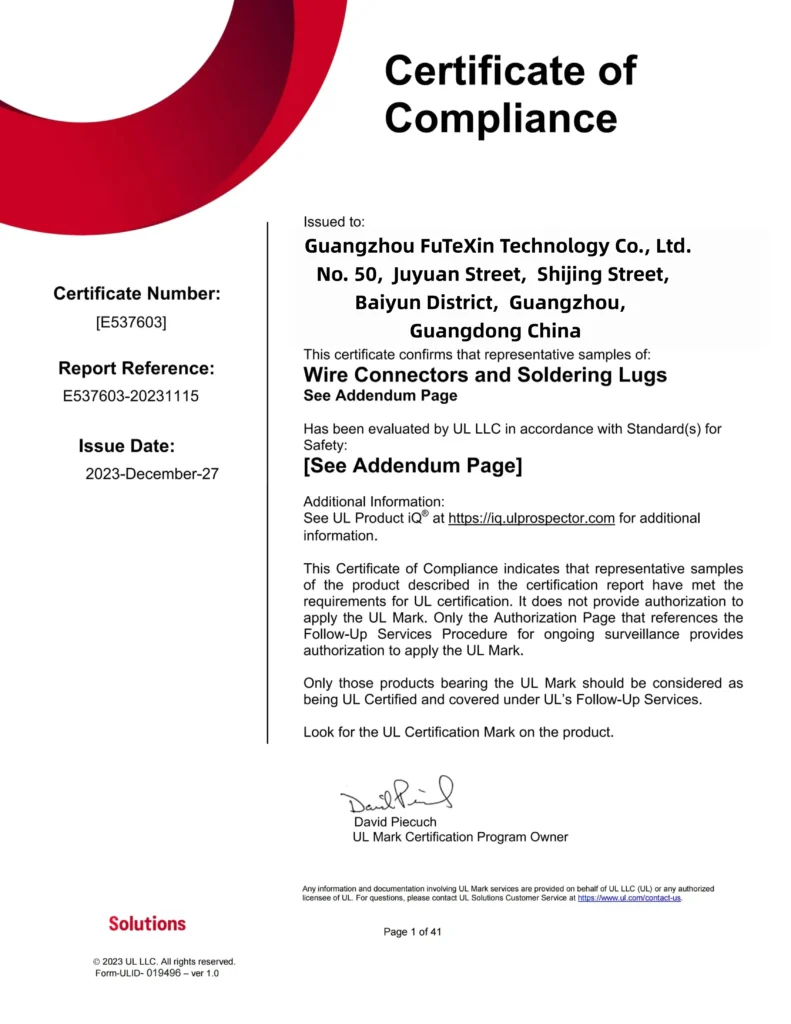
The standards that buyers cite for set-screw lugs describe conductor ranges and scope, not supplier approvals, and naming them here is not a claim that AM or CM lugs are certified to them. According to UL Standards & Engagement, the aluminum conductor ranges listed for UL 486A-486B are 12 and 10 AWG solid, 12 AWG through 2,000 kcmil stranded, and 12 AWG through 1,000 kcmil stranded single-input wire. According to CSA Group, its connector standard covers single-polarity connectors used with copper, aluminum or copper-clad aluminum conductors under Canadian, United States or Mexican installation codes.
Before a sample of an AM or CM lug is approved, put these documents on the request:
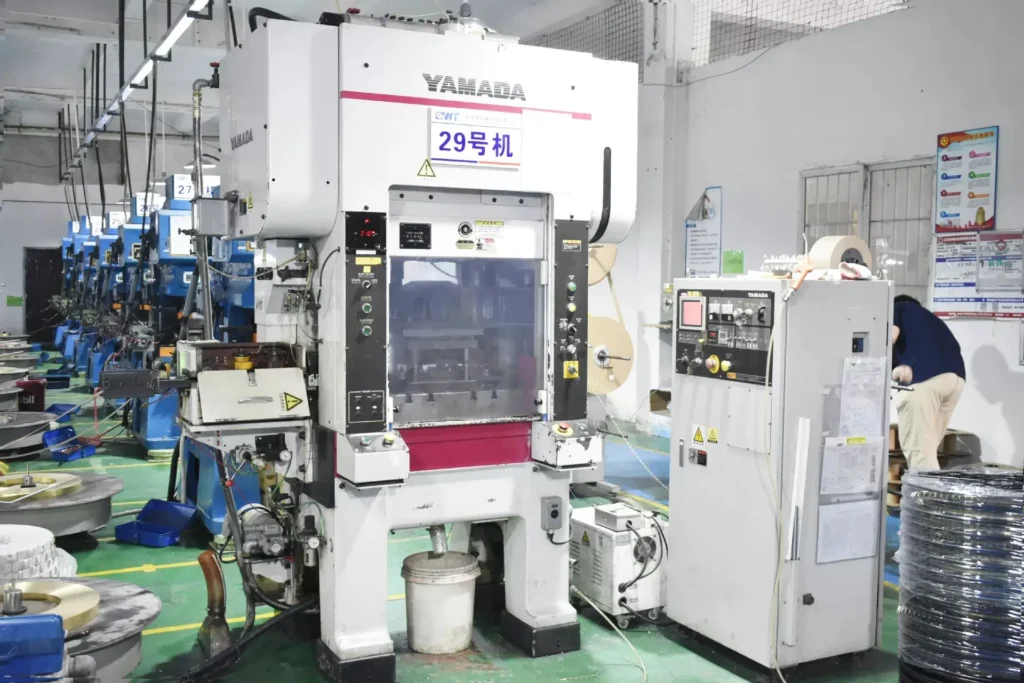
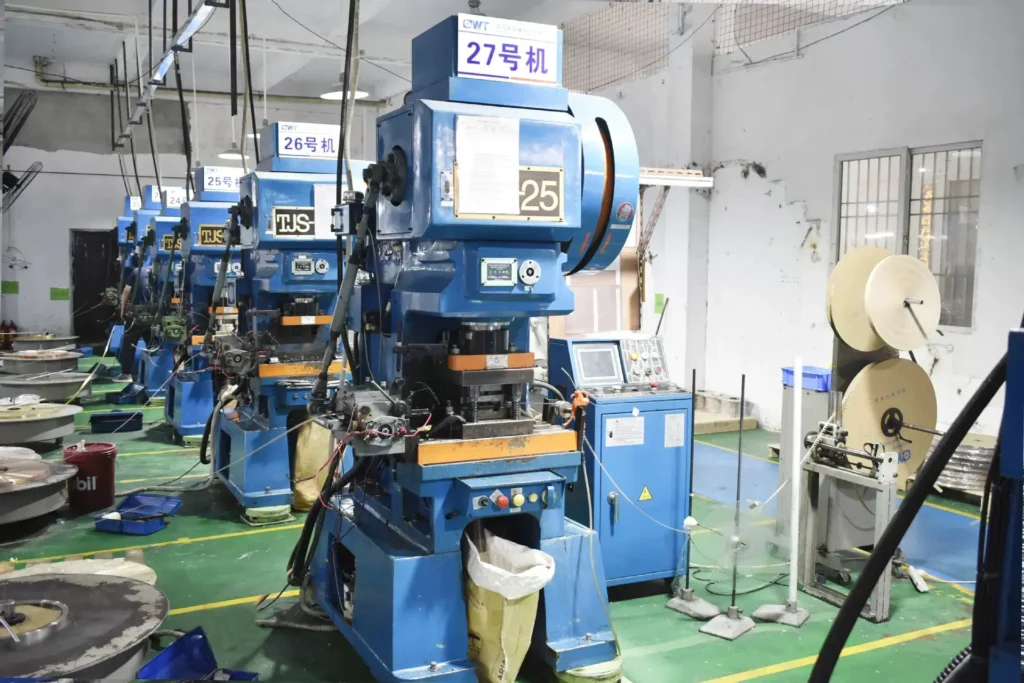
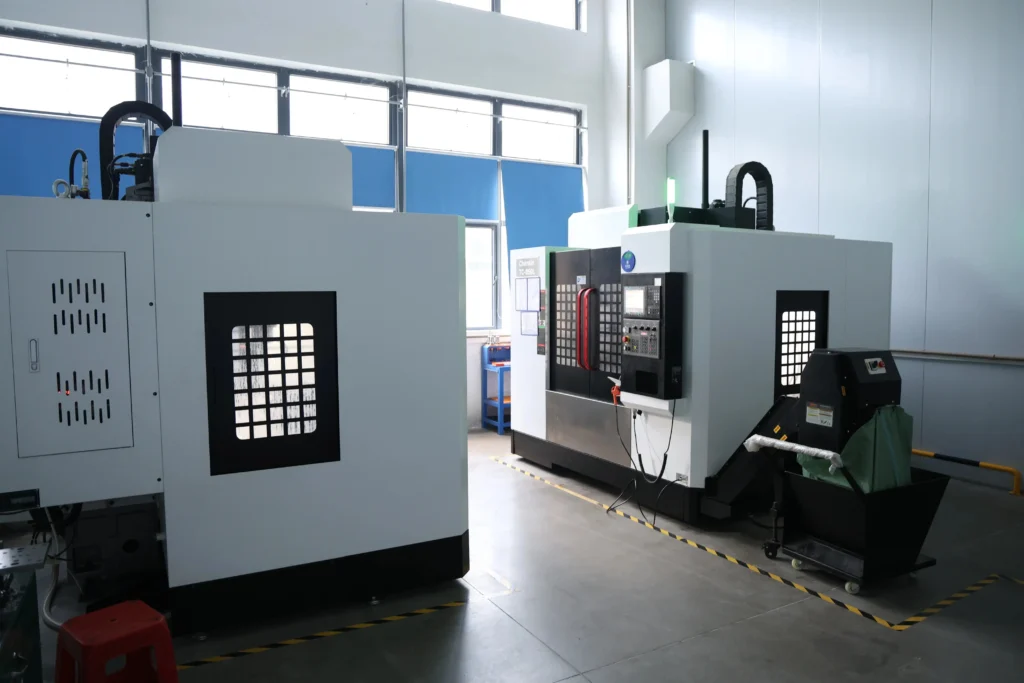
The photos below show machines on the VoltixC floor in Guangzhou. They record what stands on site and say nothing about which machine handles a given AM or CM order.
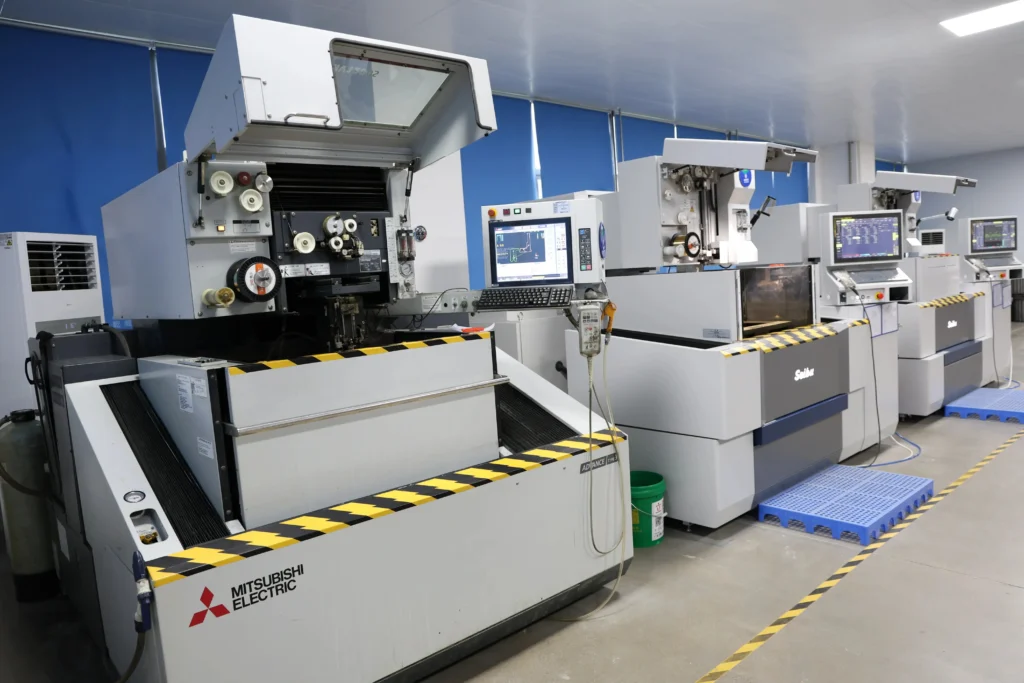
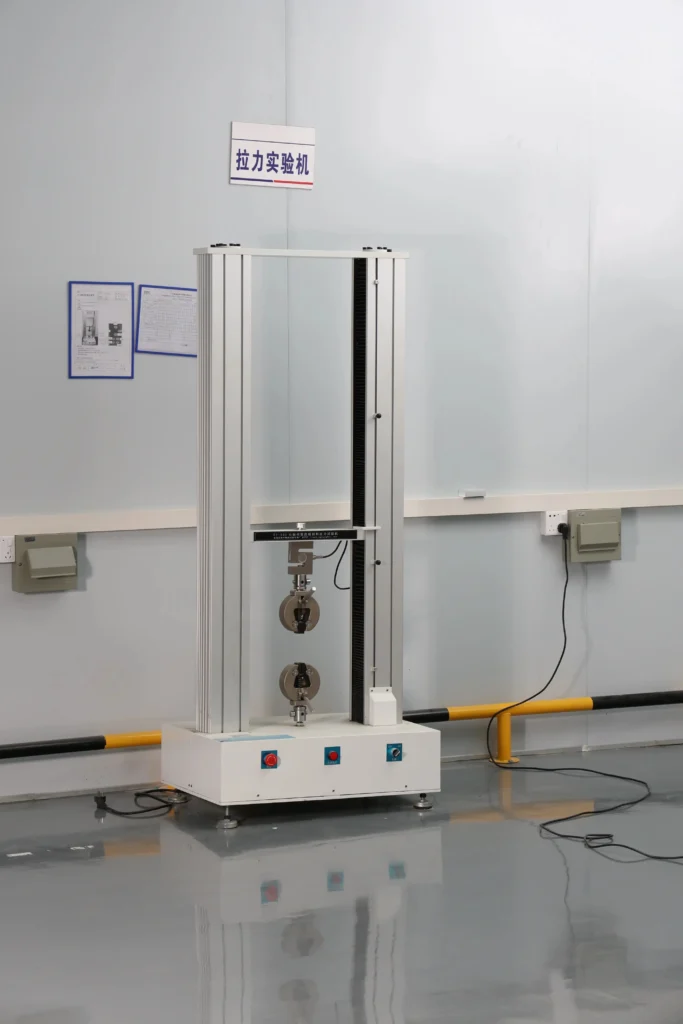
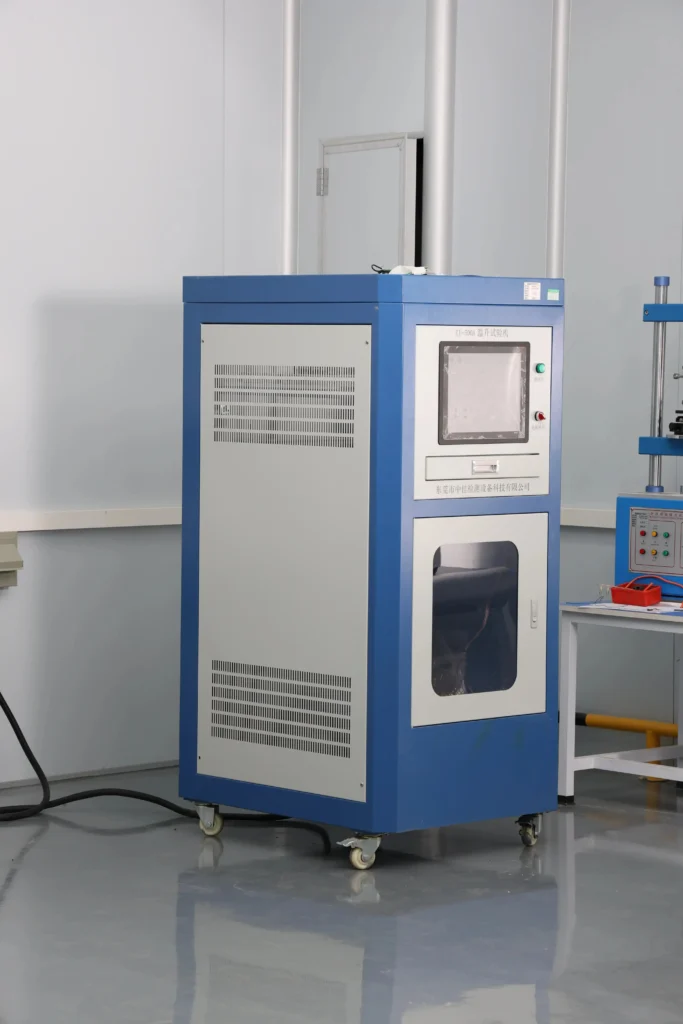
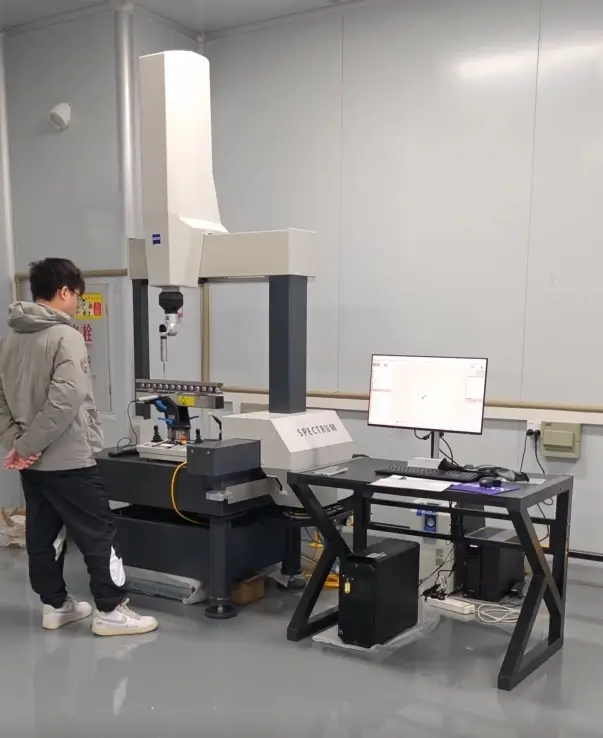
The unit price of copper mechanical lugs and aluminum mechanical lugs follows the body you pick and the order around it. Five of the seven inputs below come straight from your enquiry; tooling for a custom drawing and the document list are agreed per order. A request that gives the catalogue number (AM2506 or CM4002, for example), the conductor size for each port and the quantity on every line can be priced without a round of questions.
| Driver | Effect on cost | What you control |
|---|---|---|
| Model and layout | More ports, holes or barrels mean a larger body and more set screws (AM2506-44 against AM2506) | The catalogue number from the tables |
| Body metal and finish | Aluminum body per the supplier series summary; the tongue finish is set per order | The finish you specify for the bolted face |
| Conductor size | A larger conductor needs a larger barrel and screw | AWG, kcmil or mm² for each port |
| Number of models in one order | Each extra code adds its own set-up | How many codes you combine |
| Quantity | Set-up spreads over more pieces in a larger run | Order and call-off quantities |
| Custom drawing | A body outside the tables may need new tooling, confirmed per order | The drawing and its tolerances |
| Packing and documents | Pack size and requested papers change handling | Packing instructions and the document list |
Send the catalogue numbers, conductor sizes, quantities and supply schedule (one delivery or call-offs) through the enquiry form. Its fields are name, company, email, country, product line, conductor size, quantity and message; drawings go by email to hugo@voltixconnect.com, because the form has no upload field.
When the order replaces another maker’s lug, write its part number beside the AM or CM code you think matches, and copy the conductor marking stamped on the old part. List each code on its own line with its own conductor size and quantity, so every line can be priced and checked on its own. Pack size per carton, mixed codes in one box and any label text belong in the message field, so they are part of the first price rather than a revision.
MOQ, warranty and payment terms are confirmed per order by email or the enquiry form, and lead time is confirmed per order as well. Sampling for an AM or CM model starts from 7 days at the fastest; the production schedule is fixed with the confirmed order.
Four pages answer the checks that come before an AM or CM enquiry: torque, route, size lookup and the wider range.
How set-screw torque is stated per lug size and conductor range. Read the guide to set-screw torque values.
Where a crimped barrel beats a set screw, and the reverse. Read the crimp and set-screw comparison.
Find lugs by AWG, kcmil or mm² in the lug size lookup; it does not hold the AM and CM ranges yet, so use the tables above for those.
The three mechanical lug pages side by side, including stacked and grounding forms. Browse mechanical lugs.
Choose by the conductor you install, not by the lug name, because the lug has to be rated for that conductor metal. AM and CM are both listed with aluminum bodies in the supplier series summary, and no conductor rating is stated for either; ask before you specify a model. NASA KSC notes that galvanic corrosion is controlled by selecting metals closer in the galvanic series or by electrically isolating them.
Use the torque shown on the lug marking or in the manufacturer’s installation instructions for the exact model (NEC 110.14(D)); no single value covers every mechanical lug, and a figure from another brand’s chart does not carry over. For AM and CM models the torque is stated per model on the quotation. On a body with more than one port, such as AM-21S or AM-44, each set screw takes the value for its own conductor size, so ask for the figure port by port. Put those values on the installation sheet, so each screw is tightened to the figure stated for its own port.
Yes. Each catalogue number takes a band of sizes set by its barrel and screw: AM0614 is printed #14 AWG–#6 AWG, and AM1151 takes 500 kcmil–1000 kcmil. Send your AWG, kcmil or mm² sizes, and VoltixC matches them to a catalogue number. State the strand class too: according to UL Standards & Engagement, compact-stranded copper conductors are covered from 2 AWG and larger in the United States and from 8 AWG and larger in Canada and Mexico.
Only when the lug is rated for aluminum conductors. According to the ILSCO installation guide, connector markings use CU for copper-only conductors, AL9 for aluminum-only conductors and AL9CU for aluminum or copper conductors. The AM and CM supplier data carry no conductor marking, so no aluminium rating is stated; ask before you specify either series for aluminium cable.
Only when the lug is rated for both metals and has a port for each conductor. According to Electrical Engineering Portal, cleaning and brushing with a quality joint compound is recommended for both materials and is more essential for aluminum. The supplier data states no mixed-metal rating for the two-conductor AM-21S and AM-22S, so ask before you specify them for copper and aluminum together.
One hundred: 48 AM and 52 CM, each printed with a wire range, a bolt size and its main dimensions. The two tables give one row per wire range and list the other part numbers with the same range in the last column. The supplier documentation also groups the parts under 11 AM and 6 CM listing titles, such as AM-44 and CM-11.
They come from the supplier specification sheets, one per table, with dimensions converted from inches, and VoltixC has not re-tested them. The sheets print no body material. For CM, the variant record says copper while the supplier series summary says aluminum alloy, so the page follows the series summary until your order settles it.
For 4/0, yes: CM4002 is printed #2-#4/0, AM5140-22S starts at 4/0 AWG, and AM5104 takes #4 AWG–500 kcmil, which spans 4/0. Send the size or the drawing and VoltixC matches it to a catalogue number. Neither series uses the name chair lugs, so a chair-lug request is matched against your drawing.
Put the codes from the two tables, the conductor metal and size for each port, and the quantity into the enquiry form. A drawing, or a photo of the lug you are replacing, goes by email to hugo@voltixconnect.com.