VOLTIXC / ENQUIRY
Request a Quote
Tell us what you need and we will review your enquiry.

By VoltixC Engineering Team · Last updated: 2026-09-28
Fast answer: For ferrule crimping, choose the ferrule by conductor cross-section and insulation diameter, strip the wire to the ferrule’s pin length, insert until the insulation meets the collar, crimp with a tool whose profile suits the terminal block, then check that no strands escape and pull-test the joint before landing it.
A wire ferrule is a short metal tube, with or without a plastic collar, crimped over the stripped end of a stranded conductor so the strands enter a terminal as one solid pin. Panel builders also call it a bootlace ferrule or a cord-end ferrule. Ferrule crimping closes that tube around the strands, and the checks after the crimp decide whether the pin goes into the terminal block. VoltixC lists wire ferrules in two series: ENY nylon-insulated cord-end ferrules in 18 sizes and EN non-insulated ferrules in 23 sizes, each size printed in mm² and AWG on the supplier specification sheet.
Crimp tools come up here by type and profile only, since VoltixC makes the ferrules and sells no tools. Twin ferrules, strip packs and reels are described from other makers’ data; none of them is on the current VoltixC list, so ask before you specify one.
Conductor size, ferrule style, collar fit, crimp profile and finished pin length all have to match before the first crimp, and the strip length follows from the sleeve you pick.
| Ferrule check | What to match | Working value |
|---|---|---|
| Conductor size | Wire cross-section in mm² or AWG against the ferrule size | ENY covers 0.25 to 150 mm² and EN 0.25 to 500 mm²; from 0.25 to 0.75 mm² the two sheets print different AWG numbers, so order by mm² |
| Ferrule style | Collar or bare sleeve, one wire or two | ENY has a nylon collar and EN is a bare sleeve; twin ferrules are not on the current list, so ask before you specify one |
| Collar fit | Insulation outside diameter against the collar opening | Phoenix Contact offers insulated ferrules with an enlarged plastic collar for 0.5 to 16 mm², conforming to DIN 46228-4 and UL 486F-E |
| Crimp profile | Die shape against the terminal block | Tools for pre-insulated terminals give a different crimp profile from tools for bootlace ferrules, as Wiltronics points out |
| Clamp type | Screw clamp or spring clamp | TE Connectivity’s DIN wire ferrules cover flexible leads from 0.14 to 50.0 mm² and are used with screw or spring clamps |
| Strip length | Bare conductor against the sleeve | Strip to the pin length of the chosen ferrule; the ENY sheet prints pin length F and the EN sheet sleeve length L for every part number |
| Finished end | Strands at the tip and at the collar | No strand outside the pin or the collar; the projection limit comes from your process spec or the terminal maker |
| Collar colour | Colour against a named colour system | Colour codes vary by maker; TE’s featured listings show red on a 16–15 AWG part and on an 8 AWG part |
Source: ENY and EN rows per supplier specification sheet, not individually re-tested; other rows from the sources cited below.
Where the terminal block maker publishes a strip length, a pin length or a pull force for ferruled wire, work to those figures. The ENY and EN sheets print pin and sleeve lengths but no projection limit, so the finished-end row carries no number.
| Also asked as | Short answer | Covered in |
|---|---|---|
| Wire ferrule crimping; crimping wire ferrules; crimping bootlace ferrules | Closing a ferrule sleeve around the stripped strands so they enter the clamp as one pin | What a wire ferrule is |
| How to crimp a ferrule; how to crimp ferrule terminals | Cut square, strip to the pin length, insert to the collar, crimp in the die cavity for that size, then pull-test | Six crimp steps |
| Ferrule sizes; ferrules size chart | Pick the row by cross-section in mm², then check the collar against the insulation diameter | Sizing a ferrule |
| Ferrule crimper; ferrule crimp tools; crimper | A tool whose die profile the terminal block maker names for ferruled wire; VoltixC supplies ferrules, not tools | Crimp profiles |
| Cord end types; different types of cord ends | Insulated, bare, twin, enlarged-collar, strip-fed, reel-fed or loose; rings, spades and splices sit under crimp connectors | Ferrule styles |
A wire ferrule, or bootlace ferrule, is usually a tin-plated copper tube crimped onto a stranded wire end, and panel specs call for it because a clamp tightened on loose strands can cut or spread them.
| Problem | What to do | Check |
|---|---|---|
| Fine strands fray at the cut end | Crimp a ferrule over them. TE Connectivity describes a crimp ferrule as a soft metal tube crimped onto the end of a stripped wire to protect strands from fraying | Every strand sits inside the tube |
| A few strands miss the clamp and carry no current | Gather all of them in one sleeve; per Hubbell/Burndy, ferrules terminate stranded wires and can provide a reliable connection when each strand conducts current after proper crimping | No strand is left outside the pin |
| The screw terminal cuts strands as it tightens | Land a crimped ferrule instead of bare copper, since crimping ferrules can avoid strand shearing and dispersion risks, particularly those inherent in direct screw terminals, as Electrical Engineering Portal explains | The screw bears on the metal sleeve |
| Someone proposes tinning the strands instead | Keep solder off the strands. The same article warns that tin on a flexible conductor may cause fretting corrosion and prefers cable ends, sleeves or lugs where operating conditions are difficult | The wire end is bare copper inside a crimped sleeve |
| The conductor is solid, not stranded | Follow the terminal maker’s instruction for solid wire; for a rigid copper conductor, Electrical Engineering Portal advises against tinning the stripped core because tinning could cause the conductor to break later | The maker’s note for solid wire is on file |
| Strands fold back as they enter the tube | Choose a ferrule with a funnel entry. Hubbell/Burndy’s YF-I insulated ferrules use electrolytic copper, tin plating and a smooth funnel entry for easier wire insertion | The strands slide in straight |
| The plastic collar looks as if it needs crimping too | Keep it out of the die. In TE Connectivity’s description, the ferrule flare gathers the strands, while the conical plastic cable-entry sleeve bridges insulation and ferrule and is not pressed during installation | The collar comes out round and unmarked |
| Two wires must share one terminal position | Use a twin ferrule, covered in the next section | One pin carries both wires |
Ferrules belong on flexible stranded wire going into a clamp. A stud, bolt or terminal post takes a ring terminal, sized with the ring terminal sizing table, and a wire-to-wire joint takes insulated butt splices instead.
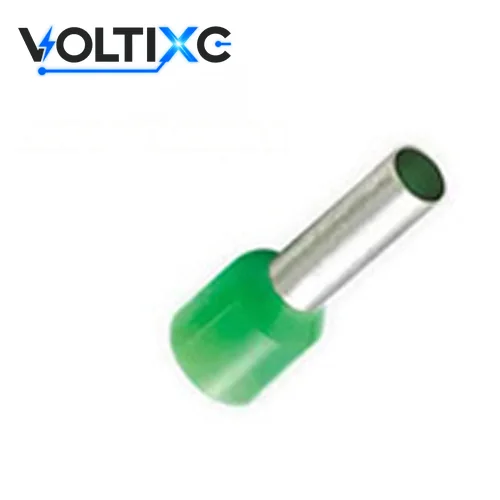
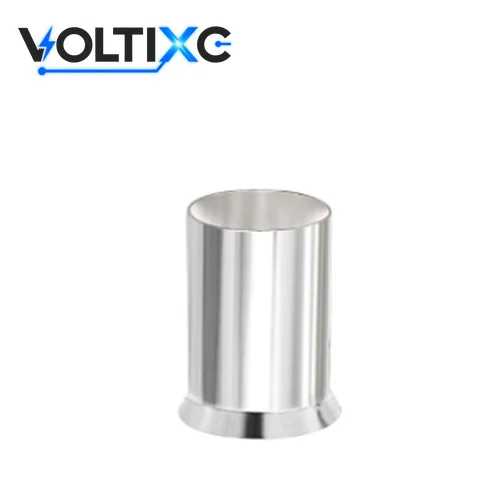
A panel builder wiring a row of screw clamps fits insulated ferrules, because the collar steers the strands in and hides the cut edge of the jacket. Where the clamps sit too close for a collar, or the terminal housing already covers the joint, bare ferrules go on instead.
| Style | Collar | Wires per ferrule | Where it fits | VoltixC series |
|---|---|---|---|---|
| Insulated, single | Plastic collar behind the sleeve | One | Screw or spring clamp rows; Phoenix Contact lists its insulated ferrules as conforming to DIN 46228-4 and UL 486F-E for 0.14 to 120 mm² | ENY, nylon collar, 18 sizes |
| Uninsulated (bare) | None | One | Tight spaces and housings that already cover the joint; Cembre makes its KE family as a non-insulated end sleeve for flexible copper conductors | EN, 23 sizes |
| Twin, insulated | One collar sized for two wires | Two | Two stranded conductors in one terminal position. Hubbell/Burndy says twin designs let two conductors connect to the same termination, and Phoenix Contact’s insulated TWIN ferrules take two conductors of 0.5 to 16 mm² each | Not on the current list; ask before you specify |
| Enlarged collar | Wider collar for a thick jacket | One | Wire whose insulation will not pass a standard collar; Phoenix Contact’s enlarged-collar ferrules cover 0.5 to 16 mm² | Not on the current list; ask before you specify |
| Strip-fed | Insulated, joined on a carrier strip | One | Bench machines that feed ferrules from a strip; on Phoenix Contact‘s range, strip-packed insulated ferrules cover 0.5 to 2.5 mm² | Not on the current list; ask before you specify |
| Reel-fed | Set by the machine maker | One | Automatic crimping machines fed from a reel | Not on the current list; ask before you specify |
| Loose | With or without a collar | One | Hand crimping at the bench or on site | ENY and EN; packing is confirmed per order |
Source: the maker pages named in each row; VoltixC series per supplier specification sheet.
If two wires are headed for one clamp, check with the terminal block maker before ordering; the answer decides between two single ferrules and one twin ferrule. Rings, spades and splices are compared with ferrules in the overview of wire crimp connector types.
Start from the cross-section printed on the jacket, which picks the ferrule size, and put calipers on the insulation to see whether the collar fits.
| Input | Where to get it | What it decides |
|---|---|---|
| Cross-section (mm² or AWG) | The print on the jacket or the wiring diagram | The ferrule size. In TE Connectivity’s description, most ferrules are copper, typically tin-plated, and their diameter and length are set by the applicable wire gauge |
| Conductor build | The cable data sheet: flexible, fine-stranded or solid | Whether a ferrule applies at all; solid wire follows the terminal maker |
| Insulation outside diameter | Calipers on the jacket, or the cable data sheet | Whether the jacket passes the collar or an enlarged collar is needed |
| Terminal clamp | The terminal block maker’s data: screw or spring, clamp depth | The pin length and the crimp profile |
| Maker’s size range | The ferrule maker’s catalogue | Whether a size exists at all; Phoenix Contact lists its non-insulated ferrules as conforming to DIN 46228-1 and UL 486F-A for 0.14 to 120 mm² |
| Colour system | Your panel spec or the customer’s drawing | The collar colour only. TE Connectivity notes that most ferrules are colour-coded for wire size |
| Cross-section (mm²) | AWG on the ENY sheet | ENY pin length F (mm) | AWG on the EN sheet | EN sleeve length L (mm) | Collar colour (ENY sheet) |
|---|---|---|---|---|---|
| 0.34 | 24 | 6 to 8 (2 lengths) | 22 | 5 to 10 (5 lengths) | Multiple colours |
| 0.5 | 22 | 5 to 12 (5 lengths) | 20 | 5 to 12 (5 lengths) | Multiple colours |
| 0.75 | 20 | 6 to 18 (5 lengths) | 18 | 5 to 20 (8 lengths) | Multiple colours |
| 1 | 18 | 6 to 18 (5 lengths) | 18 | 6 to 25 (9 lengths) | Multiple colours |
| 1.5 | 16 | 6 to 18 (6 lengths) | 16 | 6 to 20 (8 lengths) | Multiple colours |
| 2.5 | 14 | 8 to 25 (5 lengths) | 14 | 6 to 30 (10 lengths) | Multiple colours |
| 4 | 12 | 10 to 18 (3 lengths) | 12 | 7 to 30 (8 lengths) | Multiple colours |
| 6 | 10 | 10 to 18 (3 lengths) | 10 | 6 to 25 (7 lengths) | Multiple colours |
| 10 | 8 | 12 to 18 (3 lengths) | 8 | 6 to 25 (9 lengths) | Multiple colours |
Source: ENY and EN supplier specification sheets, not individually re-tested; the full sheets run from 0.25 mm² up to 150 mm² (ENY) and 500 mm² (EN).
Spec note: From 0.25 to 0.75 mm² the two sheets print different AWG numbers for the same cross-section (0.5 mm² is 22 AWG on the ENY sheet and 20 AWG on the EN sheet), so order those sizes by mm².
Your job sheet lists 16 AWG flexible leads for a row of spring clamps. That puts you on the 1.5 mm² row: an ENY part, or an EN part if the panel does without collars. Before ordering, put calipers on the jacket: if it will not pass the ENY collar, ask for an enlarged-collar part, which is not on the current list. Write the collar colour from your panel scheme on the same line.
Six steps take a stranded wire from a square cut to a pull-tested ferrule, and the pin goes into the terminal only after the last one passes.
Cut the wire end square with sharp side cutters before any insulation comes off.
Every strand then ends at the same point, and none is bent back.
The strip length comes from the ferrule itself, so hold the chosen part beside the wire and mark its pin length on the jacket.
If your stripper has a length stop, set it to that mark and compare the first stripped end with the ferrule.
Strip to the mark without nicking the copper, and slide the insulation slug straight off.
Any nicked or missing strand means the end is cut off and stripped again.
Push the stripped end into the ferrule until the jacket stops against the collar, or against the sleeve mouth on a bare ferrule.
You should see no bare copper between the jacket and the collar.
With the metal sleeve in the die cavity marked for its size, on a tool whose profile suits the terminal block, close the tool through its full stroke.
The plastic collar stays outside the die and comes out round.
Before the wire goes near the terminal, look at the tip and give the joint a firm in-line pull.
Loose strands, a cracked collar or a pin that slides on the wire all mean the ferrule is cut off and replaced.
| Step | What the source says | Source |
|---|---|---|
| Insert | A crimp ferrule is a soft metal tube crimped onto the end of a stripped wire to protect strands from fraying | TE Connectivity |
| Crimp | The ferrule flare gathers the strands, while the conical plastic cable-entry sleeve is not pressed during installation | TE Connectivity |
| Tool | Crimp tools for pre-insulated terminals produce a different crimp profile from tools for bootlace ferrules | Wiltronics knowledge base |
| Tool | Using a crimping tool for ferrules can avoid strand shearing and dispersion risks, particularly those of direct screw terminals | Electrical Engineering Portal |
Your terminal maker or your own standard sets the strip length, the projection limit and any pull force; this guide gives none of them. Rings, spades and splices follow the general method in the wire terminal crimping guide.
Tip: Crimp and pull one test piece from each new bag of ferrules before the batch. A wrong die cavity shows up on that first pin.
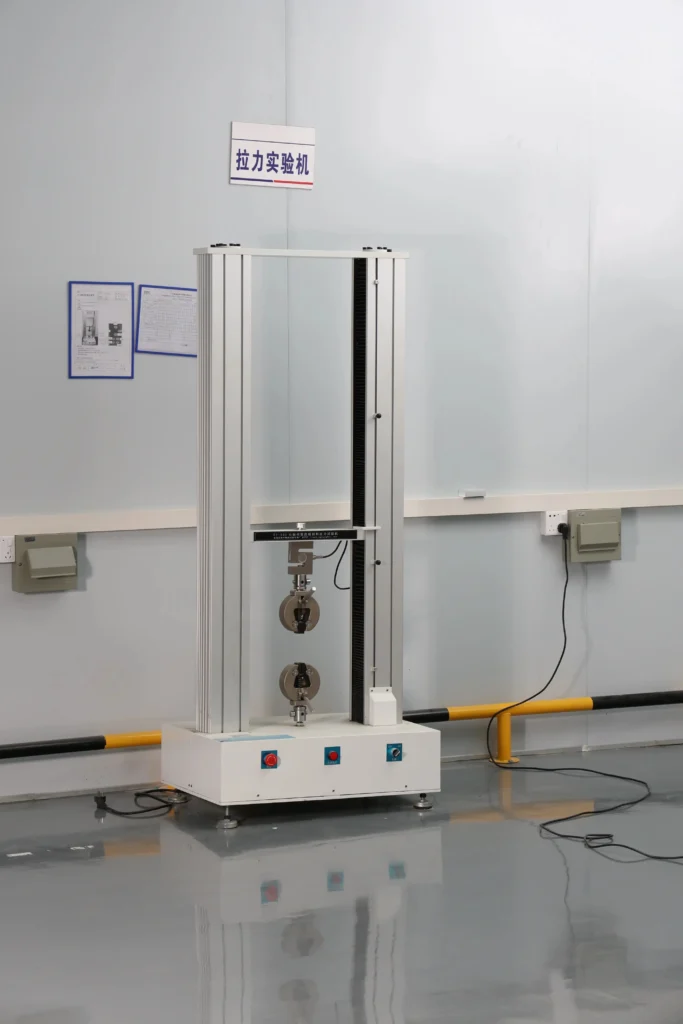
Use the profile that the terminal block maker names for ferruled wire, and crimp it with a tool made for ferrules rather than one made for insulated terminals.
| Profile | Shape of the crimped pin | Ask the terminal block maker |
|---|---|---|
| Trapezoidal | Four flat sides, two of them sloping toward a narrower face | Whether the clamp opening takes a trapezoidal pin at that size |
| Square | Four equal flat sides | Whether a square pin seats fully in the clamp |
| Hexagonal | Six flat faces around the pin | Whether the clamp or cavity is sized for a hexagonal pin |
| Profile from an insulated-terminal tool | The shape made for a pre-insulated barrel, not for a ferrule | Nothing to ask: Wiltronics notes that these tools produce a different crimp profile from tools for bootlace ferrules |
| Point | What the data says | Source |
|---|---|---|
| Clamp types | DIN wire ferrules for flexible leads from 0.14 to 50.0 mm² are used with screw or spring clamps | TE Connectivity product page |
| Process | TE’s DIN ferrule process crimps the individual wires for the specified wire size with AMP precision tools to form a gas-tight connection | TE Connectivity product page |
| Cross-section | An incorrect cross-section can disperse strands and cause poor contact | Electrical Engineering Portal article |
Source: the maker and publisher pages named in each row; none of them describes ENY or EN parts.
The profile names come from tool makers, and a spring clamp and a screw clamp may each accept a different one, so read the block maker’s instruction before choosing a tool. VoltixC supplies ENY and EN ferrules without tools, and any sample is matched to the profile you name in the enquiry.
A good ferrule crimp keeps every strand inside the pin, leaves the collar whole and holds under a firm pull; a crimp that fails any of those checks is cut off and done again with a new ferrule.
| Problem | What to do | Check |
|---|---|---|
| Copper sticks out past the tip | Cut the ferrule off, strip shorter to the pin length and crimp a new one | The tip stays within your process limit |
| The strands stop short of the tip | Strip again to the full pin length and crimp a new ferrule | Copper fills the pin to its tip |
| Strands escape outside the collar or pin | Remove the ferrule and restrip; a folded strand is not pushed back in | No strand is visible outside the metal sleeve |
| The collar splits or the sleeve cracks | Stop the batch and set the cracked part and its bag aside for the supplier | The next test piece from a fresh bag comes out whole |
| The ferrule is too big for the wire | Fit the size that matches the cross-section; Electrical Engineering Portal reports that an incorrect cross-section can disperse strands and cause poor contact | The pin is firm on the wire after crimping |
| The pin looks crimped but moves when pulled | Crimp in the die cavity for that size; TE Connectivity crimps the individual wires for the specified wire size with precision tools to form a gas-tight connection | The pin does not move under a firm in-line pull |
| The pin shape jams in the terminal block | Change to the profile the block maker names | The pin seats to full depth by hand |
| A crimped ferrule is taken out of a terminal | Cut it off and fit a new ferrule before the wire goes back in | Every landed wire carries a fresh crimp |
Tighten the terminal screw on a finished pin to the block maker’s instruction. Your own standard may also set a pull force, which this guide does not give.
Caution: Never crimp a failed ferrule a second time. Cut it off and start again with a new part.
DIN 46228-1 and DIN 46228-4 describe bare and insulated ferrules, and UL 486F is the North American ferrule standard; ask each supplier which document a part refers to and what its certificate actually covers.
| Problem | What to do | Check |
|---|---|---|
| Your drawing calls for a bare ferrule to a named standard | Ask which document the part refers to; Phoenix Contact lists its non-insulated ferrules against DIN 46228-1 and UL 486F-A | The quotation names the document next to the item |
| Your drawing calls for an insulated ferrule | Ask the same question for the collared part; Phoenix Contact gives DIN 46228-4 and UL 486F-E for its insulated ferrules | The document named matches the collar style |
| A supplier quotes UL 486F | Ask what the certificate covers. Phoenix Contact states that UL 486F certification applies to its ferrule-and-tool combinations and that its ferrules conform to DIN 46228-1 and -4 | The certificate names the ferrule and the crimping tool together |
| The terminal block carries a UL 486E rating | Read the block’s installation instructions; the UL 486E scope also covers equipment wiring terminals used with conductors prepared with UL 486F ferrules when their ratings and installation instructions are followed | The block instructions allow ferruled wire at your size |
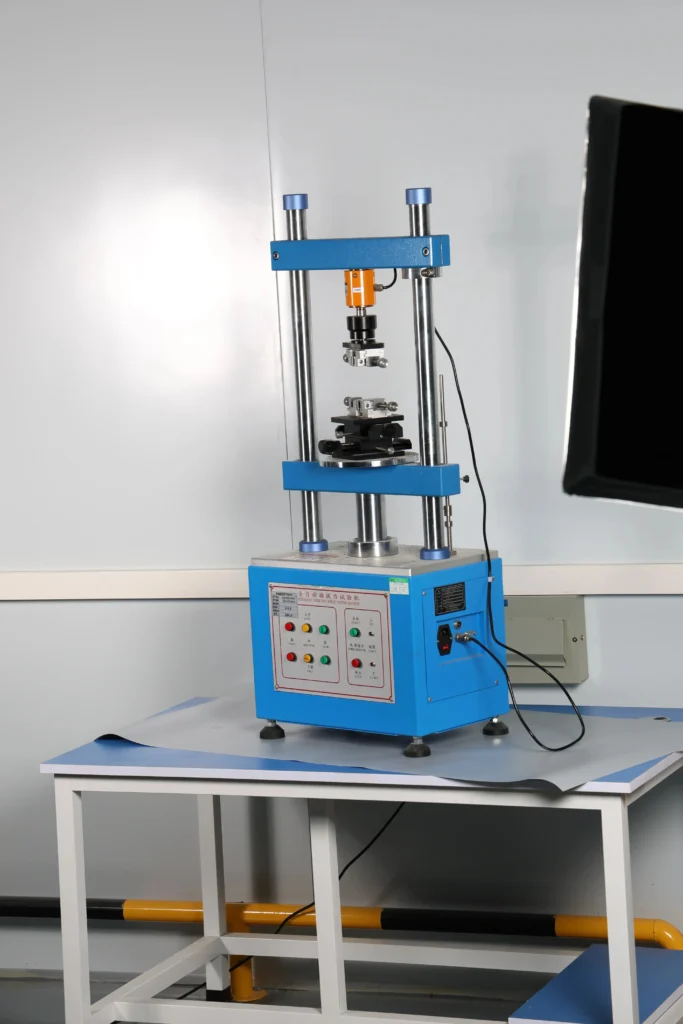
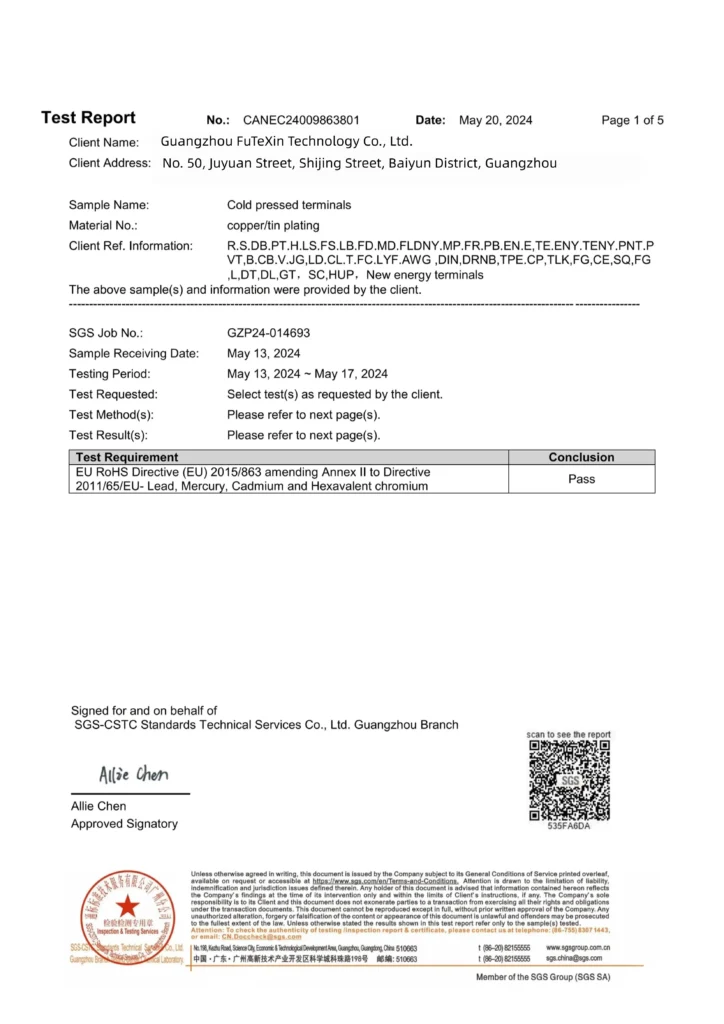
| You need VoltixC paperwork for ENY or EN parts | Ask for the CE attestation, which covers the full terminal range, and the SGS RoHS test report, and ask which items the UL certificate covers; VoltixC makes no UL 486F certification claim for its ferrules | The reply names the document and the item numbers |
| You want test data with the order | Ask for the test records available with your enquiry | The records named in the reply match your items |
This page explains selection and inspection steps but does not certify a ferrule or tool combination without the applicable test record. Standards are named here so that the document on your drawing and the one on the quotation match.
Send the conductor size in mm² or AWG, the insulation outside diameter, collar or bare, single or twin, loose or strip packing, and any collar colours you need.
| What to send | Why it matters | Example |
|---|---|---|
| Conductor size | It picks the ENY or EN row | 1.5 mm², or 16 AWG for ENY1.5 and EN1.5 |
| Insulation outside diameter | It shows whether the jacket passes the collar | The caliper reading, or the cable data sheet |
| Collar or bare | ENY has a nylon collar and EN has none | ENY where the collar helps, EN where space is tight |
| Single or twin | Twin ferrules are not on the current list | Two wires per clamp, flagged so it can be checked |
| Packing | Loose parts, strips and reels feed different tools | Bag count and label text, or the machine that feeds them |
| Collar colour | ENY colours follow the customer’s requirement | Your panel colour scheme, stated once for the list |
Put one line per size with a count, and add the terminal block maker and part number if you know it. Drawings and panel photos go by email to hugo@voltixconnect.com, since the enquiry form takes no uploads. The reply confirms quantities, samples and delivery for your order.
Fraying, cut strands and strands that spread under the clamp. TE Connectivity describes the crimp ferrule as a soft metal tube that protects strands from fraying. With the strands held in one pin, the screw or spring presses on metal.
No. The cross-section and the collar fit decide the size, and the colour only follows whichever colour system your panel uses. Colour codes vary by maker, so an ENY order takes its colours from your own requirement.
When two stranded wires must land in one terminal position. According to Hubbell/Burndy, twin designs allow two stranded conductors to connect to the same termination. Twins are not on the VoltixC list, so ask before you specify one.
All of the pin length and very little more. The copper should fill the pin to its tip, with any projection inside the limit your terminal maker or standard sets; this guide gives no figure. Nothing should show between the jacket and the collar.
None. The terminal block decides, so use the profile its maker names for ferruled wire. Wiltronics notes that tools for pre-insulated terminals produce a different crimp profile from tools for bootlace ferrules.
The moment one check fails. A split collar, a strand outside the pin, the wrong length or a pin that slides under a firm pull are all reasons to cut it off and crimp a new one.
Finishing flexible stranded wire for screw and spring clamps in control panels, machine wiring and terminal blocks. TE Connectivity’s DIN wire ferrules, for example, cover flexible leads from 0.14 to 50.0 mm² for screw or spring clamps. VoltixC’s ENY and EN ferrules are listed by mm² and AWG for the same kind of work.
Yes, on flexible stranded wire going into a clamp. Electrical Engineering Portal notes that crimping ferrules can avoid the strand shearing and dispersion risks of direct screw terminals. Solid wire is different, and there the terminal maker’s instruction applies.
How this guide was written: it follows one ferrule from the size choice to the pull check. The sources are product pages from TE Connectivity, Phoenix Contact, Hubbell/Burndy and Cembre, an Electrical Engineering Portal article, a Wiltronics knowledge-base article and the UL 486E standard listing. VoltixC ran no tests for this guide and gives no projection or pull-force figures. ENY and EN sizes and lengths come from the supplier specification sheets and have not each been re-tested, and DIN and other colour conventions are kept side by side without treating any colour as a measurement.
VoltixC is the brand of Guangzhou FuTeXin Technology Co., Ltd. It makes the ENY and EN ferrules this guide uses as examples; crimp tools are outside its range.